DR Congo Ebola outbreak uncontrolled as North Kivu cases surge 73%
Synopsis
The DRC's Ebola outbreak has become the deadliest ever recorded in the country and the second-worst globally, with North Kivu cases surging 73% even as Ituri shows a 26% decline. The WHO's blunt verdict: 'not under control' — and with children under five dying at a rate above 60%, the humanitarian cost is accelerating faster than the response.
Key Takeaways
The DRC Ebola outbreak has recorded 7,773 confirmed cases and 3,759 deaths as of Monday, 22 September 2026 .
North Kivu province saw a 73 per cent surge in cases between 31 August and 20 September , even as Ituri declined by 26 per cent .
WHO official Marie Roseline Belizaire stated the outbreak is 'still not under control' and poses 'a significant risk to regional and global health security.' Children under five face a case fatality rate above 60 per cent , compared to approximately 40 per cent among adults.
The outbreak, declared in May 2026 , is now the largest and deadliest Ebola outbreak in DRC history and the second-largest globally after the 2014–2016 West Africa epidemic .
Contact follow-up has reached 88 per cent , but surveillance gaps persist, with many new cases lacking a known epidemiological link.
The Ebola outbreak in the Democratic Republic of the Congo (DRC) remains uncontrolled, with cases surging sharply in the eastern province of North Kivu even as select regions show tentative signs of improvement, a senior World Health Organisation (WHO) official warned on Wednesday, 23 September 2026. The DRC has recorded 7,773 confirmed cases and 3,759 deaths as of Monday, according to health authorities in the country.
Outbreak Status and Key Figures
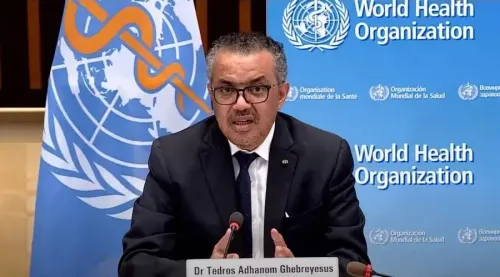
Marie Roseline Belizaire, director of the WHO emergencies programme in the African region, said during an online press briefing that the situation continues to evolve unevenly across the country's affected provinces. Between 31 August and 20 September, cases declined by approximately 26 per cent in Ituri Province — the long-time epicentre of the outbreak — and by around 15 per cent in Haut-Uele Province.
However, North Kivu recorded a dramatic 73 per cent increase in cases over the same period. 'This clearly shows that the outbreak continues to evolve differently across the affected areas,' Belizaire said, noting that each of the seven affected provinces carries its own distinct transmission pattern.
WHO Warning: 'Not Under Control'
'The outbreak is still not under control,' Belizaire stated plainly. 'This outbreak continues to pose a significant risk to regional and global health security.' The warning underscores fears that the virus could spread beyond DRC's borders into neighbouring countries, given the highly mobile populations in the region's eastern provinces.
Contact follow-up has reportedly improved to nearly 88 per cent, but officials acknowledge that too many new infections are still being detected without a known epidemiological link — highlighting what Belizaire described as 'persistent gaps in surveillance.'
Children Under Five Among the Hardest Hit
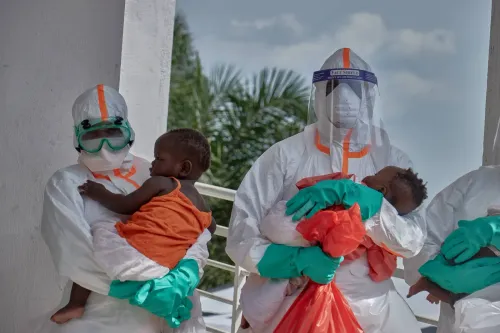
Children under the age of five remain particularly vulnerable to the current outbreak, with a case fatality rate exceeding 60 per cent — compared with approximately 40 per cent among adults, according to the WHO official. The disparity points to severe strain on paediatric care infrastructure in conflict-affected areas of eastern DRC, where health facilities are routinely understaffed and under-resourced.
Historical Scale and Global Context
The outbreak, declared in May, has already become the largest and deadliest Ebola outbreak ever recorded in the DRC and the second-largest globally, trailing only the 2014–2016 West Africa epidemic. That epidemic killed more than 11,300 people across Guinea, Liberia, and Sierra Leone, making the current DRC crisis a benchmark-level public health emergency.
Notably, this is not the DRC's first encounter with Ebola — the country has endured multiple outbreaks over five decades. But the scale and geographic spread of the current wave sets it apart from all previous episodes within the country's borders.
What the Response Must Focus On
Belizaire stressed that resources must now be concentrated in areas where transmission risk is highest. 'We must consolidate the progress made in Ituri, strengthen the response in North Kivu and other emerging hotspots, detect cases earlier, reduce community deaths, and maintain strong cross-border preparedness,' she said. Officials are also calling for sustained maintenance of essential health services alongside the emergency response, warning against diverting critical capacity solely to outbreak containment.
With North Kivu's situation deteriorating and surveillance gaps persisting, the coming weeks will be critical in determining whether the outbreak can be brought under control or risks a wider regional spread.
Point of View
And it reflects genuine alarm rather than diplomatic hedging. What mainstream coverage risks missing is the structural dimension: North Kivu is an active conflict zone, where armed groups have historically obstructed vaccination campaigns and health workers have been attacked. Progress in Ituri is real but fragile, and it cannot offset a 73% surge in a province where the state barely has a foothold. The children's fatality rate above 60% is a damning indictment of paediatric health infrastructure. The world moved slowly in 2014; the DRC cannot afford the same delay now, and neither can the neighbours who share porous borders with North Kivu.
NationPress
24 Sept 2026
Frequently Asked Questions
How many Ebola cases and deaths have been recorded in the DRC outbreak?
As of Monday, 22 September 2026, the DRC had recorded 7,773 confirmed Ebola cases and 3,759 deaths, according to the country's health authorities. The outbreak, declared in May 2026, is now the deadliest in DRC history.
Why is the Ebola situation in North Kivu getting worse?
North Kivu recorded a 73 per cent increase in Ebola cases between 31 August and 20 September, according to WHO. The province's ongoing conflict, mobile populations, and strained health infrastructure make outbreak containment significantly more difficult than in other affected areas.
Is the DRC Ebola outbreak the worst ever recorded?
It is the largest and deadliest Ebola outbreak ever recorded within the DRC, and the second-largest globally, surpassed only by the 2014–2016 West Africa epidemic that killed more than 11,300 people.
What is the death rate among children in the current Ebola outbreak?
Children under five face a case fatality rate of more than 60 per cent in the current outbreak, compared with approximately 40 per cent among adults, according to WHO official Marie Roseline Belizaire.
What is the WHO calling for to bring the outbreak under control?
The WHO is urging a focus on areas with the highest transmission risk — particularly North Kivu — while consolidating gains in Ituri, closing surveillance gaps, reducing community deaths, and strengthening cross-border preparedness to prevent regional spread.