Namo Drone Didi: How rural women pilots are reshaping Indian agriculture
Synopsis
India's Namo Drone Didi programme is quietly rewriting gender rules in rural farming — placing precision drone technology in the hands of Self-Help Group women who are now training dozens more. With pilots like Sabina Khatoon coaching 80 farmers and Rekha Devi rallying 15 women's groups, the scheme's multiplier effect is turning a government initiative into a grassroots agritech movement.
Key Takeaways
India's Namo Drone Didi initiative trains rural women as drone pilots to spray fertilisers, pesticides, and liquid nutrients across farmland.
The programme is rooted in village-level Self-Help Groups (SHGs) , with trained pilots expected to train other women — creating a grassroots multiplier effect.
Sabina Khatoon from Bihar has trained 80 women farmers ; Rekha Devi from Agra works with 15 of 20 women's groups in her village.
Drone-based aerial application replaces exhausting manual spraying, delivering faster coverage, more uniform application, and lower water usage.
The scheme is driving a measurable shift in rural attitudes, with men in participating villages now citing Drone Didis as role models.
Women trained under India's Namo Drone Didi initiative are transforming agricultural practices across rural India — earning higher incomes, improving resource efficiency, and dismantling entrenched gender norms — according to a new report highlighting the programme's social and economic impact.
What the Programme Delivers
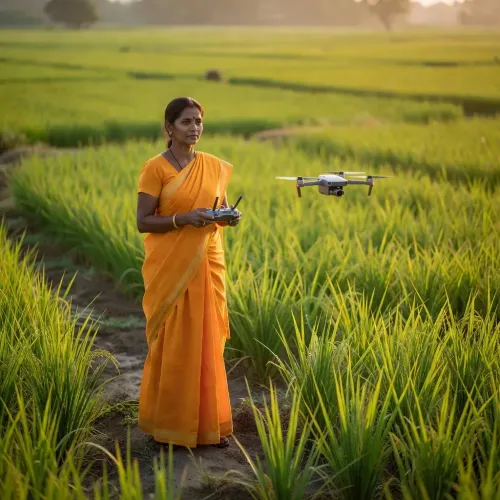
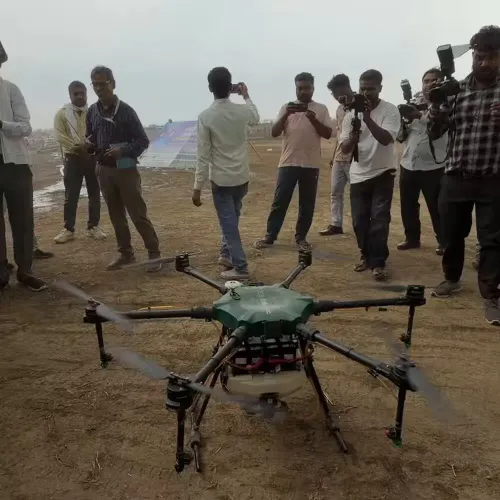
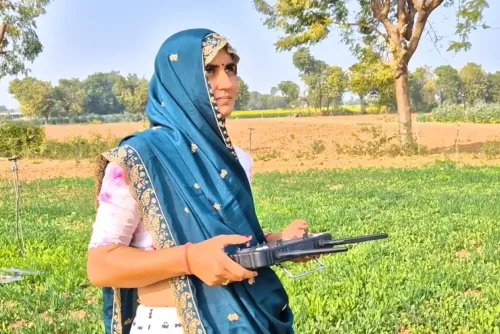
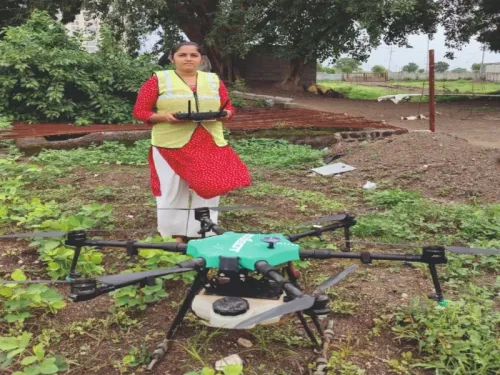
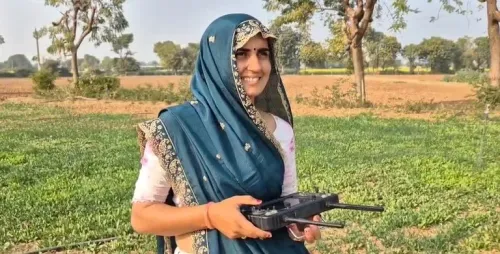
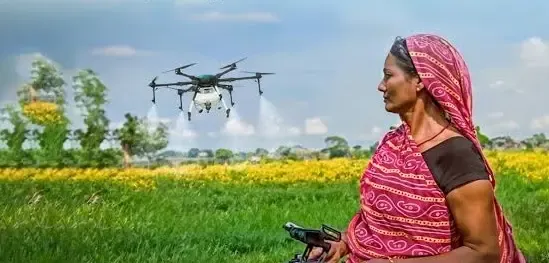
The scheme creates a new cadre of rural women drone operators, known as 'Drone Didis' — a title fusing modern aviation technology with Didi, the affectionate Hindi term for elder sister used across rural India to honour women who lead and uplift their communities. These pilots provide precision aerial services including spraying fertilisers, pesticides, and liquid nutrients across farmland, dramatically reducing the physical burden of crop management.
Traditionally, farmers were required to walk through dense crop rows carrying heavy tanks — an exhausting, labour-intensive process that also consumed large quantities of water. Drone-based application replaces this with faster coverage, more uniform distribution, and significantly lower resource consumption.
Women Breaking Ground in Bihar and Agra
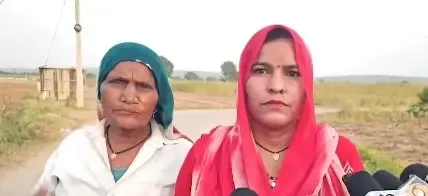
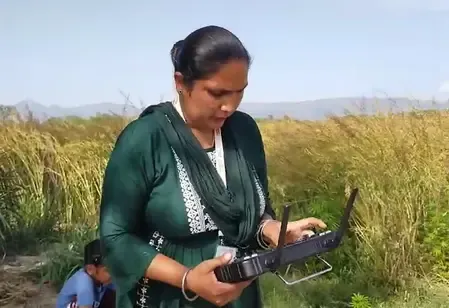
Sabina Khatoon from Bihar and Rekha Devi from Agra are among the women who defied prevailing gender-based stereotypes — many in their villages initially held that operating flying machinery was 'a man's job.' Both have since become local role models.
Sabina has already trained 80 women farmers, while Rekha actively collaborates with 15 of the 20 women's self-help groups in her village. The programme is built on a multiplier model: trained pilots are encouraged to train others, compounding the scheme's reach organically.
The Self-Help Group Model
The Namo Drone Didi programme is anchored in village-level Self-Help Groups (SHGs), leveraging existing community networks to identify, train, and deploy women pilots. This bottom-up structure ensures local ownership and sustained participation — advantages that top-down government rollouts often lack.
According to the report, the attitudinal shift in villages has been notable: 'Men who once insisted women remain confined to domestic chores now look to them as role models for their own daughters and wives,' it noted.
Wider Significance for Indian Agritech
The initiative sits at the intersection of two of India's stated policy priorities: agricultural modernisation and women's economic empowerment. By placing precision agritech tools in the hands of rural women through structured SHG frameworks, the programme attempts to address both simultaneously.
Notably, this comes amid broader government efforts to expand drone adoption in agriculture — an area where India has set ambitious targets for coverage and technology diffusion. Whether the Drone Didi model can scale nationally while maintaining its grassroots character will be a critical test in the months ahead.
Point of View
Or simply a headline metric. The SHG-anchored multiplier model is structurally sound: peer-to-peer training within trusted community networks has historically outperformed top-down skilling drives. The harder question is scale — whether the pipeline of drones, maintenance support, and crop-service income holds as the programme expands beyond early-adopter villages. The cultural shift described in the report is real, but it is fragile; sustaining it requires that Drone Didis remain economically viable, not just symbolically celebrated.
NationPress
19 Nov 2026
Frequently Asked Questions
What is the Namo Drone Didi initiative?
The Namo Drone Didi initiative is a government-backed programme that trains rural women, organised through Self-Help Groups, to operate agricultural drones for tasks such as spraying fertilisers, pesticides, and liquid nutrients. The 'Drone Didi' title combines modern aviation with the Hindi word Didi — meaning elder sister — to reflect the mentoring role these women play in their communities.
How does the Drone Didi programme empower rural women?
The programme gives rural women a skilled, income-generating role in modern agriculture, replacing gruelling manual labour with precision drone technology. Beyond income, it challenges gender stereotypes: women who were once told operating machinery was 'a man's job' are now local role models, with men in their villages encouraging daughters and wives to follow their example.
How is the training structured under Namo Drone Didi?
Training is embedded within village-level Self-Help Groups, and certified pilots are encouraged to train other women, creating a grassroots multiplier. Sabina Khatoon from Bihar has already trained 80 women farmers, while Rekha Devi from Agra collaborates with 15 of the 20 women's groups in her village.
What are the agricultural benefits of using drones under this scheme?
Agricultural drones enable faster field coverage, more uniform application of fertilisers and pesticides, and significantly lower water consumption compared to traditional manual spraying. Farmers previously carried heavy tanks through dense crops — a physically demanding process the drone technology eliminates.
What is the broader significance of the Namo Drone Didi model for India?
The initiative sits at the intersection of India's two key policy priorities: agricultural modernisation and women's economic empowerment. By anchoring precision agritech in existing SHG networks, it attempts to address both simultaneously — though whether the model can scale nationally while preserving its community-driven character remains the critical question going forward.