Revanth Reddy pitches Telangana's $3 trillion 2047 vision at IRC
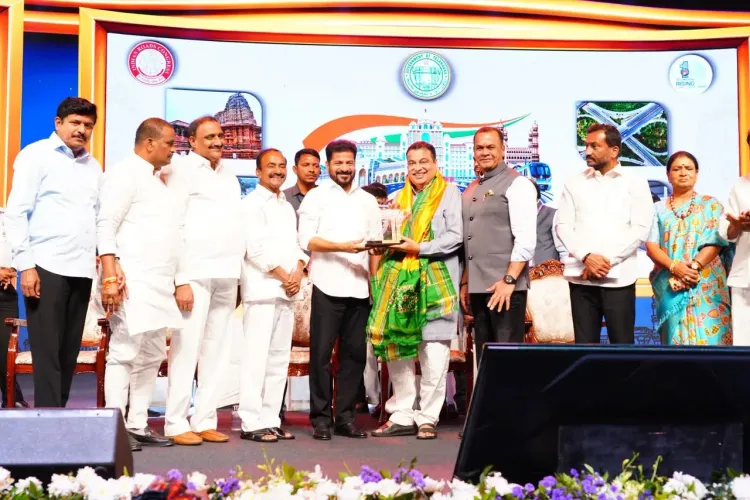
Synopsis
At the 85th Indian Roads Congress in Hyderabad, CM Revanth Reddy unveiled Telangana's $3 trillion economy target for 2047, a three-zone development model covering services, manufacturing, and agro-industry, 8,000 new hospital beds, and a December investor summit.
Key Takeaways
Revanth Reddy addressed the 85th Indian Roads Congress in Hyderabad on November 19, 2026 .
The state has set a target of becoming a $3 trillion economy by 2047 , aligned with India's Viksit Bharat vision.
A three-zone framework — CURE (services), PURE (manufacturing), RARE (agro-industries) — will guide sectoral investment across the state.
New hospitals including New Osmania Hospital and TIMS are expected to add 8,000 hospital beds to Telangana's healthcare infrastructure.
The Invest Telangana Global Summit is scheduled for December 7–9 , with delegates formally invited at the IRC session.
Revanth Reddy called for cross-party cooperation on development, framing growth outcomes as a goal that must reach every region and family.
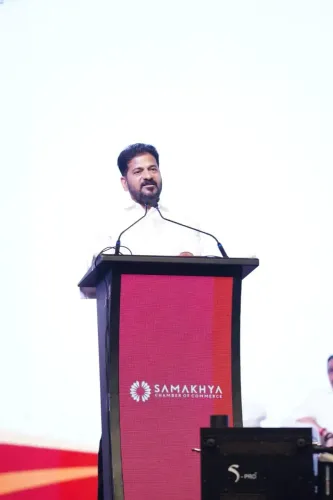
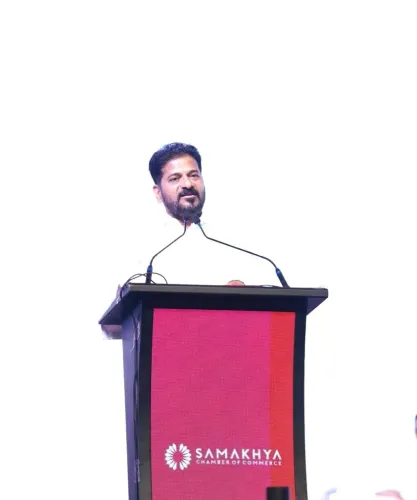
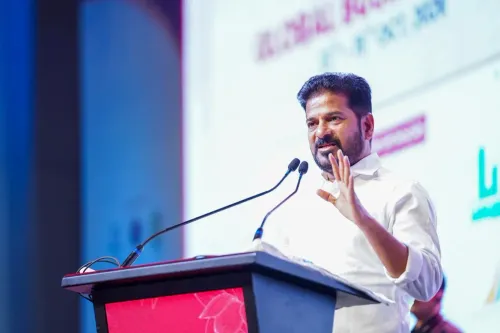
A $3 trillion economy by 2047 — that is the number Telangana Chief Minister A. Revanth Reddy put on the table at the 85th Indian Roads Congress session in Hyderabad on Thursday, November 19, laying out an ambitious zonal blueprint for the state's transformation before an audience of the country's top highway engineers and infrastructure planners.
Three zones, one economic vision: CURE, PURE, and RARE
At the heart of Revanth Reddy's pitch is a three-zone development framework designed to channel growth where it can hit hardest. The CURE zone will anchor the services sector, PURE will drive manufacturing, and RARE will cultivate agro-based industries — a deliberate geographic and sectoral segmentation meant to ensure no corner of the state is left playing catch-up.
The strategy aligns squarely with India's national Viksit Bharat @2047 vision, which asks every state to build a credible growth plan toward a developed-economy status by the centenary of Independence. Telangana — already a powerhouse in IT and pharmaceuticals since its formation in June 2014 — is now making the case that diversification beyond Hyderabad's tech corridor is the next essential leap.
8,000 hospital beds and a rebuilt Osmania
Roads were only part of the conversation. Revanth Reddy told the Congress session that the state is bundling health infrastructure into its development roadmap, with new facilities including New Osmania Hospital and TIMS (Telangana Institute of Medical Sciences) set to bring 8,000 additional hospital beds online. Osmania Hospital, one of Hyderabad's most historic tertiary care institutions, has long awaited redevelopment — its inclusion here signals the government is tying healthcare capacity directly to the broader economic vision rather than treating it as a separate welfare line item.
Invest Telangana Global Summit: December 7–9
The CM used the IRC platform to issue a direct invitation to delegates for the Invest Telangana Global Summit, scheduled for December 7, 8, and 9. The summit is the state government's centrepiece investment-attraction event, designed to pull domestic and foreign capital into the very sectors outlined in the CURE-PURE-RARE framework. With the architecture of the plan now publicly stated, December's gathering will be the first real test of whether investors buy the blueprint.
Revanth Reddy closed his address with a call that cut across the partisan noise: development outcomes, he argued, must reach every region and every family, and that goal demands cooperation above politics. 'దేశాభివృద్ధి విషయంలో రాజకీయాలకు అతీతంగా కలిసి పనిచేయాలి' — ('On the question of national development, we must work together beyond politics') — a line that doubles as both a governing philosophy and an implicit pitch to investors wary of policy reversals.
The Indian Roads Congress, established in 1934, is India's premier body for highway engineers and has shaped national road policy for nearly a century. Getting a state's economic vision aired at its annual session is itself a statement — roads, after all, are the circulatory system every other sector runs on.
What December's summit must deliver
The zonal framework is bold on paper. The credibility question is execution: whether the CURE-PURE-RARE demarcations translate into real land allocation, fiscal incentives, and regulatory clearances before the next election cycle reshuffles priorities. The 8,000-bed hospital target and the summit's investment commitments will be the first tangible milestones the CM will be held to. Telangana has the brand equity — now it needs the receipts.
Point of View
Numbered economic target — $3 trillion by 2047 — at a national infrastructure body's annual session, Revanth Reddy is doing something politically deliberate: locking a measurable ambition into the public record well ahead of the next state election cycle, making it harder for rivals to dismiss the Congress government's development credentials. The three-zone CURE-PURE-RARE structure also signals an attempt to move Telangana's growth story beyond the Hyderabad IT enclave, addressing a long-standing criticism that the state's prosperity is too geographically concentrated. The bundling of healthcare capacity into an infrastructure conference is tactically smart — it frames 8,000 hospital beds not as welfare spending but as economic infrastructure, a reframe that tends to land better with the investor class the December summit needs to woo. Whether the blueprint survives contact with fiscal constraints and coalition politics is the arc to watch.
NationPress
19 Nov 2026
Frequently Asked Questions
What did Revanth Reddy announce at the Indian Roads Congress 2026?
Telangana CM Revanth Reddy announced a goal of building a $3 trillion economy by 2047, a three-zone development framework dividing the state into CURE (services), PURE (manufacturing), and RARE (agro-industries) zones, plans for 8,000 new hospital beds, and an invitation to the Invest Telangana Global Summit on December 7–9.
What is the Invest Telangana Global Summit and when is it?
The Invest Telangana Global Summit is the Telangana state government's flagship investment-attraction event, aimed at drawing domestic and foreign capital into key sectors. It is scheduled for December 7, 8, and 9, 2026.
What are the CURE, PURE, and RARE zones in Telangana?
These are the three development zones announced by CM Revanth Reddy as part of Telangana's 2047 economic blueprint. CURE focuses on the services sector, PURE on manufacturing, and RARE on agro-based industries, each targeting different geographic regions of the state.
What is Telangana's target GDP or economy size by 2047?
Telangana has set a target of becoming a $3 trillion (three trillion US dollar) economy by 2047, as announced by Chief Minister A. Revanth Reddy at the 85th Indian Roads Congress session in Hyderabad.
What is the new Osmania Hospital project in Hyderabad?
New Osmania Hospital is a redevelopment project involving Hyderabad's historic Osmania Hospital. Along with TIMS and other new facilities, it is part of the Telangana government's plan to add 8,000 hospital beds to the state's healthcare infrastructure.