Hyderabad pollution-free development: CM Revanth Reddy unveils CURE, PURE, RARE zones
Synopsis
Telangana CM Revanth Reddy has drawn a hard boundary around Hyderabad's future: a 2,100-sq-km service-only zone inside the Outer Ring Road, with all industries pushed out. The CURE-PURE-RARE framework is the state's most structured attempt yet to avoid the urban failures of Delhi and Bengaluru — and it was announced at the launch of India's next-gen solar manufacturing plant in Rangareddy.
Key Takeaways
Revanth Reddy announced a pollution-free development plan for Hyderabad on 9 July .
A 2,100-sq-km CURE zone within the Outer Ring Road has been designated exclusively for the service sector; all industries inside the ORR will be relocated.
The state is divided into CURE, PURE, and RARE zones for sustainable urban, peri-urban, and rural development.
Telangana targets a $3 trillion economy by 2047 and aims to contribute 10% to the national economy.
Skills University and Advanced Training Centres have been set up to build a skilled workforce.
Families in Sitarampur village who lost land for the solar plant will receive housing and commercial livelihood support, per CM's orders to the Rangareddy Collector .
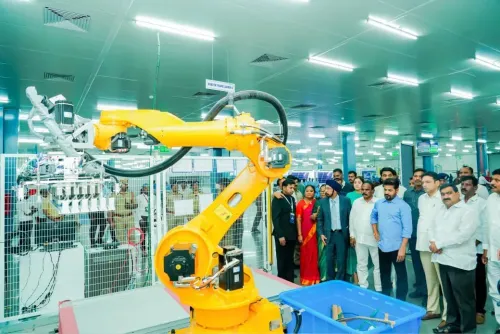
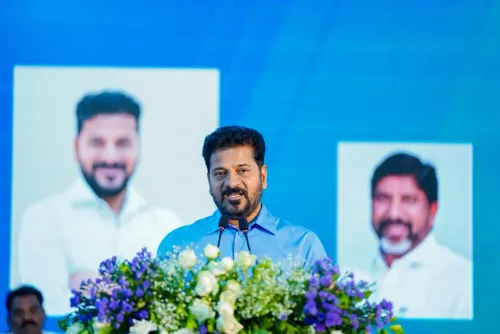
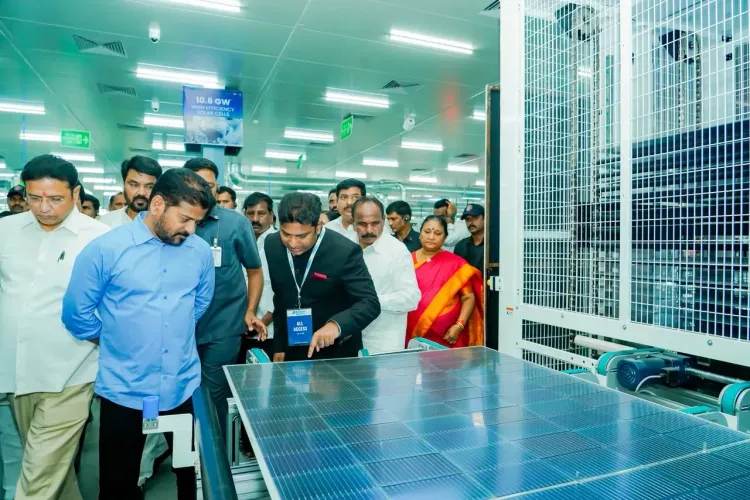
Telangana Chief Minister A. Revanth Reddy on Thursday, 9 July outlined a comprehensive plan to ensure pollution-free and sustainable development in Hyderabad, anchored around a tri-zone spatial framework that will reshape how industries, services, and rural areas coexist across the state. The announcement came at the inauguration of India's next-generation solar module manufacturing facility in Rangareddy district.
The CURE, PURE, and RARE Framework
At the centre of the plan is a 2,100-square-kilometre zone within the Outer Ring Road (ORR), designated as the CURE area, which has been earmarked exclusively for the service sector. All industries currently operating within the ORR will be relocated outside it, the Chief Minister said. The state has further been divided into CURE, PURE, and RARE zones to guide sustainable development across urban, peri-urban, and rural geographies.
Hyderabad as a Counter-Model to Delhi and Bengaluru
Revanth Reddy expressed serious concern over the deteriorating urban quality of life in Indian metros. He pointed to Delhi's worsening air pollution, saying it had rendered the capital 'uninhabitable', and noted that cities like Bengaluru and Chennai are battling severe traffic congestion. The zoning initiative, he indicated, is Hyderabad's bid to avoid replicating those failures — a deliberate attempt to plan ahead rather than retrofit solutions onto a broken urban fabric.
The ₹3 Trillion Economy Target and Investment Push
The Chief Minister reiterated the Telangana government's ambition to build a $3 trillion economy by 2047, while acknowledging that the current pace of investment falls short of what is needed to compete globally. 'We are striving to transform Telangana into the number one state in the country,' he said. He stressed the need to upgrade infrastructure to attract larger and more sustained capital inflows. The government also aims for Telangana to contribute 10 per cent of the national economy, he added.
Skills, Solar, and Rehabilitation
On workforce development, Revanth Reddy listed the establishment of a Skills University and Advanced Training Centres (ATCs) to equip youth with industry-relevant capabilities. At the inauguration itself, he directed the district Collector of Rangareddy to provide housing and construct commercial complexes for families in Sitarampur village who lost their land to make way for the solar manufacturing plant. He also thanked farmers of Rangareddy district for facilitating the project's establishment.
Political Tone and the Road Ahead
Revanth Reddy used the occasion to push back against political criticism, asserting that despite 'numerous political allegations', the Congress government remained focused on development. 'It's not the time for politics. We should do politics only during elections. The Opposition leaders are pained over losing power, but let us work for the development of the state,' he said. The inauguration of the solar facility marks a visible early step in the state's broader clean-energy and pollution-reduction agenda, with the zoning policy expected to guide urban planning decisions in the years ahead.
Point of View
But the devil will be in the enforcement. Relocating industries outside the Outer Ring Road is a policy that previous administrations have also gestured toward without full execution — the question is whether Telangana has the regulatory muscle and land availability to actually move entrenched industrial units. The $3 trillion economy target by 2047 is a headline number that needs a credible investment pipeline behind it; the CM's own admission that current investment flows are 'insufficient' is a rare moment of candour that deserves scrutiny. And while the solar plant inauguration is a tangible win, the rehabilitation promise to Sitarampur farmers — housing plus commercial complexes — will be the real test of whether development here is genuinely inclusive.
NationPress
8 Oct 2026
Frequently Asked Questions
What is the CURE zone announced by Telangana CM Revanth Reddy?
The CURE zone is a 2,100-square-kilometre area within Hyderabad's Outer Ring Road designated exclusively for the service sector, with all industries to be relocated outside it. It is part of a tri-zone framework — CURE, PURE, and RARE — aimed at sustainable and pollution-free development across Telangana.
Why is Telangana shifting industries outside the Outer Ring Road?
The relocation is aimed at reducing pollution in Hyderabad and ensuring the city develops as a service-sector hub. CM Revanth Reddy cited the deteriorating air quality in Delhi and traffic chaos in Bengaluru and Chennai as cautionary examples that Hyderabad must avoid.
What is Telangana's economic target for 2047?
The Telangana government has set a target of building a $3 trillion economy by 2047, with a goal of contributing 10 per cent to India's national economy. The CM acknowledged that the current pace of investment needs to accelerate significantly to meet this ambition.
What rehabilitation has been promised to Sitarampur village farmers?
CM Revanth Reddy directed the Rangareddy district Collector to provide housing and construct commercial complexes to support the livelihoods of families who lost their land in Sitarampur village for the solar module manufacturing plant.
What is the next-generation solar facility inaugurated in Rangareddy?
It is described as India's next-generation solar module manufacturing facility, inaugurated in Rangareddy district on 9 July. The plant was made possible by land contributed by farmers of the district, whom the CM publicly thanked at the event.