CM Revanth Reddy launches Premier Energies 5.6 GW solar unit
Synopsis
Chief Minister Revanth Reddy inaugurated Premier Energies' 5.6 GW solar module plant in Seetharampur, Rangareddy, the first unit in Telangana's new peri-urban manufacturing zone, while pledging to make the entire 2,100 sq km ORR core urban area pollution-free under the Telangana Rising 2047 vision.
Key Takeaways
Premier Energies has launched a 5.6 GW solar module manufacturing unit in Seetharampur, Rangareddy district — the first enterprise in Telangana's new peri-urban manufacturing zone outside the ORR.
The unit was completed in just 12 months , earning public praise from CM Revanth Reddy at the inauguration.
The Telangana government has enacted legislation to relocate industries from the 2,100 sq km ORR core urban area to the outer manufacturing zone, targeting a fully pollution-free core region for 1.35 crore residents .
The Telangana Rising 2047 vision divides the state into CURE, PURE and RARE regional clusters, with a goal of achieving a $1 trillion economy by 2034 .
Premier Energies unveiled the 'OxyTree' — a solar-powered street light with an integrated air-cleaning system — at the event.
The government plans to establish ATCs, polytechnic colleges and a Skills University to train youth for blue-collar industrial jobs in the new manufacturing zone.
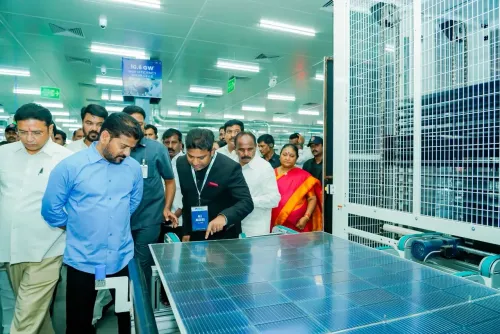
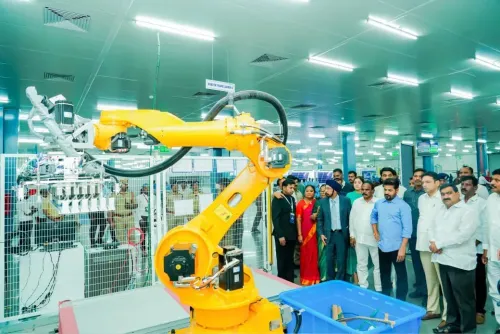
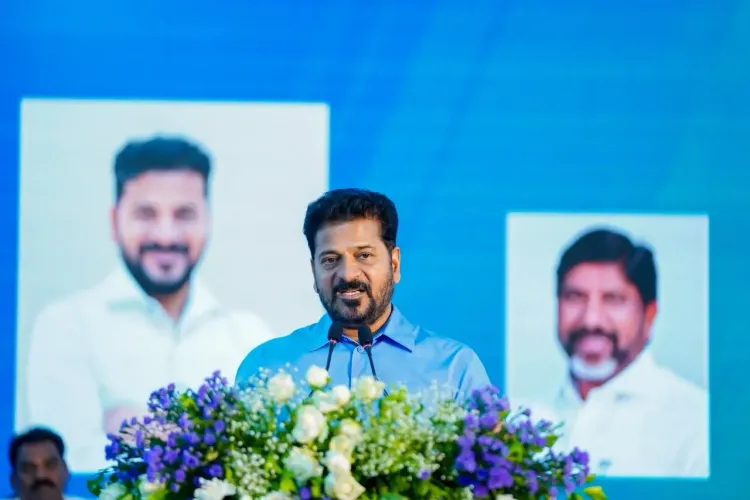
Hyderabad, 9 July 2026 — The Chief Minister's Office of Telangana announced that Chief Minister Revanth Reddy inaugurated a 5.6 gigawatt solar module manufacturing unit set up by Premier Energies in Seetharampur, Rangareddy district, marking the first major facility in the state's newly designated peri-urban manufacturing zone outside the Hyderabad Outer Ring Road (ORR).
Context
Speaking at the inauguration, CM Revanth Reddy said the government has set a firm goal of transforming the entire 2,100 sq km core urban area inside the ORR into a pollution-free zone. He noted that the region is home to 1.35 crore residents whose quality of life is being compromised by industrial emissions, particularly from industrial parks in areas such as Jeedimetla and Balanagar, compounded by pollution in the Musi river.
Quoting the Chief Minister directly: 'aa nagaraala anubhavaala nundi manam paathalu nerchukovalI' ('We must learn lessons from the experiences of those cities'), he cited Delhi, Mumbai, Bengaluru and Chennai as cautionary examples of metropolitan areas now facing severe urban crises because timely decisions were not taken.
Policy Backdrop
The Telangana government has enacted legislation to relocate industries currently operating inside the ORR to a peri-urban manufacturing zone beyond it. Land in the manufacturing zone will be allocated to units that relocate from the core urban area. The Premier Energies facility in Seetharampur is the first enterprise to commence operations in this zone — completing its unit in just 12 months, a fact CM Revanth Reddy publicly praised.
The policy sits within the broader Telangana Rising 2047 vision, which divides the state into three regional clusters — CURE, PURE and RARE — and targets a $1 trillion economy by 2034, with the state aiming to rank among India's top states by 2047, coinciding with the centenary of Independence. This framework mirrors national momentum around solar manufacturing incentives and urban decongestation strategies being pursued across Indian states.
Telangana's solar manufacturing push also aligns with India's Production Linked Incentive (PLI) scheme for solar modules, which has spurred several states to attract large-capacity manufacturing investments to reduce import dependency and meet renewable energy targets.
Stakeholders and Impact
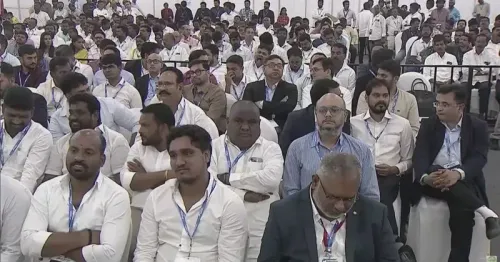
Premier Energies Chairman Surender Pal Singh Saluja and Managing Director Chiranjeev Singh Saluja were present at the inauguration along with Director Sudhir Moola and Executive Director Revathi Rohini. The event was also attended by Council Chief Whip Patnam Mahender Reddy and Kale Yadaiah, as well as government officials and company representatives.
CM Revanth Reddy also highlighted the facility's showcase of the 'OxyTree' — Premier Energies' first solar-powered street light integrated with an air-cleaning system that uses solar energy to pump oxygen — as a direct response to rising urban air pollution. He called on both the government and citizens to share responsibility for environmental protection, warning that destruction of nature leads to severe consequences.
On workforce development, the Chief Minister said the government is focusing on skilling youth for blue-collar jobs given the competitive pressures on white-collar employment, with plans for Advanced Training Centres (ATCs), polytechnic colleges and a Skills University to build an industry-ready workforce.
What's Next
The phased rollout of the peri-urban manufacturing zone will involve land allotments to industries relocating from the ORR core area. The government's stated ambition is to make Hyderabad globally competitive by attracting further investment and industry, with the 2047 centenary of Independence serving as the long-term planning horizon. Establishment of skill institutions and the operationalisation of the CURE-PURE-RARE regional zoning framework will be closely watched as indicators of whether Telangana's urban-industrial restructuring delivers on its pollution-free and economic growth targets.
Point of View
Which has been policy on paper since the ORR legislation was passed. By anchoring the event to the Telangana Rising 2047 vision and invoking the cautionary tales of Delhi and Bengaluru, CM Revanth Reddy is positioning his administration as proactively managing urbanisation rather than reacting to a crisis already in motion. The CURE-PURE-RARE zoning model, if implemented at scale, could offer a replicable template for other fast-growing Indian metros grappling with the tension between industrial growth and liveability. The $1 trillion by 2034 target, however, will require sustained investment attraction well beyond a single solar facility, making the pace of zone development and skill institution rollout the true test of this vision.
NationPress
8 Oct 2026
Frequently Asked Questions
What is the Premier Energies solar plant inaugurated in Telangana?
Premier Energies has set up a 5.6 GW solar module manufacturing unit in Seetharampur, Rangareddy district , inaugurated by CM Revanth Reddy on 9 July 2026 . It is the first unit in Telangana's new peri-urban manufacturing zone outside the Hyderabad Outer Ring Road.
What is Telangana's plan to make Hyderabad pollution-free?
The Telangana government has enacted a law to relocate industries from the 2,100 sq km core urban area inside the ORR to a manufacturing zone in the peri-urban region outside it. The goal is to make the entire ORR interior a pollution-free zone for its 1.35 crore residents .
What is the Telangana Rising 2047 vision?
Telangana Rising 2047 is the state's long-term development vision that divides Telangana into three regional clusters — CURE, PURE and RARE — and targets a $1 trillion economy by 2034 , aiming to position the state among India's top states by the centenary of Independence in 2047.
What is the OxyTree launched by Premier Energies?
The OxyTree is Premier Energies' first solar-powered street light integrated with an air-cleaning system that uses solar energy to actively pump oxygen, designed as a response to rising urban air pollution. It was showcased at the Seetharampur plant inauguration.
How is Telangana planning to create jobs in the new manufacturing zone?
CM Revanth Reddy announced plans to set up Advanced Training Centres (ATCs), polytechnic colleges and a Skills University to train youth for blue-collar industrial jobs in the peri-urban manufacturing zone, recognising the increasing difficulty of securing white-collar employment.