CM Dhami Directs Banks to Boost CD Ratio at 97th SLBC Meet
Synopsis
Uttarakhand CM Pushkar Singh Dhami chaired the 97th SLBC meeting on 9 July 2026, ordering banks to raise the state's credit-deposit ratio, hold loan camps in low-performing districts, and fast-track lending under six key welfare schemes including Mudra, Vishwakarma, and Kisan Credit Card.
Key Takeaways
CM Dhami chaired the 97th SLBC meeting at the Uttarakhand secretariat on 9 July 2026 , focusing on the state's credit-deposit ratio.
Districts with low CD ratios are directed to hold regular loan camps to connect eligible beneficiaries with credit schemes.
Officials were instructed to prioritise lending under six schemes: Mukhyamantri Swarojgar Yojana 2.0 , Veer Chandra Singh Garhwali Swarojgar Yojana , Home-Stay Yojana , PM Vishwakarma Yojana , PM Mudra Yojana , and Kisan Credit Card .
CM Dhami warned that no laxity in public-interest work will be tolerated and demanded full departmental accountability within set timelines.
The push targets youth entrepreneurs, farmers, artisans, and rural households to expand self-employment and economic empowerment.
Quarterly SLBC data on district-wise CD ratios and disbursements will track compliance with the directives.
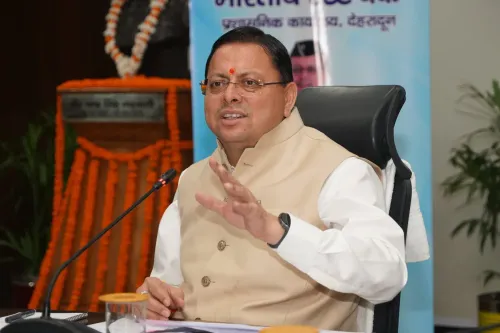
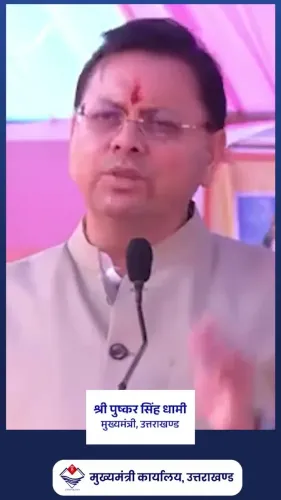
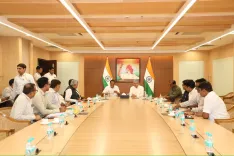
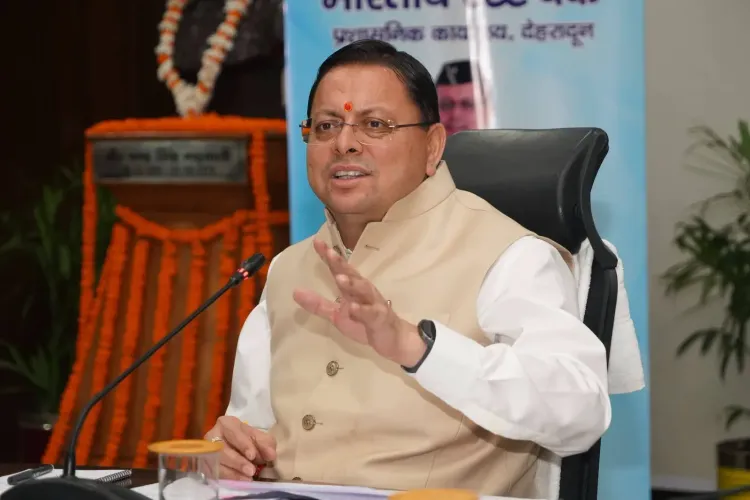
Uttarakhand Chief Minister Pushkar Singh Dhami on Thursday, 9 July 2026, chaired the 97th State Level Bankers Committee (SLBC) meeting at the state secretariat in Dehradun, directing officials to take effective and result-oriented steps to improve the state's credit-deposit (CD) ratio and ensure priority lending under key welfare schemes.
Context
Addressing bankers and departmental officers, CM Dhami instructed that districts with a low credit-deposit ratio must organise regular rin shivir (loan camps) to connect eligible beneficiaries with banking facilities and credit schemes. He made clear that 'janhit se jude karyon mein kisi bhi prakar ki shithilata sweekarya nahin hogi' — 'no laxity in public-interest work will be acceptable.'
Every department and associated institution was directed to work with full accountability and deliver expected results within stipulated timelines. The meeting reviewed district-wise banking penetration and credit flow across the hill state.
Policy Backdrop
Uttarakhand has historically recorded lower CD ratios in its hill districts, a pattern attributed to difficult terrain and limited banking penetration compared with the national average. The SLBC forum serves as the primary coordination mechanism between the state government and scheduled commercial banks to set and review credit targets and priority sector lending.
CM Dhami specifically directed officials to prioritise disbursements under six schemes: the Mukhyamantri Swarojgar Yojana 2.0, the Veer Chandra Singh Garhwali Swarojgar Yojana, the Home-Stay Yojana, the Pradhan Mantri Vishwakarma Yojana (launched in 2023 to support traditional artisans and craftspeople with credit and skill training), the Pradhan Mantri Mudra Yojana (a central scheme launched in 2015 providing loans up to Rs 10 lakh to micro and small enterprises), and the Kisan Credit Card scheme, which provides short-term credit to farmers for cultivation and allied activities.
Successive state administrations have linked self-employment schemes with central credit programmes in an effort to address out-migration and unemployment, a persistent structural challenge in Uttarakhand's hill districts.
Stakeholders and Impact
The directives are aimed at expanding economic opportunity for youth entrepreneurs, farmers, artisans, and rural households across the state, with a stated goal of maximising access to self-employment and economic empowerment. Districts currently underperforming on credit disbursal are expected to be the primary focus of the loan camp initiative.
The emphasis on the Home-Stay Yojana alongside artisan and farmer credit schemes reflects the state's dual push to formalise tourism-linked livelihoods in the mountains while strengthening agricultural and micro-enterprise credit pipelines.
What's Next
Quarterly SLBC data releases tracking district-wise CD ratio changes and loan disbursements under the listed schemes will serve as the primary measure of compliance with the 9 July directives. CM Dhami's explicit accountability warning signals that underperforming districts and departments can expect closer scrutiny at subsequent SLBC reviews.
If the state sustains momentum on credit camp outreach, the initiative could meaningfully reduce the gap between deposit mobilisation and productive lending in Uttarakhand's remote hill blocks — a gap that has long constrained local economic activity and contributed to youth out-migration.
Point of View
The administration is attempting to leverage established credit pipelines rather than build new ones, which is politically efficient ahead of any electoral cycle. The explicit accountability warning and the loan-camp directive signal an escalation in tone, suggesting the government is dissatisfied with the pace of implementation at the district level. Whether this translates into measurable CD ratio improvement will depend on the banking system's capacity to appraise and disburse in remote hill terrain — a structural constraint that administrative directives alone cannot resolve.
NationPress
9 Jul 2026
Frequently Asked Questions
What is the CD ratio and why does it matter for Uttarakhand?
The credit-deposit (CD) ratio measures how much of the money deposited in banks in a region is lent back as credit within that region. For Uttarakhand, a low CD ratio — especially in hill districts — means deposits flow out rather than funding local businesses, farms, and entrepreneurs, limiting economic growth and contributing to out-migration.
What did CM Dhami say at the 97th SLBC meeting?
CM Dhami directed officials to take result-oriented steps to raise the state's CD ratio, organise regular loan camps in low-performing districts, and ensure priority lending under six welfare schemes including PM Mudra Yojana, PM Vishwakarma Yojana, and Kisan Credit Card. He warned that no laxity in public-interest work would be tolerated.
What schemes were highlighted for priority lending at the SLBC meeting?
The six schemes highlighted were Mukhyamantri Swarojgar Yojana 2.0, Veer Chandra Singh Garhwali Swarojgar Yojana, Home-Stay Yojana, Pradhan Mantri Vishwakarma Yojana, Pradhan Mantri Mudra Yojana, and Kisan Credit Card.
What is the Pradhan Mantri Vishwakarma Yojana?
PM Vishwakarma Yojana is a central government scheme launched in 2023 that provides traditional artisans and craftspeople with access to credit and skill development training, aimed at formalising and strengthening India's artisan economy.
What are loan camps and how will they help in Uttarakhand?
Loan camps are organised outreach events where bank officials and government representatives visit underserved areas to identify eligible beneficiaries, process applications, and disburse credit on-site. In Uttarakhand's hill districts, where banking access is limited by terrain, such camps are a key tool for improving credit penetration.