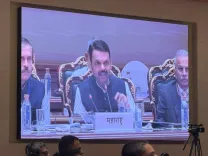
Shekhawat leads 'Bharat Mata Ki Jai' chants on Australian soil

Synopsis
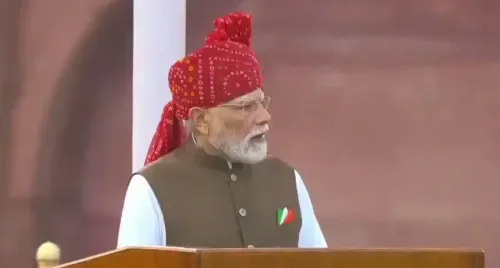
Union Culture and Tourism Minister Gajendra Singh Shekhawat joined the Indian diaspora in Australia on 9 July 2026, leading chants of 'Bharat Mata Ki Jai' and 'Vande Mataram', underscoring India's cultural diplomacy and people-to-people outreach in one of its fastest-growing diaspora hubs.
Key Takeaways
Gajendra Singh Shekhawat , Union Minister of Culture and Tourism, participated in a diaspora event in Australia on 9 July 2026 .
The minister led chants of 'Bharat Mata Ki Jai' and 'Vande Mataram' , capturing the moment on video shared via X .
Australia hosts one of the fastest-growing Indian-origin communities outside the Gulf, making it a key node for India's diaspora outreach.
The engagement aligns with India's long-standing cultural diplomacy framework, anchored by institutions such as the Indian Council for Cultural Relations (ICCR) , founded in 1950 .
Follow-up announcements on joint cultural programmes or tourism initiatives from the visit are anticipated.
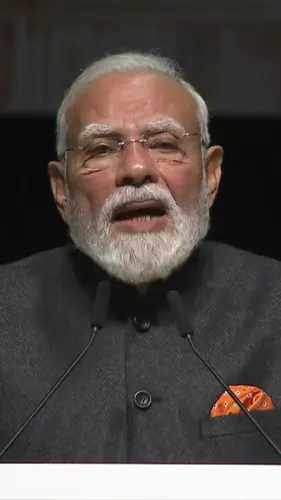
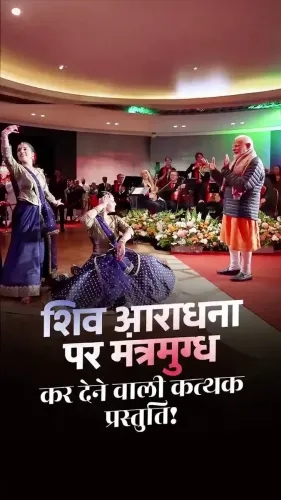
Union Culture and Tourism Minister Gajendra Singh Shekhawat joined the Indian diaspora in Australia on Thursday, 9 July 2026, leading resounding chants of Bharat Mata Ki Jai (Victory to Mother India) and Vande Mataram (I bow to thee, Mother) during what the minister described as an emotionally charged gathering on Australian soil.
Context
Shekhawat shared a video on X capturing the moment, writing: 'Australiya ki dharti par goonja... Bharat Mata Ki Jai aur Vande Mataram ka jaighosh!' — 'On the soil of Australia... the resounding cheer of Bharat Mata Ki Jai and Vande Mataram rang out!' The post, accompanied by the Indian tricolour emoji, reflected the high emotion of an overseas diaspora gathering rallying around national identity.
The minister's presence in Australia forms part of a broader diplomatic and cultural outreach that Indian ministers have increasingly undertaken to engage the country's rapidly growing diaspora communities abroad. Australia is home to one of the fastest-growing Indian-origin populations outside the Gulf region.
Policy Backdrop
India's cultural diplomacy has long relied on institutional frameworks such as the Indian Council for Cultural Relations (ICCR), established in 1950, which has organised India Festivals and cultural events in Australia and across the world. The Ministry of Culture and Tourism has consistently positioned cultural heritage — including national symbols, slogans, and performing arts — as a key instrument of international engagement.
Such engagements align with the government's broader strategy of leveraging people-to-people ties to deepen bilateral relationships. India and Australia are strategic partners in the Indo-Pacific, with expanding cooperation in education, trade, and defence complementing the cultural dimension.
Stakeholders and Impact
The Indian diaspora in Australia — numbering in the hundreds of thousands and concentrated in cities such as Melbourne and Sydney — represents a significant constituency for both governments. Ministerial visits that include community gatherings serve dual purposes: reinforcing the emotional bond between overseas Indians and their homeland, and signalling to the host country the depth of people-to-people ties.
For Shekhawat, who holds the culture and tourism portfolio, such engagements also carry a promotional dimension — showcasing India as a destination and a living civilisation to diaspora members who often serve as informal ambassadors for Indian tourism and culture.
What's Next
Observers will watch for any formal announcements emerging from Shekhawat's Australia visit — including potential joint cultural programmes, tourism partnership frameworks, or ICCR-led initiatives targeting the Indian-Australian community. The minister's engagement is expected to feed into the broader India-Australia bilateral calendar, which has seen intensified activity across multiple sectors in recent years.
Point of View
Diaspora engagement has evolved from a peripheral activity into a strategic priority, with cabinet ministers now routinely doubling as cultural envoys. The choice of 'Bharat Mata Ki Jai' and 'Vande Mataram' — slogans with deep ideological resonance for the ruling party — also carries a domestic signal: that India's cultural identity travels confidently onto foreign soil. Whether this visit translates into concrete bilateral cultural or tourism deliverables will determine its lasting policy weight.
NationPress
9 Oct 2026
Frequently Asked Questions
Why did Gajendra Singh Shekhawat visit Australia in July 2026?
Shekhawat visited Australia as part of cultural and diaspora outreach, participating in a community event where he led chants of 'Bharat Mata Ki Jai' and 'Vande Mataram' on 9 July 2026. Specific event details have not been officially announced beyond the minister's post on X.
What is India's cultural diplomacy strategy in Australia?
India engages the Australian diaspora through institutions like the Indian Council for Cultural Relations (ICCR), which organises cultural festivals and events abroad. Ministerial visits complement this by strengthening people-to-people ties and promoting India as a cultural and tourism destination.
How large is the Indian diaspora in Australia?
Australia hosts one of the fastest-growing Indian-origin communities outside the Gulf, with significant populations in cities like Melbourne and Sydney. This community plays a key role in India-Australia bilateral relations across education, trade, and cultural exchange.
What does 'Bharat Mata Ki Jai' mean?
'Bharat Mata Ki Jai' translates to 'Victory to Mother India' and is one of India's most widely used patriotic slogans. 'Vande Mataram', meaning 'I bow to thee, Mother', is drawn from a 19th-century Bengali poem and serves as India's national song.
What bilateral ties exist between India and Australia?
India and Australia are strategic partners in the Indo-Pacific with growing cooperation in defence, education, trade, and cultural exchange. The relationship has deepened significantly in recent years, with cultural diplomacy forming an important people-to-people pillar.