Shekhawat on Akashvani: 12 Years of Trust, Development, Culture
Synopsis
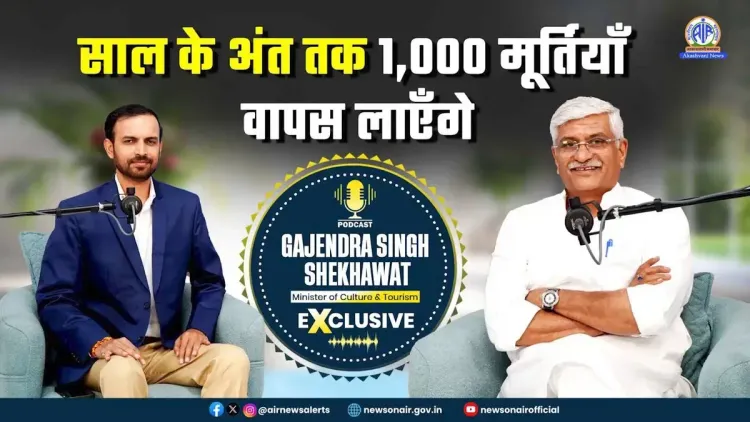
Union Culture and Tourism Minister Gajendra Singh Shekhawat appeared on Akashvani on 12 June 2026 for a special interview linking 12 years of NDA governance with India's cultural heritage and the national song Vande Mataram, continuing the BJP's established pattern of ministerial outreach via public broadcasters.
Key Takeaways
Gajendra Singh Shekhawat gave a special interview on Akashvani on 12 June 2026 .
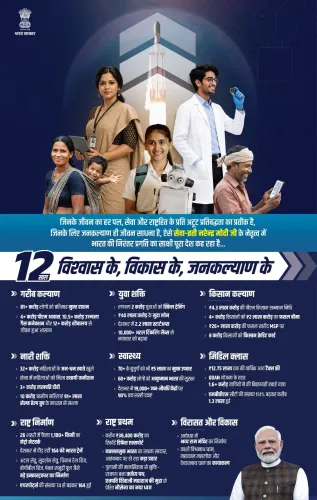
The interview was titled '12 saal vishwas ke, vikas ke, jan-kalyan ke' — '12 years of trust, development, and public welfare.' Themes covered included Vande Mataram and India's broader cultural heritage.
The interview continues the NDA government 's pattern since 2014 of pairing development messaging with cultural nationalism on public broadcasters.
Akashvani , under Prasar Bharati , provides reach to rural and semi-urban audiences beyond digital platforms.
Further ministerial appearances on public broadcasters are expected as the 2026-27 cultural calendar progresses.
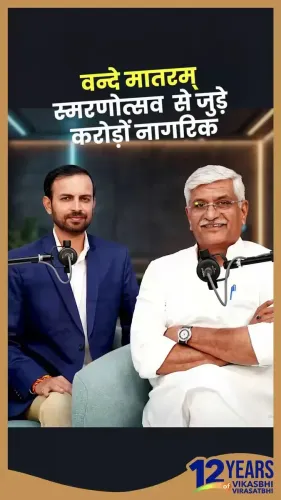
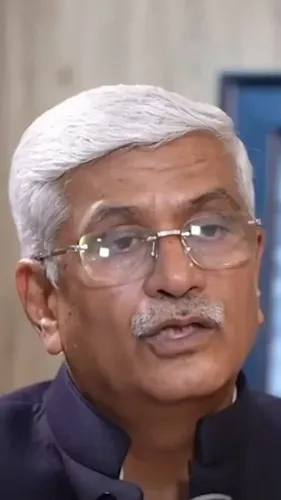
Union Culture and Tourism Minister Gajendra Singh Shekhawat gave a special interview on Akashvani, India's national public radio broadcaster, on Friday, 12 June 2026, reflecting on twelve years of the NDA government under Prime Minister Narendra Modi through the lens of cultural heritage, Vande Mataram, and national development.
Context
The interview, titled '12 saal vishwas ke, vikas ke, jan-kalyan ke' ('12 years of trust, development, and public welfare'), was shared by Shekhawat on his official X account alongside a video. The conversation centred on Vande Mataram — India's national song — and the country's broader cultural legacy, framing governance milestones within a patriotic and civilisational narrative.
Akashvani, operating under Prasar Bharati, has long served as the government's preferred platform for ministerial outreach to audiences beyond urban digital ecosystems, including rural and semi-urban India.
Policy Backdrop
Since 2014, the NDA government has consistently woven cultural promotion into its governance messaging. Flagship initiatives such as Ek Bharat Shreshtha Bharat have sought to highlight India's heritage alongside development indices, making culture a pillar of the administration's public communication strategy.
The Ministry of Culture and Tourism under Shekhawat has continued this pattern, using public broadcasters to connect the '12 years of development' narrative with symbols of cultural nationalism — a framing repeated across multiple ministries since the 2014 general election.
Stakeholders and Impact
Akashvani reaches tens of millions of radio listeners across India, particularly in regions with limited internet penetration, making it a high-reach channel for ministerial messaging. Cultural organisations, heritage bodies, and civic groups invested in India's intangible heritage are the secondary audience for such programming.
By anchoring the interview around Vande Mataram — a song with deep roots in India's independence movement — Shekhawat invoked a symbol that transcends political boundaries while simultaneously reinforcing the government's cultural-nationalist positioning ahead of what is expected to be an active cultural calendar in 2026-27.
What's Next
The interview is likely to be followed by further appearances on Akashvani and Doordarshan by ministers in the culture and tourism portfolio as the government approaches key milestones in the current fiscal year. Observers will watch for whether themes raised in this interview — heritage preservation, cultural identity, and public welfare — surface in upcoming budget allocations or policy announcements from the Ministry of Culture and Tourism.
The broader pattern suggests that cultural messaging through public broadcasters will remain a core tool of the government's outreach strategy, with Shekhawat positioned as one of its more prominent voices on the airwaves.
Point of View
Shekhawat signals that the culture ministry sees symbolic patriotism as inseparable from policy communication. The choice of Akashvani over digital-first platforms is deliberate, targeting a demographic that national television and social media often miss. As the government crosses the 12-year mark, such interviews serve as both retrospective branding and groundwork for the next electoral cycle.
NationPress
19 Sept 2026
Frequently Asked Questions
What did Gajendra Singh Shekhawat say on Akashvani?
Shekhawat gave a special interview on Akashvani on 12 June 2026 discussing 12 years of NDA governance, focusing on trust, development, public welfare, Vande Mataram, and India's cultural heritage.
What is the significance of Vande Mataram in this interview?
Vande Mataram is India's national song and a powerful symbol of patriotic and cultural identity. Its invocation in the interview reflects the government's framing of its 12-year tenure through the lens of cultural nationalism.
What is Akashvani and why is it used for ministerial interviews?
Akashvani is India's national public radio broadcaster under Prasar Bharati. It reaches tens of millions of listeners, especially in rural and semi-urban areas, making it a high-reach channel for government outreach beyond digital platforms.
What is Ek Bharat Shreshtha Bharat?
Ek Bharat Shreshtha Bharat is a flagship government initiative launched after 2014 to promote India's cultural unity and heritage, often cited alongside development programmes in the NDA's governance narrative.
What is Gajendra Singh Shekhawat's current role?
Gajendra Singh Shekhawat is the Union Minister of Culture and Tourism, a senior BJP leader, and a Lok Sabha MP representing Jodhpur, Rajasthan.