CM Sawant Announces ID Cards for Goa Fishermen With 15-Yr Domicile
Synopsis
Goa Chief Minister Pramod Sawant announced on National Fish Farmers Day that identity cards will be issued to fishermen with 15 years of domicile in the state, prioritising local communities in the traditional fishing sector and signalling a formal eligibility framework for welfare access.
Key Takeaways
Goa CM Pramod Sawant announced identity cards for fishermen with a minimum 15 years of domicile in the state.
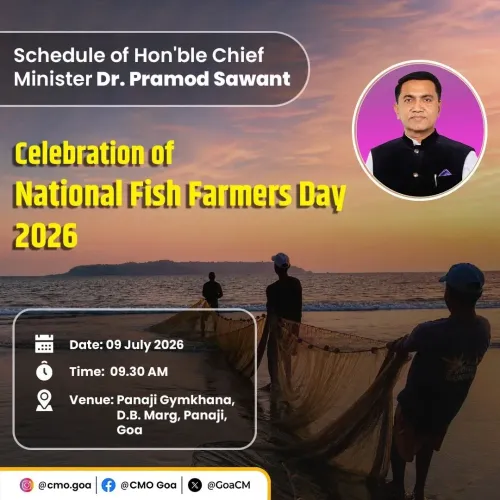
The announcement was made on 9 July 2026 , on the eve of National Fish Farmers Day observed on 10 July .
The scheme is aimed at protecting the livelihoods and identity of Goa's traditional fishing communities.
The 15-year domicile threshold would exclude more recent migrants from eligibility under the proposed framework.
The scheme may be integrated with the central government's Pradhan Mantri Matsya Sampada Yojana , launched in 2020 .
Operational details including verification processes and distribution timelines are yet to be formally notified.
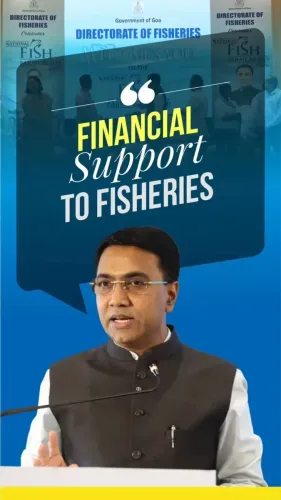
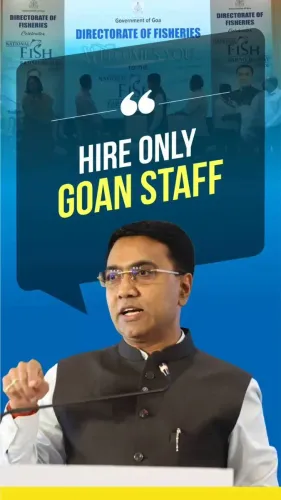
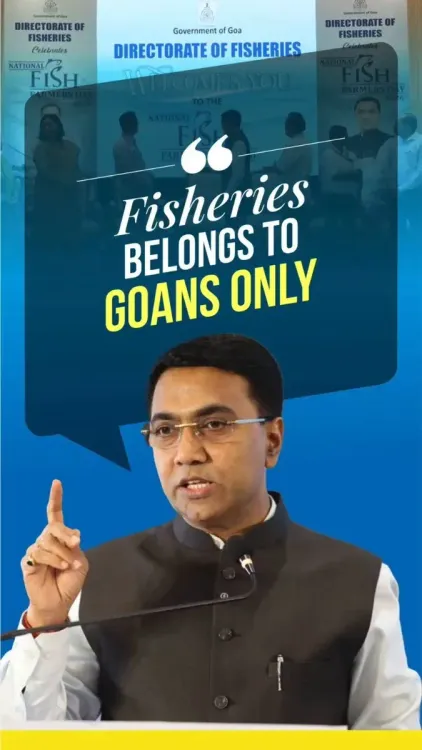
Goa Chief Minister Pramod Sawant on Thursday, 9 July 2026, announced that identity cards will be issued exclusively to fishermen with a minimum 15 years of domicile in Goa, framing the move as a measure to protect the livelihoods and identity of the state's traditional fishing communities.
Context
Posting on the occasion of National Fish Farmers Day — observed annually on 10 July to recognise the contributions of fish farmers and fishing communities across India — CM Sawant declared that 'the traditional fishing sector in Goa belongs to Goans.' The announcement signals a formal domicile-based eligibility framework for fishermen seeking state recognition and, by extension, access to associated welfare benefits.
The identity card system is intended to distinguish long-settled local fishermen from more recent migrants engaged in the same sector, a distinction the state government appears to be codifying for the first time through a structured documentation mechanism.
Policy Backdrop
The move sits within a broader national framework for fisheries development. The Government of India launched the Pradhan Mantri Matsya Sampada Yojana (PMMSY) in 2020 to strengthen fisheries infrastructure, improve livelihoods, and promote sustainable practices across coastal and inland states. Goa's domicile-based identity card scheme could potentially be integrated with central-level beneficiary databases under such programmes.
Several Indian coastal states have previously applied domicile or residency criteria in fisheries and related employment sectors to balance the economic interests of long-term residents against pressures from internal migration. Goa's proposed 15-year domicile threshold is among the more specific eligibility benchmarks adopted in this space.
Stakeholders and Impact
The primary beneficiaries of the scheme are Goa's traditional fishing communities — families whose livelihoods have historically depended on the state's coastal and inland waters. For these communities, formal identity documentation can unlock access to subsidies, insurance, disaster relief, and other government welfare provisions tied to occupational registration.
The announcement also has implications for fishermen who have migrated to Goa from other states but have not yet completed 15 years of residence. These individuals would not qualify under the proposed criteria, reflecting the government's stated priority of protecting local identity in a resource-dependent sector.
What's Next
The operational details of the scheme — including the verification process for the 15-year domicile requirement, the card distribution timeline, and any linkage with central fisheries welfare programmes — are yet to be formally notified. State assembly discussions or official government orders will clarify how eligibility will be assessed and enforced.
Observers will also watch whether the scheme is extended to cover allied activities such as fish processing and trade, and how it interacts with existing occupational registrations held by fishermen under national schemes. The announcement marks a significant policy signal ahead of what is expected to be a more detailed rollout by the Goa state government in the coming months.
Point of View
Particularly as internal migration reshapes occupational demographics. For CM Sawant, the move serves a dual purpose: it reinforces a 'sons of the soil' identity narrative ahead of future electoral cycles while also creating a structured beneficiary database that can be leveraged under central welfare schemes. The 15-year domicile bar is notably stringent and will test the state's administrative capacity to verify claims at scale. How the government handles disputes and edge cases in eligibility will determine whether this becomes a durable welfare instrument or a politically contentious one.
NationPress
9 Jul 2026
Frequently Asked Questions
What did Goa CM Pramod Sawant announce for fishermen?
Goa Chief Minister Pramod Sawant announced that identity cards will be issued to fishermen who have lived in Goa for at least 15 years, with the aim of protecting local livelihoods in the traditional fishing sector.
What is the 15-year domicile rule for Goa fishermen?
Under the proposed scheme, only fishermen who can demonstrate a minimum of 15 years of residency in Goa will be eligible to receive the state-issued identity card, which is intended to prioritise long-settled local communities over more recent migrants.
When was the Goa fishermen identity card scheme announced?
The scheme was announced by CM Pramod Sawant on 9 July 2026, on the occasion of National Fish Farmers Day, observed annually on 10 July.
What is National Fish Farmers Day in India?
National Fish Farmers Day is an annual observance held on 10 July across India to recognise the contributions of fish farmers and fishing communities and to highlight developments in the fisheries sector.
How does Goa's fishermen ID card scheme relate to central government programmes?
The scheme could potentially be integrated with the Pradhan Mantri Matsya Sampada Yojana, the central government's flagship fisheries development programme launched in 2020, which supports livelihoods and infrastructure across India's fishing communities.