Shekhawat Hails 'Modi! Modi!' Chants in Melbourne

Synopsis
Union Culture and Tourism Minister Gajendra Singh Shekhawat posted a video on 9 July 2026 capturing Melbourne's Indian diaspora chanting 'Modi! Modi!' during PM Narendra Modi's Australia visit, highlighting the diaspora's role in India's soft-power and people-to-people diplomacy.
Key Takeaways
Union Minister Gajendra Singh Shekhawat posted on X on 9 July 2026 capturing diaspora chants of 'Modi!
Modi!' in Melbourne, Australia .
The post accompanied a video, suggesting a large-scale Indian community reception for PM Narendra Modi during an official Australia visit.
India and Australia have maintained a Comprehensive Strategic Partnership since June 2020 , with diaspora engagement as a core pillar.
Large community receptions for PM Modi in Australia trace back to his November 2014 Sydney visit, establishing a recurring soft-power template.
The Ministry of Culture and Tourism's amplification of the event signals intent to link diaspora outreach with tourism and cultural exchange goals.
Any formal bilateral announcements on cultural or tourism cooperation emerging from the visit will be closely watched.
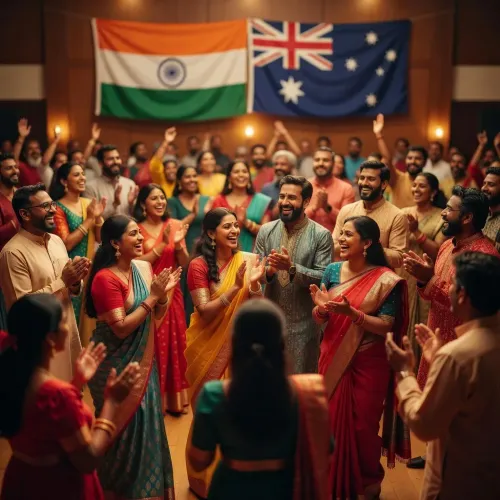
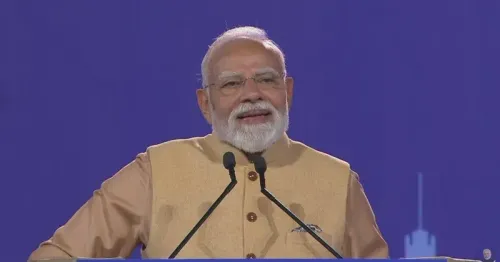
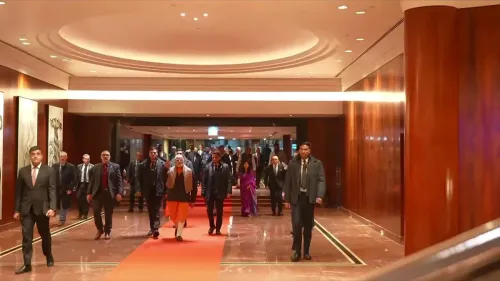
Union Culture and Tourism Minister Gajendra Singh Shekhawat on Thursday, 9 July 2026 shared a charged message on X capturing the mood at a diaspora gathering in Melbourne, Australia, where chants of 'Modi! Modi!' rang out among Indian-origin attendees welcoming Prime Minister Narendra Modi.
Context
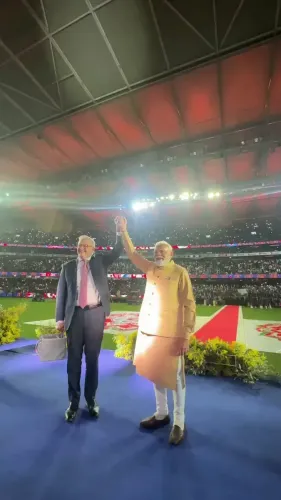
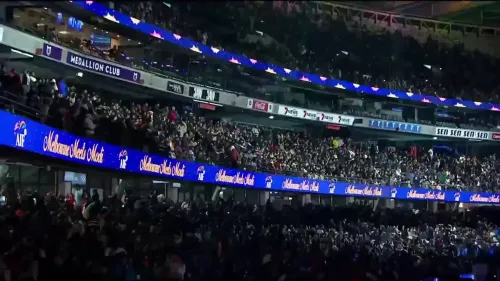
Shekhawat's post — 'Melbourne bola – Modi! Modi!' (Melbourne said – Modi! Modi!) — was brief but pointed, reflecting the energy at what appears to be a community reception for the Prime Minister during an official visit to Australia. The post accompanied a video, underscoring the scale of the crowd response. Such diaspora moments have become a signature feature of Modi's overseas visits, with large Indian-origin communities turning out in force to greet the Prime Minister.
The Indian diaspora in Melbourne is among the most prominent in the southern hemisphere, making the city a natural focal point for community outreach during high-level Indian government visits to Australia.
Policy Backdrop
India and Australia elevated their bilateral relationship to a Comprehensive Strategic Partnership in June 2020, covering defence, trade, technology and people-to-people links. That framework has since deepened, with diaspora engagement serving as a visible pillar of the relationship alongside formal diplomatic and economic cooperation.
The pattern of large community receptions for Prime Minister Modi dates to his first official Australia visit in November 2014, when he addressed thousands of Indian-origin residents in Sydney. Melbourne gatherings have since become part of the same playbook, blending soft-power projection with diaspora mobilisation.
Stakeholders and Impact
For the Ministry of Culture and Tourism, such high-profile diaspora moments carry strategic weight beyond optics. The Indian diaspora in Australia is a key driver of inbound tourism to India — visiting family, attending festivals, and increasingly investing in cultural tourism. Shekhawat's decision to amplify the Melbourne moment from his official handle signals the ministry's intent to link diaspora pride with the broader 'Dekho Apna Desh' and cultural outreach agenda.
For Indian-Australians, the reception reflects a community that has grown in political and economic visibility, with Australia home to one of the fastest-growing Indian-origin populations among developed nations. The enthusiasm on display in Melbourne points to strong community identification with India's current foreign policy posture.
What's Next
Attention will now turn to the formal outcomes of the India-Australia engagement, including any joint announcements on cultural exchanges, tourism facilitation, or strategic cooperation. The Ministry of Culture and Tourism is expected to follow up diaspora outreach visits with structured programming — from cultural festivals to bilateral tourism compacts — that translate community goodwill into tangible people-to-people initiatives. Any joint leaders' statement or new institutional mechanism emerging from the visit will be closely watched by both governments and the diaspora community alike.
Point of View
Lending the moment an air of organic enthusiasm while ensuring the BJP's cultural and tourism portfolio is visibly associated with Modi's diplomatic triumph abroad. The post fits a well-established pattern in which cabinet ministers amplify diaspora receptions to reinforce the narrative of a globally celebrated Prime Minister. For the Culture and Tourism Ministry specifically, piggybacking on a high-decibel diaspora moment is a low-cost way to project India's soft-power credentials and keep the ministry's mandate — people-to-people links, cultural pride, inbound tourism — in the public eye. The Melbourne chants, framed this way, become as much a tourism-promotion asset as a political one.
NationPress
9 Oct 2026
Frequently Asked Questions
Why did Melbourne Indians chant 'Modi! Modi!'?
The chants appear to have erupted at an Indian diaspora community reception in Melbourne during an official visit by Prime Minister Narendra Modi to Australia in July 2026, reflecting strong community support for the Prime Minister among Indian-origin Australians.
What did Gajendra Singh Shekhawat post about Melbourne?
Union Culture and Tourism Minister Gajendra Singh Shekhawat posted on X on 9 July 2026 with the message 'Melbourne bola – Modi! Modi!' (Melbourne said – Modi! Modi!), sharing a video of the diaspora reception.
How large is the Indian diaspora in Melbourne?
Melbourne is home to one of Australia's largest Indian-origin communities, which has grown rapidly in recent years and is among the most prominent Indian diaspora populations in the southern hemisphere.
What is India's relationship with Australia?
India and Australia share a Comprehensive Strategic Partnership established in June 2020, covering defence, trade, technology, and people-to-people ties, making Australia one of India's key strategic partners in the Indo-Pacific.
Has PM Modi visited Australia before?
Yes. PM Modi made his first official visit to Australia in November 2014, addressing a large Indian community gathering in Sydney. Large diaspora receptions have since become a feature of his Australia engagements.