CM Dhami: Development Must Reach Last Person on Hills
Synopsis
Chief Minister Pushkar Singh Dhami has reaffirmed that his government's core belief is that development must extend beyond cities to the last person at the farthest edge of Uttarakhand's mountains — a statement rooted in the state's founding rationale and its ongoing battle against hill out-migration.
Key Takeaways
CM Pushkar Singh Dhami stated on 16 June 2026 that development must reach the last person at the farthest edge of the mountains, not remain confined to cities.
Uttarakhand was created in 2000 specifically to address the neglect of hill communities by the earlier Uttar Pradesh administration.
The Dhami government has since 2021 framed its governance around the Antyodaya principle of prioritising the most marginalised.
Out-migration from hill districts remains one of the most acute social and political challenges facing the state.
Border and high-altitude districts such as Pithoragarh, Chamoli , and Uttarkashi are the primary focus of hill-equity commitments.
Upcoming state budget allocations and assembly sessions will be the key test of whether this philosophy translates into funded programmes.
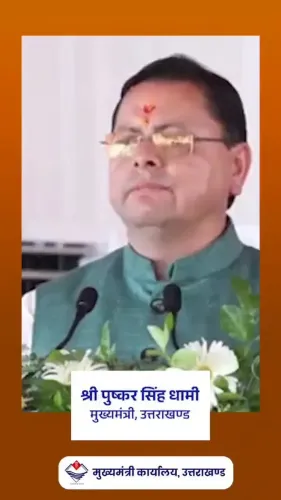
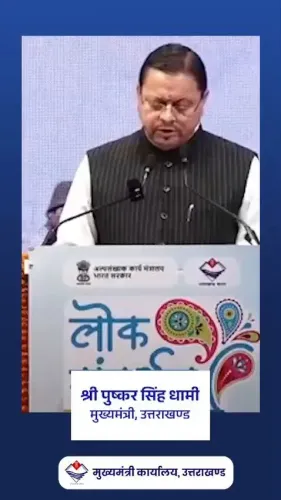
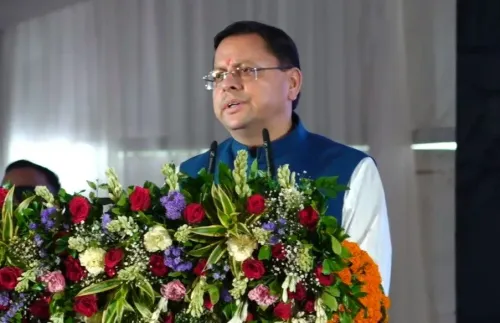
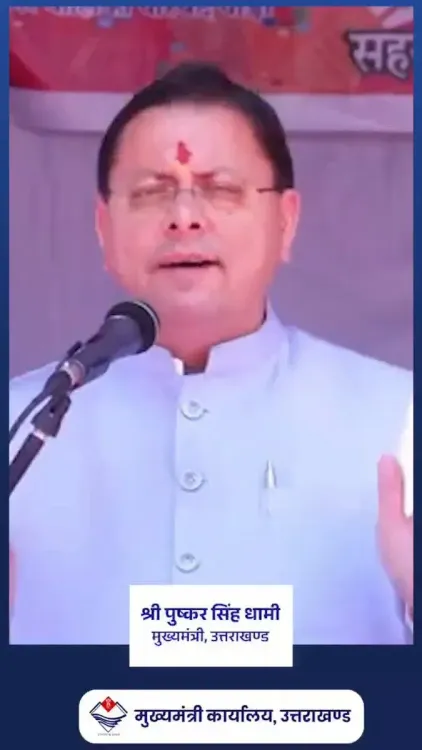
The Chief Minister's Office of Uttarakhand on Tuesday, 16 June 2026, shared a statement by Chief Minister Pushkar Singh Dhami reaffirming that development must not remain confined to cities but must reach the last person standing at the farthest edge of the mountains.
Context
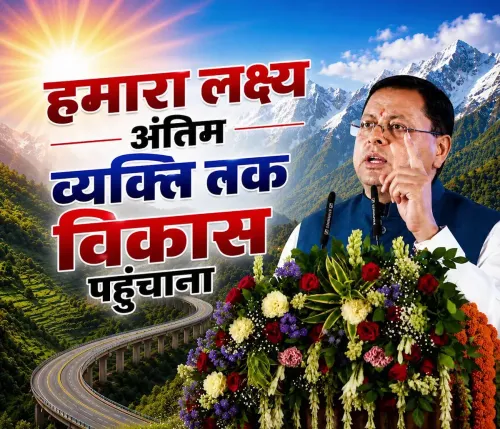
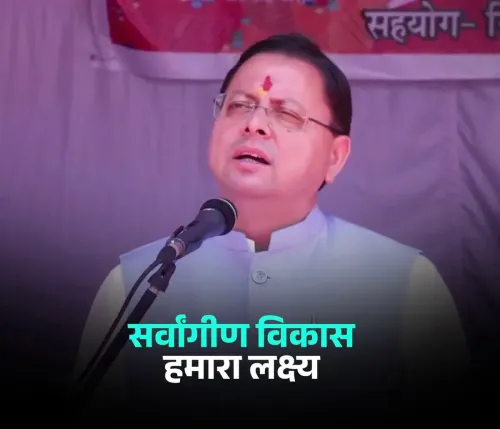
Speaking in Hindi, CM Dhami stated: 'विकास केवल शहरों तक सीमित नहीं रहना चाहिए बल्कि पहाड़ के अंतिम छोर पर खड़े व्यक्ति तक पहुंचना चाहिए' — 'Development should not remain limited to cities alone but must reach the person standing at the last edge of the mountains.' The remark encapsulates the governing philosophy of his administration toward equitable growth across Uttarakhand's varied terrain.
The statement was shared with a video, indicating it was drawn from a public address or official event. No specific scheme or budget figure was announced alongside the remark, but it signals a continued political and administrative priority for the Dhami government.
Policy Backdrop
Uttarakhand was carved out of Uttar Pradesh in November 2000 precisely because hill communities felt their development needs were being systematically overlooked. The founding argument for statehood was that a dedicated hill administration would be better placed to channel resources to remote, high-altitude villages that had long remained underserved.
Since taking office in 2021, CM Dhami has repeatedly framed governance through the lens of the Antyodaya principle — prioritising the most marginalised in resource allocation. His administration has announced measures aimed at checking the persistent out-migration from hill districts by improving local infrastructure, road connectivity, and livelihood opportunities in interior areas.
Stakeholders and Impact
The communities most directly addressed by this commitment are the rural and semi-urban residents of Uttarakhand's higher-altitude districts — areas such as Pithoragarh, Chamoli, Uttarkashi, and Rudraprayag — where access to basic services and economic opportunity has historically lagged behind the state's plains districts of Haridwar and Udham Singh Nagar.
Out-migration from the hills remains one of the most politically and socially sensitive issues in Uttarakhand. Hundreds of villages in the higher reaches have seen dramatic population decline over recent decades, leaving behind ageing populations and underutilised agricultural land. Any policy that credibly addresses this trend carries both developmental and electoral significance for the ruling government.
The broader pattern mirrors approaches adopted by governments in other Himalayan states — Himachal Pradesh, Sikkim, and Arunachal Pradesh — where extending roads, power supply, digital connectivity, and welfare delivery to the farthest villages is treated as both an equity imperative and a strategy to retain population.
What's Next
The key test for this stated commitment will be visible in upcoming state budget allocations and the pace of rollout for hill-focused connectivity and livelihood projects, particularly in border districts. Observers will watch whether the current assembly session or forthcoming policy announcements translate this governing philosophy into specific, measurable programmes with dedicated funding.
For Uttarakhand, bridging the plains-hills development gap is not merely a welfare question — it is foundational to the state's original rationale for existence. How effectively the Dhami administration converts this principle into on-ground delivery will shape both the state's development trajectory and its political landscape ahead of the next assembly cycle.
Point of View
' he is consciously aligning his administration with the Antyodaya framework championed at the national level, lending ideological coherence to what might otherwise appear as routine governance. The real analytical weight will fall on whether hill-focused budget lines and connectivity projects in the next assembly session back up the rhetoric. In a state where out-migration has hollowed out entire villages, the gap between stated intent and on-ground delivery is both a governance challenge and an electoral liability.
NationPress
16 Sept 2026
Frequently Asked Questions
What did CM Pushkar Singh Dhami say about development in Uttarakhand?
CM Dhami stated that his government firmly believes development should not remain limited to cities but must reach the last person standing at the farthest edge of the mountains in Uttarakhand.
Why is hill development such a major issue in Uttarakhand?
Uttarakhand was created in 2000 specifically because hill communities felt neglected under Uttar Pradesh. Persistent out-migration, poor connectivity, and limited economic opportunity in high-altitude districts make hill development the state's defining governance challenge.
What is the Antyodaya principle and how does it relate to Uttarakhand?
Antyodaya is a policy principle focused on uplifting the most marginalised sections of society first. The Dhami government has framed its hill-development agenda around this principle, prioritising remote villages and border districts in resource allocation.
Which districts in Uttarakhand are most affected by out-migration?
High-altitude districts such as Pithoragarh, Chamoli, Uttarkashi, and Rudraprayag have seen significant population decline due to out-migration, as residents move to plains areas or other states in search of better opportunities.
What should we watch for after CM Dhami's statement on hill development?
The key indicators to watch are state budget allocations for hill connectivity and livelihood schemes, new announcements in upcoming assembly sessions, and the pace of infrastructure rollout in border and interior districts of Uttarakhand.