CM Sai Opens Audit Pakhwada 2026 in Raipur
Synopsis
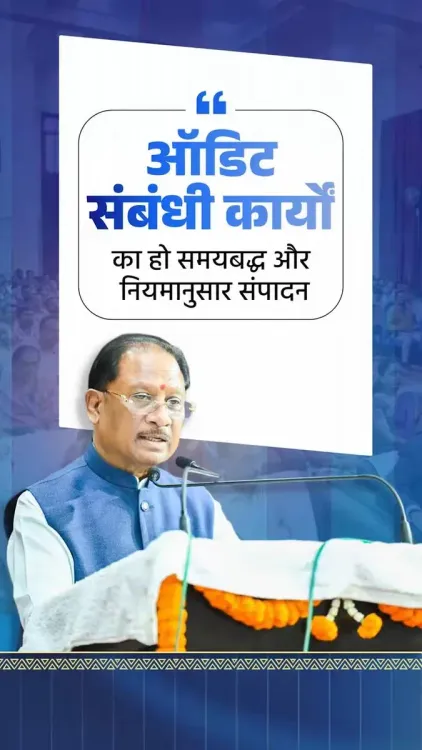
Chief Minister Vishnu Deo Sai inaugurated Audit Pakhwada 2026 in Raipur on 19 November, calling audit observations a 'reform opportunity' and directing departments to ensure timely fund delivery, utilisation certificates, bank reconciliation, and action on CAG and PAC recommendations.
Key Takeaways
CM Vishnu Deo Sai inaugurated Audit Pakhwada 2026 at the Accountant General Residential Complex, Raipur, on 19 November 2026 .
He directed departments to ensure scheme funds reach beneficiaries on time and that utilisation certificates are submitted promptly.
Idle funds in departmental bank accounts must be reconciled and put to proper use, the CM said.
Time-bound action on CAG audit reports and Public Accounts Committee recommendations was specifically mandated.
The event aligns with the BJP government's declared 'Sushasan' (good governance) agenda since taking office in December 2023 .
Compliance reports tabled in the state assembly after the fortnight will be the key test of whether the initiative delivers results.
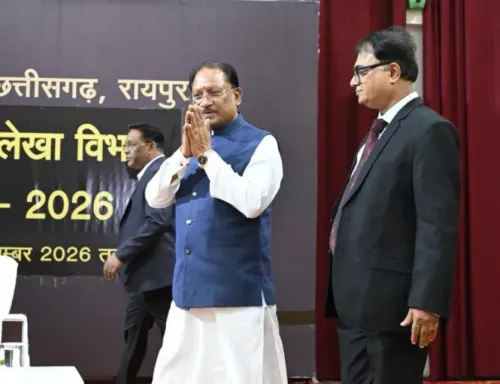
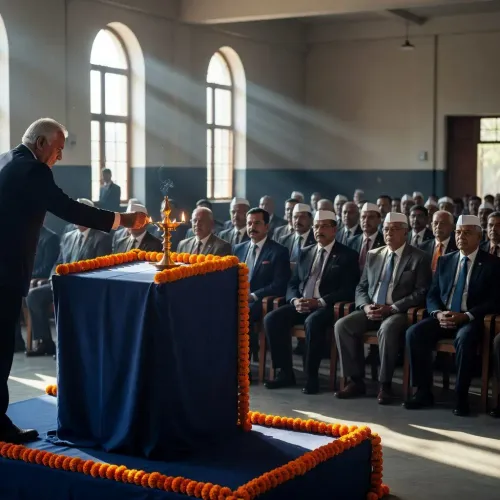
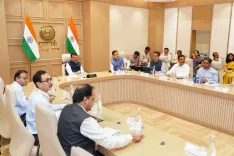
When a Chief Minister calls audit observations not a burden but a 'reform opportunity', it signals something deliberate about how a government wants to be seen — and held to account. Chief Minister Vishnu Deo Sai made exactly that case on Thursday, 19 November 2026, inaugurating Audit Pakhwada 2026 at the Community Hall, Accountant General Residential Complex, Raipur, calling on every state department to treat the fortnight as a moment of genuine administrative reckoning.
What CM Sai told departments at the inauguration
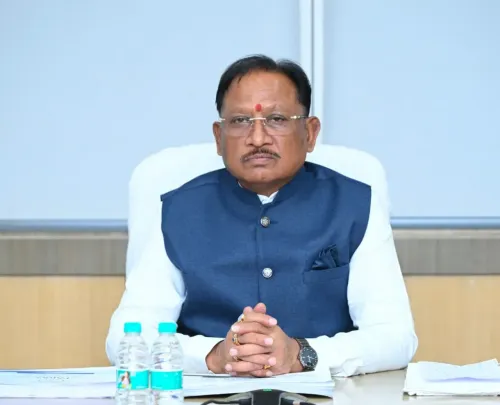
Speaking at the ceremony, CM Sai laid out four specific obligations for state departments: ensuring that scheme funds reach beneficiaries on time; submitting utilisation certificates punctually; reconciling and properly utilising money sitting idle in bank accounts; and taking time-bound action on CAG audit reports and the recommendations of the Public Accounts Committee.
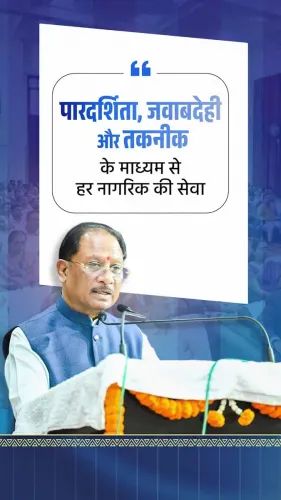
'Accounts and audit observations are an opportunity for improvement in governance,' he said — 'lekha evam lekha pariksha ki tippaniyan shasan ke liye sudhar ka avsar hain' — a framing that positions scrutiny as a governance tool rather than an adversarial check.
Audit Pakhwada and Chhattisgarh's accountability push
Audit Pakhwada is a state-level fortnight coordinated with the office of the Accountant General to drive compliance on outstanding audit findings. The format is used by Indian states to close the gap between what the Comptroller and Auditor General of India (CAG) flags and what departments actually act upon — a gap that has historically slowed the flow of welfare money to intended beneficiaries.
Chhattisgarh has conducted annual CAG audits since the state's formation in 2000. Since the BJP government took office in December 2023, 'Sushasan' — good governance — has been a declared governing theme, and events like this fortnight sit squarely within that frame. The hashtag #SushasanSarkar and #ViksitChhattisgarh attached to the post signal the government's intent to publicly brand its accountability machinery.
Why bank reconciliation and utilisation certificates matter
Two of the four directives CM Sai issued — reconciling idle bank balances and filing utilisation certificates on time — point to a persistent weak spot in state welfare delivery. When departments receive central or state scheme funds and park them in accounts without utilising or reporting them, it distorts both the state's fiscal picture and the actual reach of schemes to the poor. The CAG regularly flags such lapses across Indian states; Chhattisgarh is treating the Pakhwada as a structured two-week window to address the backlog.
The Public Accounts Committee, a legislative body that scrutinises CAG reports, adds another layer of accountability — its recommendations carry parliamentary weight and departments are formally required to respond. CM Sai's explicit mention of PAC recommendations suggests the government wants that loop closed faster.
The next measure of whether the Pakhwada moves beyond ceremony will come in the Chhattisgarh Assembly, when pending CAG reports come up for discussion and departments are expected to table compliance reports — the real audit of the audit.
Point of View
CM Sai is making a deliberate political choice — positioning his government as one that welcomes scrutiny rather than resists it. The specific emphasis on utilisation certificates and bank reconciliation targets two of the most chronic weak spots in India's welfare delivery pipeline, suggesting the speech is operationally grounded, not merely rhetorical. The branding — '#SushasanSarkar', '#ViksitChhattisgarh' — also points to a broader communications strategy ahead of future electoral cycles, linking governance metrics to political identity. Whether the Audit Pakhwada produces measurable compliance improvements or remains a symbolic exercise will be tested when the state assembly takes up the next round of CAG reports.
NationPress
19 Nov 2026
Frequently Asked Questions
What is Audit Pakhwada in Chhattisgarh?
Audit Pakhwada is a state-level fortnight organised in coordination with the Accountant General's office to improve government department compliance with audit observations and CAG findings. In 2026, it was inaugurated by Chief Minister Vishnu Deo Sai in Raipur on 19 November.
What did CM Vishnu Deo Sai say at Audit Pakhwada 2026?
CM Sai said audit and accounts observations are an opportunity for governance reform, and directed departments to deliver scheme funds to beneficiaries on time, file utilisation certificates promptly, reconcile idle bank balances, and take time-bound action on CAG reports and Public Accounts Committee recommendations.
What is the role of CAG in Chhattisgarh?
The Comptroller and Auditor General of India (CAG) is a constitutional body that audits the accounts of state governments including Chhattisgarh and submits reports to the state legislature. These reports are then scrutinised by the Public Accounts Committee.
Why is utilisation certificate compliance important for welfare schemes?
Utilisation certificates confirm that scheme funds have been spent for their intended purpose. When departments fail to submit them on time, it delays further fund releases and distorts the government's fiscal picture, often preventing welfare money from reaching its intended beneficiaries.
What is the Sushasan Sarkar initiative in Chhattisgarh?
'Sushasan Sarkar' — meaning Good Governance Government — is a declared priority of the Chhattisgarh BJP government that came to power in December 2023 under Chief Minister Vishnu Deo Sai, emphasising financial accountability, scheme delivery, and administrative transparency.