CM Fadnavis Targets 34.8 Lakh Water Structures by May 2027
Synopsis
Chief Minister Devendra Fadnavis on 19 November 2026 set a target of 34.8 lakh groundwater recharge structures by May 2027, launched Jal Yukt Shivar 3.0 across 18,000 villages, and sought special central drought funds as El Niño pushes 90% of Maharashtra into drought.
Key Takeaways
34,83,940 groundwater recharge structures to be built across Maharashtra by May 2027 under the central Jalasanchay Janbhagidari campaign.
Jal Yukt Shivar 3.0 selects 18,000 villages , converging PMKSY, MGNREGA, and state funds for watershed work.
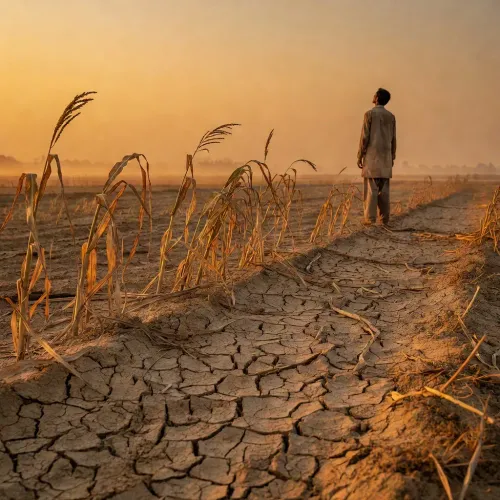
CM Fadnavis says 90% of Maharashtra is drought-affected due to El Niño, with crop damage and rising drinking water demand.
Maharashtra has formally requested special financial assistance from the Centre beyond existing norms for drought-linked water conservation work.
Jal Jeevan Mission fund utilisation is below target; Fadnavis has set a 50% expenditure milestone by December 2026 .
District Collectors will coordinate all departments locally; Chief Secretary-level reviews will track progress regularly.
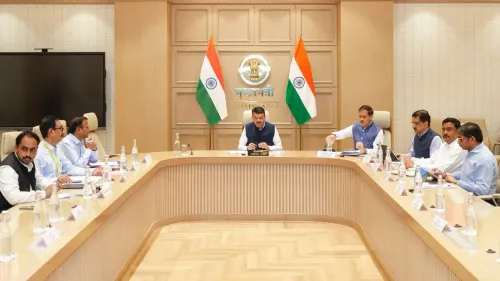
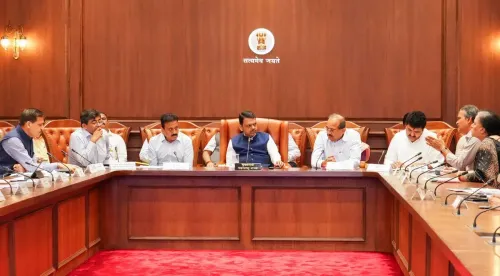
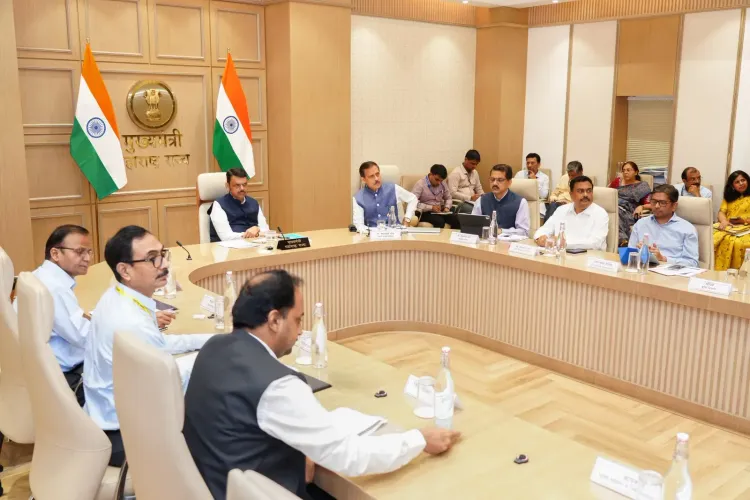
With 90 percent of Maharashtra reeling under drought conditions linked to El Niño, Chief Minister Devendra Fadnavis chaired a high-level review meeting in Mumbai on 19 November 2026 and announced an aggressive, convergence-driven water conservation push — turning the state's most acute water crisis in years into a blueprint for long-term groundwater security.
A drought-crisis meeting that set hard numbers
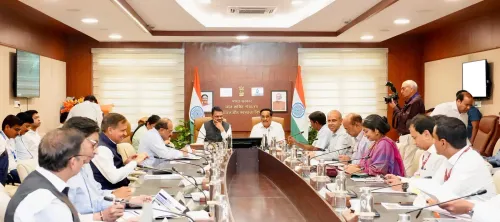
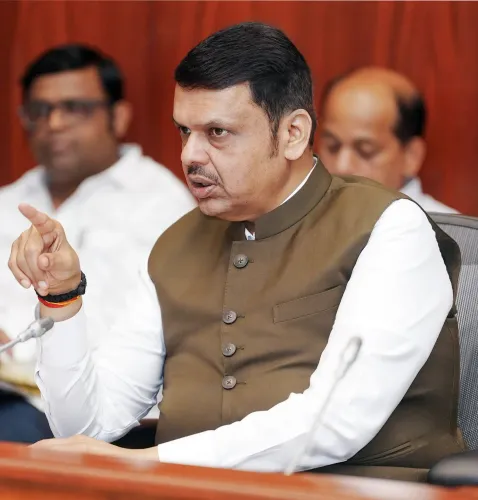
The review, chaired online by Union Minister C.R. Patil with CM Fadnavis as the principal presence, assessed progress under the Jalasanchay Janbhagidari: Catch the Rain 2026 (CTR) campaign. Fadnavis did not mince words: El Niño has pushed Maharashtra to the brink, with crops damaged at scale and drinking water demand set to climb sharply in the months ahead. 'We must convert this crisis into an opportunity,' he said, directing all departments to work in coordinated, target-bound mode.
The centrepiece target is formidable — 34,83,940 groundwater recharge structures to be built across the state by May 2027 under the Centre's Jalasanchay Janbhagidari Abhiyan. Every raindrop that can be sunk into the soil counts. That is the operational logic, and it is now a government mandate, not an aspiration.
Jal Yukt Shivar 3.0 — 18,000 villages, one convergence play
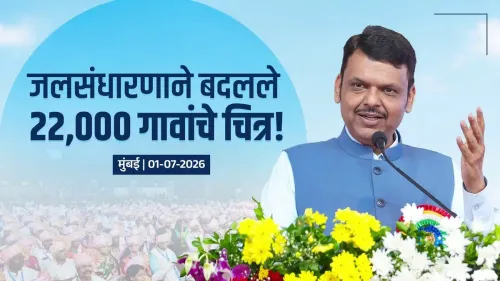
Maharashtra's flagship watershed scheme, Jal Yukt Shivar, first launched in 2015-16, now enters its third phase. 18,000 villages have been selected for Jal Yukt Shivar 3.0, and the state is explicitly threading it through multiple funding streams — Pradhan Mantri Krishi Sinchayee Yojana (PMKSY), MGNREGA, and other central and state programmes — to maximise on-ground impact without duplicating effort.
The approach is scientific: systematic planning, geospatial mapping, and monitored implementation. Responsibilities have been assigned department by department. Rural Development, Forest, Public Works, Urban Development, Agriculture, and Water Supply departments each carry defined accountability. District Collectors will coordinate all departments at the district level, with the Chief Secretary and Additional Chief Secretary conducting regular reviews at the state level.
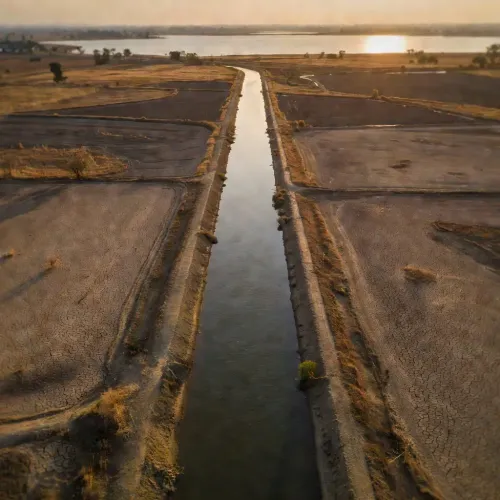
Specific work streams include revival of defunct water storage structures and lakes, farm ponds, recharge pits, forest check-dams and forest ponds through the Forest Department, and rooftop rainwater harvesting on private homes and government buildings through the Public Works and Urban Development departments. Rivers of 50 kilometres or more that flow only during the monsoon and run dry otherwise are also being targeted for revival.
Special central funds demanded, Jal Jeevan Mission prodded
Fadnavis formally requested special financial assistance from the Central Government — beyond existing norms — to fund repair of existing water conservation structures, lake revival, farm ponds, and recharge pit construction, citing the severity of the drought situation. 'The Centre must go beyond standard criteria to support the state,' he said.
On Jal Jeevan Mission, the picture is sobering: fund utilisation is running below expectations. Fadnavis set a clear interim goal — push expenditure to 50 percent by December 2026. He called for a dedicated joint meeting of Central and State officials to map state-specific obstacles, noting that one-size-fits-all solutions cannot address the structural differences between states.
People's movement — the political and community bet
Maharashtra's water conservation track record rests heavily on public participation. Fadnavis pointed to earlier successes — Jal Yukt Shivar and the Water Cup competition — that generated massive village-level engagement. The same energy is now being channelled into the Jalasanchay campaign, with state-level water conservation awards and inter-village competitions planned to stoke positive rivalry. Elected representatives' local development funds will also be mobilised for this purpose.
Union Minister of State Dr. Rajbhushan Choudhary also participated in the meeting online alongside senior officials. The state's message to every department is unambiguous: the May 2027 deadline is a commitment, not a projection.
When drought and deadline meet in the same sentence, Maharashtra is betting that science, convergence, and community pressure can tip the scales — before the next monsoon decides whether the gamble paid off.
Point of View
Deadlines, and accountability chains that previous phases of Jal Yukt Shivar lacked. The simultaneous pressure on Jal Jeevan Mission utilisation signals Fadnavis nudging New Delhi for both more money and more flexibility, a posture that blends cooperative federalism with quiet fiscal assertion. If the 34.8 lakh structure target is met by May 2027, it would constitute one of the largest single-state groundwater recharge drives in Indian history, potentially reframing Maharashtra's drought politics ahead of the next electoral cycle. The convergence of MGNREGA, PMKSY, and state schemes is a tested playbook — but this time, geospatial mapping and collector-led coordination add an institutional backbone that earlier iterations of community water drives often lacked.
NationPress
19 Nov 2026
Frequently Asked Questions
What is Jal Yukt Shivar 3.0 in Maharashtra?
Jal Yukt Shivar 3.0 is the third phase of Maharashtra's flagship watershed development scheme, targeting 18,000 villages for water conservation work. It converges funding from PMKSY, MGNREGA, and other state schemes, with scientific planning and geospatial mapping for groundwater recharge.
How many water recharge structures is Maharashtra planning to build by 2027?
Maharashtra has set a target of 34,83,940 groundwater recharge structures to be completed by May 2027 under the Centre's Jalasanchay Janbhagidari campaign.
What is the Catch the Rain 2026 campaign?
'Catch the Rain 2026' ( Jalasanchay Janbhagidari: CTR ) is an annual central government water conservation campaign focused on promoting rainwater harvesting infrastructure. Maharashtra's review meeting on 19 November 2026 assessed state-level progress under this campaign.
Why is Maharashtra facing a water crisis in 2026?
CM Devendra Fadnavis stated that the El Niño weather phenomenon has caused a severe drought across Maharashtra, affecting approximately 90% of the state's area , damaging crops, and threatening drinking water availability in the near term.
What is the status of Jal Jeevan Mission fund use in Maharashtra?
Fund utilisation under Jal Jeevan Mission in Maharashtra is currently below expectations. CM Fadnavis has directed that expenditure must reach 50% by December 2026 and called for a special joint Central-State meeting to resolve state-specific implementation obstacles.