Odisha CM Office releases ₹20.50 cr ahead of possible cyclone
Synopsis
Odisha's Chief Minister's Office pre-released ₹20.50 crore to district administrations on 19 November 2026 to fund emergency rescue, food, and drinking water operations ahead of a possible Bay of Bengal cyclone, putting people's safety as the top priority.
Key Takeaways
₹20.50 crore released in advance to Odisha district administrations on 19 November 2026 .
Funds are earmarked for emergency assistance, food, drinking water, and other essential services ahead of a possible cyclone.
Pre-positioning of funds at district level is designed to eliminate bureaucratic delays once a cyclone makes landfall.
Odisha built this rapid-response framework after the devastating 1999 Super Cyclone that killed nearly 10,000 people.
The Bay of Bengal post-monsoon season (October–November) is historically the peak period for cyclone formation threatening Odisha's 480-km coastline .
The specific weather system has not been named; India Meteorological Department track updates will determine how districts deploy funds.
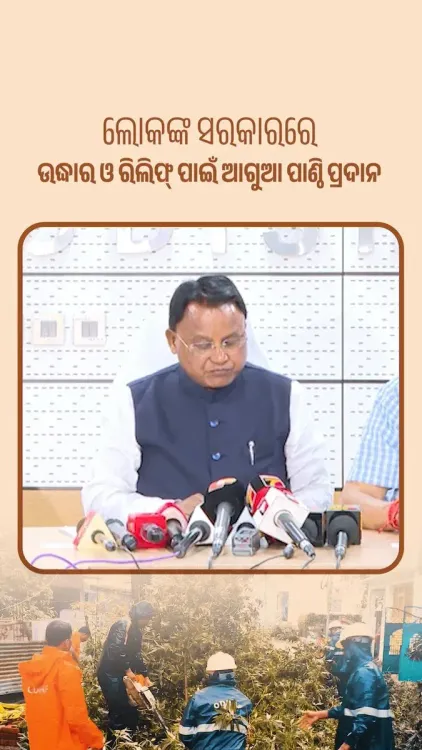
Before the storm even makes landfall, Odisha is already moving money. The Chief Minister's Office of Odisha announced on Thursday, 19 November 2026 that an advance fund of ₹20.50 crore has been released to district administrations to ensure swift rescue and relief operations in response to a possible cyclone threatening the state's coastline.
The post, shared in both Odia and English, states that the funds will facilitate 'timely delivery of emergency assistance, food, drinking water and other essential services, with the safety of people remaining the highest priority.' Pre-positioning cash at the district level — rather than waiting for disaster to strike and then processing reimbursements — is a deliberate design choice meant to cut bureaucratic lag when every hour counts.
Why Odisha moves first and asks questions later
Odisha's hair-trigger disaster response posture was forged in tragedy. The catastrophic 1999 Super Cyclone killed nearly 10,000 people and left millions homeless, exposing the state's near-total unpreparedness. In the years that followed, successive governments built the Odisha State Disaster Management Authority, erected thousands of cyclone shelters along the coast, and embedded early-warning protocols into district administration. The result: a state that now routinely draws praise as a global model for community-based disaster risk reduction.
Pre-releasing funds is a cornerstone of that model. Rather than districts scrambling for approvals mid-crisis, the money sits in accounts ready to pay for emergency transport, dry rations, water purification and temporary shelter the moment the system intensifies. Coastal communities across the Bay of Bengal littoral — historically the most exposed — are the direct beneficiaries of this institutional muscle memory.
What ₹20.50 crore buys on the ground
At the district level, the advance release covers a predictable emergency toolkit: bulk procurement of packaged food and oral rehydration supplies, deployment of boats and rescue teams, fuel for generators at cyclone shelters, and logistics for moving vulnerable populations inland. The India Meteorological Department's track updates will determine which districts draw down their allocations first, but having the funds already in place means no district has to wait for Bhubaneswar's sign-off when the wind picks up.
The Bay of Bengal is statistically one of the most cyclone-prone basins on earth, and November sits squarely in the post-monsoon peak season. Odisha's coastline — stretching roughly 480 kilometres — faces the full fetch of Bay systems that can intensify rapidly before making landfall.
Eyes on the IMD forecast and central support
The CMO's post does not name the specific weather system, and formation details remain unconfirmed at this stage. What to watch next: India Meteorological Department bulletins on the system's track and intensification category, and whether Odisha formally requests additional central assistance under the National Disaster Response Fund. If the storm strengthens, this ₹20.50 crore advance will likely be the first tranche of a larger mobilisation.
Odisha has repeatedly proven that preparation is cheaper than recovery. This fund release is that philosophy made liquid — and it signals the state machinery is already on war footing.
Point of View
Spend fast, and let district officials act without waiting for crisis-stage approvals — a playbook refined over two decades since the 1999 Super Cyclone. The move also reflects a broader national trend of treating disaster preparedness as a governance metric, not an afterthought. Politically, proactive fund releases allow the government to demonstrate administrative seriousness before images of destruction dominate the news cycle. The real test, however, will be in utilisation tracking — whether the advance reaches frontline responders efficiently, or whether procedural bottlenecks dilute the head-start.
NationPress
19 Nov 2026
Frequently Asked Questions
How much money has Odisha released for cyclone relief in November 2026?
The Odisha government has released an advance fund of ₹20.50 crore to district administrations to ensure swift rescue and relief operations ahead of a possible cyclone.
What will the ₹20.50 crore cyclone fund be used for in Odisha?
The funds are earmarked for emergency assistance, food, drinking water, rescue team deployment, and other essential services to protect people in cyclone-affected areas.
Why does Odisha release disaster funds before a cyclone hits?
Odisha pre-positions funds at the district level so local administrations can act immediately without waiting for state-level approvals — a protocol built after the catastrophic 1999 Super Cyclone that killed nearly 10,000 people.
Which cyclone is threatening Odisha in November 2026?
The Chief Minister's Office referred to a 'possible cyclone' but did not name the specific weather system. India Meteorological Department updates on the system's track and intensity are being watched closely.
What is the Odisha State Disaster Management Authority?
The Odisha State Disaster Management Authority was established after the 1999 Super Cyclone to coordinate disaster preparedness, early warnings, cyclone shelter management, and rapid response across the state's coastal and inland districts.