CM Dhami Stresses Balanced Development Across Uttarakhand Constituencies
Synopsis
Uttarakhand CM Pushkar Singh Dhami declared that his government's goal goes beyond expanding infrastructure to delivering positive, balanced development across all 70 assembly constituencies, speaking at an event attended by MLA Savita Kapoor, Mayor Saurabh Thapliyal, and BJP City President Siddharth Aggarwal.
Key Takeaways
CM Pushkar Singh Dhami stated the government's aim is 'positive change in the lives of common people' alongside infrastructure expansion.
He emphasised balanced development across every assembly constituency — all 70 seats — not just select urban or accessible areas.
MLA Savita Kapoor , Mayor Saurabh Thapliyal , and BJP City President Siddharth Aggarwal were present at the event.
The statement reflects a continuing policy thrust by the BJP state government since Dhami took office in 2021 .
Uttarakhand's hill-plains geography makes constituency-level equity a persistent governance challenge the speech directly addresses.
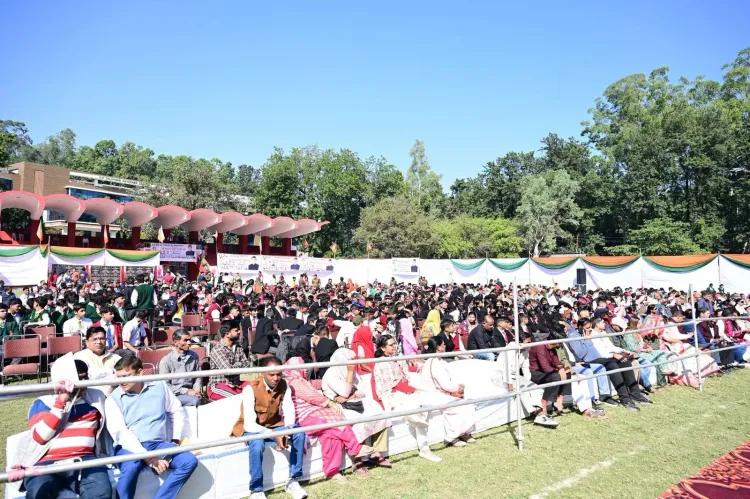
Balanced growth for every assembly seat — not just bigger roads or taller buildings — is the governing philosophy Uttarakhand Chief Minister Pushkar Singh Dhami put on record at a public event on Thursday, 19 November 2026, underscoring his government's stated commitment to ensuring ordinary citizens feel tangible change in their daily lives.
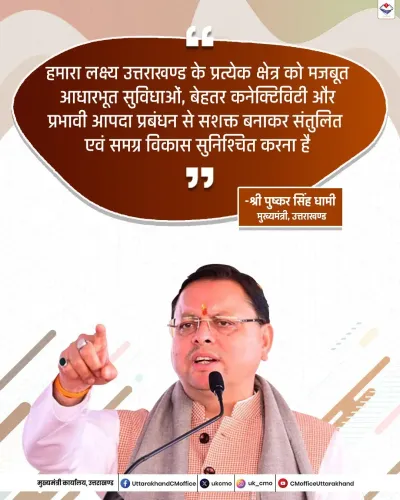
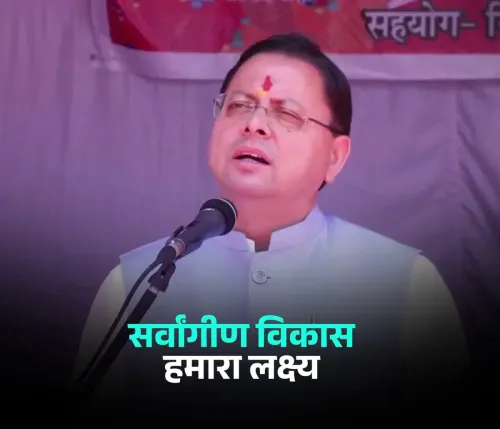
Addressing the gathering, CM Dhami said — 'हमारा लक्ष्य केवल आधारभूत ढांचे का विस्तार करना नहीं, बल्कि प्रत्येक विधानसभा का संतुलित विकास सुनिश्चित करते हुए जनसामान्य के जीवन में सकारात्मक परिवर्तन लाना है' — 'Our goal is not merely to expand infrastructure, but to bring positive change in the lives of common people while ensuring balanced development of every assembly constituency.'
Who Was in the Room
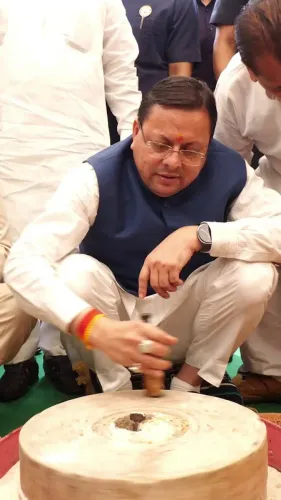
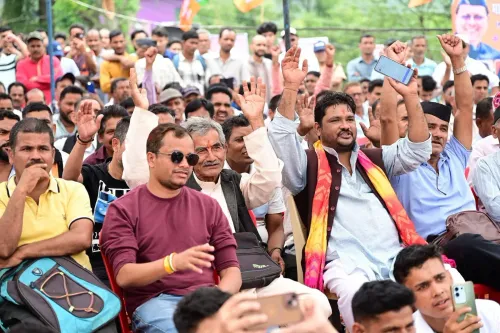
The event drew a cross-section of local governance figures. MLA Smt. Savita Kapoor, Mayor Shri Saurabh Thapliyal, and BJP City President Shri Siddharth Aggarwal were among the dignitaries present, signalling coordinated alignment between the state government, local body administration, and party organisation on the development agenda.
The 70-Seat Balancing Act
Uttarakhand's legislature comprises 70 assembly constituencies spread across the hill districts of Garhwal and Kumaon as well as the terai plains — a geography that has historically made uniform development a persistent challenge. Hill areas often lag in road connectivity, healthcare access, and economic opportunity compared to the more accessible plains. Dhami's framing of 'balanced development across every constituency' directly addresses this long-standing disparity, positioning the BJP state government's approach as one that refuses to let geography determine who gets development and who does not.
Since assuming office in 2021, Dhami has repeatedly linked constituency-level infrastructure investment to the broader goal of reversing out-migration from Uttarakhand's hills — a demographic crisis that hollows out villages and strains the state's social fabric. The presence of an MLA, a Mayor, and a city party chief at a single event points to the kind of multi-tier coordination that makes local delivery possible — or visibly accountable when it falls short.
What the Language Signals
The Chief Minister's choice of words — 'jansaamanya ke jeevan mein sakaratmak parivartan' (positive change in common people's lives) — is deliberate. It moves the conversation from inputs (how much money was spent, how many roads were built) to outcomes (did the person in a remote constituency feel anything change). That is a higher bar, and announcing it publicly sets a standard the government will now be measured against in upcoming state assembly sessions and eventual elections.
Point of View
The Chief Minister is both setting a governing benchmark and countering any perception that BJP-ruled Uttarakhand privileges urban or plains constituencies. The multi-tier attendance of an MLA, Mayor, and party city chief at a single event reflects a deliberate effort to signal vertical coordination across governance layers. Whether project implementation matches the rhetoric will be the real test, one the opposition and voters in hill districts will watch closely.
NationPress
19 Nov 2026
Frequently Asked Questions
What did CM Pushkar Singh Dhami say about development in Uttarakhand?
CM Dhami stated that the government's goal is not just expanding infrastructure but ensuring balanced development across every assembly constituency and bringing positive change in ordinary people's daily lives.
How many assembly constituencies does Uttarakhand have?
Uttarakhand has 70 assembly constituencies , spread across the Garhwal and Kumaon hill divisions as well as the terai plains.
Who attended the event with CM Dhami on 19 November 2026?
MLA Savita Kapoor , Mayor Saurabh Thapliyal , and BJP City President Siddharth Aggarwal were among the dignitaries present alongside CM Dhami.
When did Pushkar Singh Dhami become Chief Minister of Uttarakhand?
Pushkar Singh Dhami first assumed office as Chief Minister of Uttarakhand in 2021 and has led the state's BJP government since.
What is the main governance challenge for development in Uttarakhand?
Uttarakhand's varied geography — remote hill districts versus accessible plains — has historically created uneven development, making balanced growth across all constituencies a persistent challenge for successive governments.