Is Balochistan Facing a Crisis Similar to Bangladesh?
Click to start listening
Synopsis
As unrest escalates in Balochistan, fears mount that the region may mirror the tragic path of Bangladesh before its independence. With echoes of political violence, state repression, and a struggle for cultural identity, this report sheds light on the alarming parallels and the ongoing crisis facing Balochistan in 2025.
Key Takeaways
- Balochistan is experiencing a severe crisis marked by violence and repression.
- The region faces alarming parallels to Bangladesh before its independence.
- Internet blackouts contribute to a lack of accountability for human rights abuses.
- Religious minorities are under constant threat in the province.
- The Pakistani government employs repression as a strategic necessity to maintain control over Balochistan's resources.
Quetta, Dec 7 (NationPress) The year 2025 has revealed that Pakistan's Balochistan is in a state of crisis, marked by political violence, state repression, and a digital blackout. The rising unrest in the province has raised alarm that it might be evolving into 'the new Bangladesh', according to a recent report.
The situation mirrors that of Bangladesh prior to 1971, facing political marginalization, economic exploitation of local resources, and systematic attempts to erase its cultural identity. In a report for Pressenza International Press Agency, Greek journalist Dimitra Staikou outlined these alarming trends.
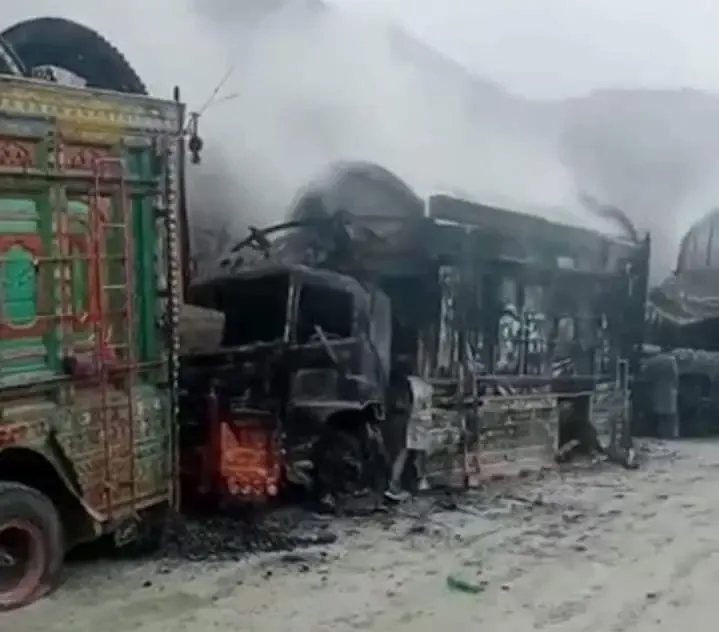
“The year 2025 indicated that the province is not merely facing turmoil; it is on a perilous path characterized by political violence and state oppression, compounded by an unprecedented lack of digital communication. The Baloch Liberation Army and other militant groups have escalated their activities, conducting over 280 operations in just the first half of the year. The abduction of the Jaffar Express train in March revealed a level of violence that resembles a war zone. Bombings and assaults, including a recent attack on a Frontier Corps base in Nokkundi, underscore the resilience and organization of insurgent forces in the region,” she noted.
“The intensifying unrest has sparked global concerns that Balochistan is on a trajectory towards becoming 'the new Bangladesh.' Both regions share a grim history of systematic state repression by Pakistan, employing similar tactics such as violent crackdowns on protests, enforced disappearances, and extrajudicial killings. The use of paramilitary and extremist groups to control populations reflects a troubling parallel,” she added.
Intellectuals and activists in both areas have faced persecution, while religion has been wielded as a tool for social control and political oppression. Both regions exhibit a calculated campaign to silence those advocating for self-determination, with Bangladesh ultimately achieving independence while Balochistan continues to suffer.
The decision by the Pakistani government to suspend internet services in Balochistan has rendered the province a 'black hole' of information, allowing human rights abuses to occur without scrutiny. Concurrently, religious minorities, including Christians, Hazara Shia, Hindus, and Ahmadiyya, live under constant threat. Blasphemy laws have been exploited for intimidation, leading to arbitrary arrests and mob violence.
“The Pakistani state represses minorities in Balochistan not out of mere prejudice, but because it perceives repression as a strategic necessity,” the report stated.
“First, there is a profound fear of secession. Balochistan has a robust national movement advocating for self-determination, control over local resources, and the reduction of military presence. A potential breakaway could inspire similar movements in other provinces, jeopardizing Pakistan's territorial integrity. Second, religion is used as a method of social control, empowering extremist groups and enforcing draconian blasphemy laws. Lastly, the state aims to maintain stringent control over the province’s vast natural wealth—gas, gold, copper, and lithium—fueling the national economy while the local population remains marginalized,” the Pressenza report concluded.
Point of View
It is crucial to approach the events in Balochistan with a commitment to truth and transparency. The ongoing unrest is deeply concerning and demands attention from the national and international community, as it highlights significant human rights issues and the urgent need for dialogue and reform.
NationPress
11/12/2025
Frequently Asked Questions
What is causing the unrest in Balochistan?
The unrest in Balochistan is driven by political violence, state repression, economic exploitation of local resources, and cultural marginalization.
How does Balochistan's situation compare to Bangladesh?
Balochistan's situation mirrors Bangladesh prior to its 1971 independence, facing similar state repression tactics and struggles for self-determination.
What is the impact of internet blackouts in Balochistan?
The suspension of internet services in Balochistan has created a 'black hole' for information, allowing human rights abuses to occur without oversight.
Who are the key groups involved in Balochistan's unrest?
The Baloch Liberation Army and other militant groups have intensified their operations, raising concerns about the stability of the region.
What challenges do religious minorities face in Balochistan?
Religious minorities such as Christians, Hazara Shia, and Hindus face constant threats, intimidation, and violence, exacerbated by oppressive blasphemy laws.