Europe May heatwave 2025: Records shattered in France, UK, Austria

Synopsis
A heat dome trapping North African air over Europe has smashed May temperature records in France, Britain, and Austria that had stood since 1944 — and the worst is still ahead. With at least 13 deaths already reported and 20 countries forecast above 30°C, this is not just a weather event; scientists say it is climate change made visible, arriving earlier each year.
Key Takeaways
France recorded its hottest May day ever — a national average of 24.4°C — surpassing a record set in 1944 , with 352 stations logging new monthly highs.
London's Kew Gardens hit 34.8°C , setting a new UK May temperature record , also the highest since 1944 .
Austria's Lienz reached 32.7°C — the country's hottest May day in over 200 years .
At least 13 deaths have been linked to the heatwave across France , Britain , and Spain .
Temperatures above 30°C are forecast across around 20 European countries this week, peaking Thursday–Friday .
Climate scientists say June heatwaves in Europe are now around 10 times more likely than in the pre-industrial era.
Europe is in the grip of an unprecedented early-season heatwave, as a powerful heat dome — a high-pressure system trapping hot air from North Africa over Western Europe — has shattered temperature records across multiple countries, triggered emergency public health measures, and renewed urgent calls for accelerated climate action. Forecasters expect conditions to peak on Thursday and Friday before easing over the weekend.
Record Temperatures Across the Continent
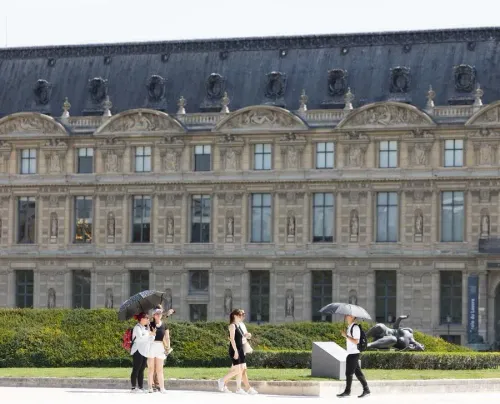
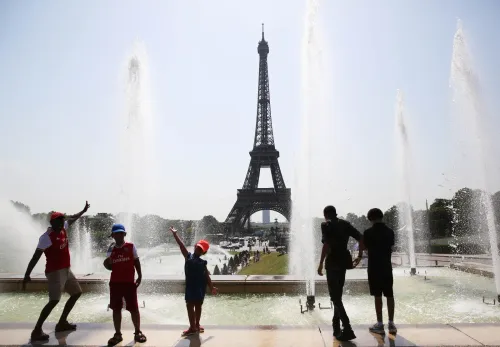
France bore the brunt of the opening days of the heatwave, recording its hottest May day in recorded history with a national average temperature of 24.4 degrees Celsius on Monday, surpassing a record that had stood since 1944, according to Météo-France. A total of 352 weather stations logged new monthly highs, including 37.1 degrees Celsius in the southwestern Landes region.
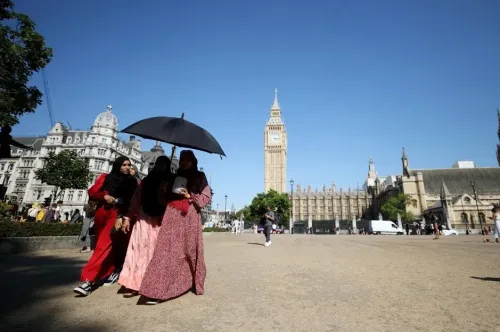
In Britain, London's Kew Gardens reached 34.8 degrees Celsius on Monday — a new UK May temperature record and the highest May reading since measurements began in 1944. Greg Dewhurst, a forecaster at Britain's Met Office, described the heat as 'unusual for the United Kingdom even in the middle of summer, let alone in May.'
Austria also saw exceptional conditions, with meteorologist Marcus Wadsak confirming that temperatures in Lienz climbed to 32.7 degrees Celsius on Monday — the country's hottest May day in more than 200 years. Forecasters indicate temperatures above 30 degrees Celsius are expected across around 20 European countries this week.
Italy issued its first heatwave warning of the year on Monday, with Milan forecast to reach 35.5 degrees Celsius on Wednesday — roughly 9 degrees above the city's long-term seasonal average. Spain is expected to see temperatures approach 40 degrees Celsius by the weekend, while persistent nighttime temperatures above 20 degrees Celsius — known as 'tropical nights' — are compounding health risks, according to Spain's State Meteorological Agency (AEMET).
Fatalities and Health Emergencies
The heatwave has already claimed lives. French authorities linked seven deaths to the extreme heat, including at least five drownings in unsupervised waters, government spokesperson Maud Bregeon confirmed. In Britain, police confirmed five water-related deaths. Spain also reported casualties, including a two-year-old girl who died after being left in a car in Galicia last week. In the Basque Country, around 30 people sought medical treatment for heat-related illnesses over the weekend, with three hospitalised.
Public health agencies in Spain, Britain, and Portugal have urged residents to avoid outdoor activity during peak afternoon hours, remain hydrated, and closely monitor vulnerable groups — including older people, children, and those with underlying health conditions.
Emergency Government Measures
France placed eight western departments under orange heatwave alert — the first May activation of the country's heat alert system since its creation in 2004. Authorities are considering temporary school closures and cancellations of sporting events. In Italy, the Lazio region surrounding Rome has prohibited prolonged outdoor work in direct sunlight between 12:30 pm and 4:00 pm through 15 September.
Climate Science: Why This Is Happening
Meteorologists attribute the extreme conditions to a heat dome trapping North African hot air over Western Europe and blocking cooler air from dispersing it. Scientists say climate change is making such events more frequent, more intense, and earlier in the year. Climate models estimate that June heatwaves in Europe are now around 10 times more likely than before the industrial era, with similar patterns increasingly emerging in May.
Atmospheric dynamics expert Mattia Gussoni noted that a developing 'Super El Niño' in the Pacific Ocean is also indirectly influencing European weather by pushing the African subtropical anticyclone farther north than usual. He warned that prolonged extreme heat could carry serious implications for the global economy and food security.
French climatologist Christophe Cassou argued that no modern heatwave can now be considered entirely natural, given the accumulation of greenhouse gases in the atmosphere. He called for 'energy sobriety' and changes in consumption habits to reduce pressure on energy, water, and other resources. Dewhurst described the event as 'a good indication of climate change in action,' warning that such conditions may become 'the new normal.'
Infrastructure Gaps and the Road Ahead
Scientists and policymakers have also warned that Europe's infrastructure is poorly adapted to rising temperatures. A report released on 20 May by the UK Climate Change Committee stated that much of Europe's infrastructure was designed for 'a climate that no longer exists,' recommending that air conditioning be installed in all care homes and hospitals within a decade and in schools within 25 years. With temperatures expected to peak later this week, pressure on health systems, energy grids, and emergency services is set to intensify before any relief arrives.
Point of View
Compressing the window between spring and dangerous summer heat. Europe's infrastructure deficit — hospitals and schools still not air-conditioned, cities designed for a cooler climate — is no longer a future risk; it is a present emergency. The political response, focused on week-by-week alerts rather than structural adaptation, is lagging the science by years.
NationPress
10 Oct 2026
Frequently Asked Questions
What is causing the May 2025 Europe heatwave?
A 'heat dome' — a high-pressure system trapping hot air from North Africa over Western Europe — is the immediate cause, preventing cooler air from dispersing the heat. Scientists link its unusual intensity and early timing to climate change, with an additional contribution from a developing 'Super El Niño' in the Pacific Ocean pushing the African subtropical anticyclone farther north than usual.
Which countries have been worst affected by the Europe heatwave?
France, Britain, Austria, Italy, and Spain have all recorded exceptional temperatures. France logged its hottest May day ever at 24.4°C nationally; London's Kew Gardens hit a UK May record of 34.8°C; Austria's Lienz reached 32.7°C — its hottest May day in over 200 years. Around 20 European countries are forecast to exceed 30°C this week.
How many deaths has the Europe heatwave caused?
At least 13 deaths have been linked to the heatwave so far. French authorities confirmed seven deaths, including five drownings; British police confirmed five water-related deaths; Spain reported additional casualties including a two-year-old girl who died after being left in a car in Galicia.
What emergency measures have European governments taken?
France placed eight western departments under orange heatwave alert — the first May activation of its heat alert system since 2004 — and is considering school closures and sporting event cancellations. Italy's Lazio region banned outdoor work in direct sunlight between 12:30 pm and 4:00 pm through 15 September. Spain, Britain, and Portugal have issued public health advisories urging people to avoid peak afternoon heat.
Is this heatwave linked to climate change?
Yes, according to climate scientists. Climate models estimate that June heatwaves in Europe are now around 10 times more likely than before the industrial era, with similar patterns increasingly appearing in May. French climatologist Christophe Cassou stated that no modern heatwave can be considered entirely natural given greenhouse gas accumulation, while Met Office forecaster Greg Dewhurst called the event 'a good indication of climate change in action.'