How Are France and Canada Promoting Solidarity Among Middle Powers Against Great Powers' Threats?
Synopsis
As global tensions rise, leaders from France and Canada at the World Economic Forum advocate for unity among middle powers. With the potential threats posed by great powers, they call for increased cooperation, highlighting the importance of national sovereignty and collective action.
Key Takeaways
Middle powers must unite to counteract pressures from great powers.
Cooperation with emerging nations is essential for stability.
National sovereignty and independence are vital in today's geopolitical landscape.
The actions of great powers challenge the existing world order.
Historical alliances highlight the need for collaboration among nations.
New York, Jan 21 (NationPress) In response to US President Donald Trump's efforts to acquire Greenland and his renewed interest in annexing Canada, leaders gathered at the World Economic Forum in Davos have urged middle powers to unite against the pressures exerted by great powers.
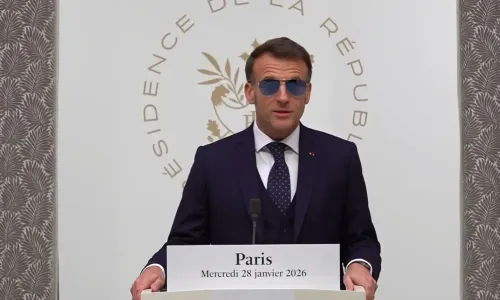
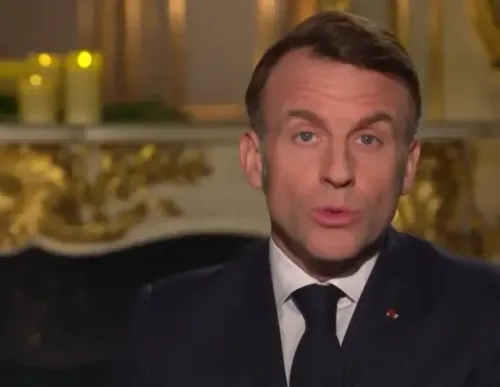
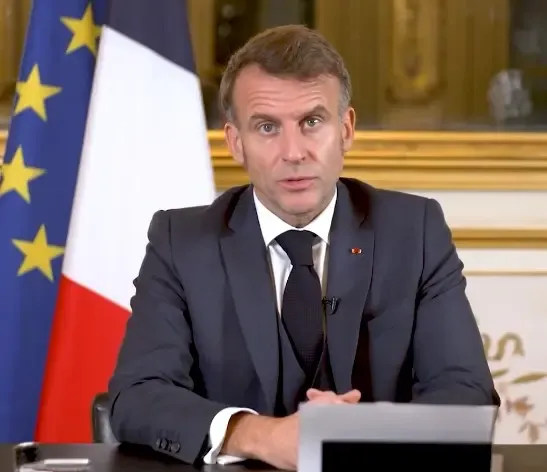
French President Emmanuel Macron emphasized that the solution to the current global “instability and imbalances” lies in fostering “bridges and greater cooperation with emerging nations, including the BRICs and the G20, as fragmentation serves no purpose in today’s world.”
India is a notable member of both BRICS and the G20.
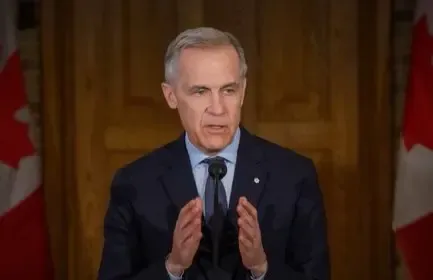
Canada’s Prime Minister Mark Carney remarked, “Middle powers must collaborate, for if you are absent from the table, you become the dish on the menu.”
In contrast, he noted that “great powers currently have the luxury to operate independently.”
He conveyed a sense of fatalism, indicating a “deterioration of the world order, marking the end of a comforting illusion and the onset of a harsh reality where great power geopolitics face no constraints.”
Without directly mentioning Trump or the US, he stated, “To be frank: we are experiencing a rupture, not a transition.”
Trump has threatened to implement a 10 percent tariff on France and seven other nations supporting Denmark in response to his desire to annex Greenland, with plans for this tariff to rise to 25 percent in June.
He has expressed intentions to purchase Greenland and has not dismissed the possibility of military action to secure it.
European Union President Ursula Von der Leyen cautioned that Trump’s actions would lead to “a perilous downward spiral, benefiting the very adversaries we are committed to keeping out of the strategic landscape.”
US officials at Davos sought to reassure European nations.
During a press briefing, Treasury Secretary Scott Bessent requested calm, comparing the recent tariff threats to the substantial tariffs Trump announced in April, which paved the way for negotiations.
Trade Representative Jamieson Greer suggested during his address that the tariff threat was merely a negotiating tactic, while acknowledging that Trump is “very clear on his expectations regarding this matter.”
Macron asserted that the US openly intends “to weaken and subordinate Europe” through tariffs, noting that “the rules-based order is deteriorating.”
He also highlighted concerns over China, whose “significant excess capacities and distortive practices pose a threat to entire industrial and commercial sectors.”
“Trade wars, escalating protectionism, and races towards overproduction will inevitably lead to losers,” he stated.
He also referenced Russia's invasion of Ukraine.
The response to these challenges, he advocated, is “greater cooperation.”
Regarding Trump's Greenland threat, he stated, “France and Europe value national sovereignty and independence, adhering to the United Nations and its charter.”
Reflecting on the experiences of World War II, where the US and France were allies, he emphasized the necessity for cooperation: “We have opted to engage in a mutual exercise in Greenland, not as a threat, but in support of an ally and fellow European nation, Denmark.”
Point of View
The emphasis on middle powers uniting against great power pressures reflects a crucial shift in global dynamics. The actions of influential leaders like Macron and Carney indicate a growing recognition that collaboration is essential to maintaining sovereignty and addressing geopolitical challenges.
NationPress
20 Sept 2026
Frequently Asked Questions
What prompted the call for solidarity among middle powers?
The call for solidarity arose in response to US President Trump's attempts to acquire Greenland and his renewed interest in annexing Canada, which raised concerns among middle powers about their influence and importance on the global stage.
Who are the key leaders advocating for this unity?
Key leaders include French President Emmanuel Macron and Canadian Prime Minister Mark Carney, who both emphasized the necessity for middle powers to cooperate against pressures from great powers.
What are the potential consequences of inaction among middle powers?
Inaction could lead to middle powers being marginalized in international affairs, risking their sovereignty and ability to influence global decisions as great powers operate independently.
How does this situation reflect on international relations?
This situation highlights a significant shift in international relations where middle powers are increasingly aware of the need to unite and collaborate to counteract the unilateral actions of great powers.
What historical context supports this call for cooperation?
The historical context includes past alliances, such as during World War II, where cooperation between nations was crucial, underscoring the importance of collective action in addressing contemporary geopolitical challenges.