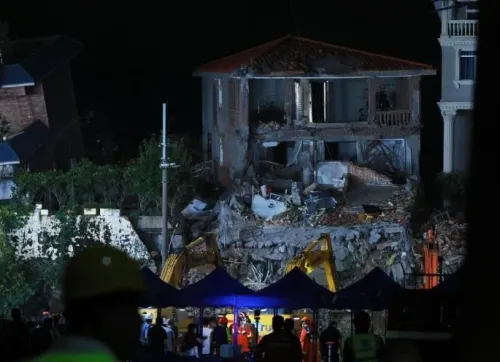
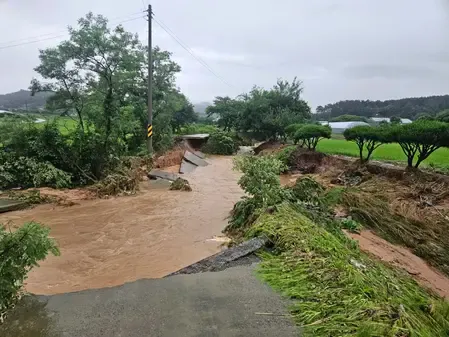
Gansu landslide kills 21 in China's Tanchang County, 7 injured
Synopsis
A pre-dawn landslide in Gansu's Tanchang County buried 33 people, killing 21 and injuring seven. With 345 rescuers and 10 search dogs deployed and a Level III national geological disaster response activated, China's deadliest recent slope failure underscores the country's chronic vulnerability — 69 per cent mountainous terrain, fragile soils, and peak monsoon season arriving simultaneously.
Key Takeaways
A landslide struck Renzang Village , Tanchang County , Gansu Province at 6:56 a.m. on Tuesday, 8 July .
21 people were killed and seven injured ; all injured are in stable condition in local hospitals.
Of 33 people trapped, five were rescued unharmed.
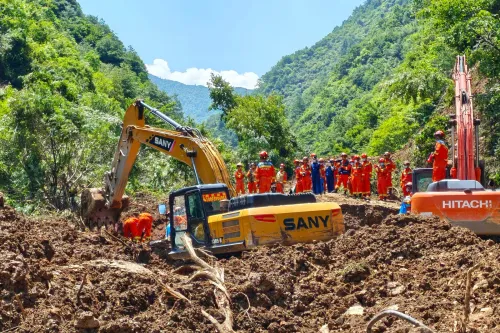
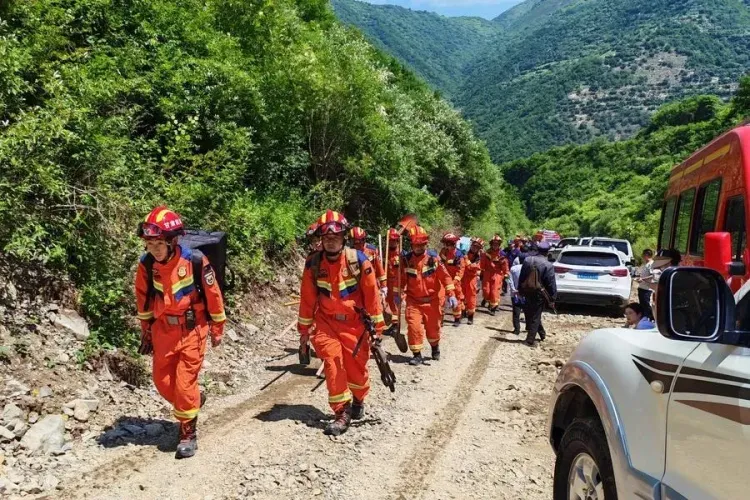
345 rescuers and 10 search dogs were deployed; rescue operations have since been completed.
The Ministry of Natural Resources activated a Level III geological disaster defense response and sent a special working group to the site.
Around 69 per cent of China's territory is mountainous or plateau terrain, making the country highly susceptible to landslides.
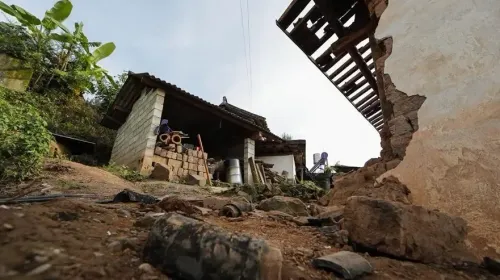
A devastating landslide in Tanchang County, northwest China's Gansu Province, has left 21 people dead and seven injured after rescue operations concluded on Wednesday, 8 July, local authorities confirmed. The disaster struck Renzang Village of Nanhe Township in Longnan City at approximately 6:56 a.m. on Tuesday, trapping 33 people beneath debris.
How the Rescue Unfolded
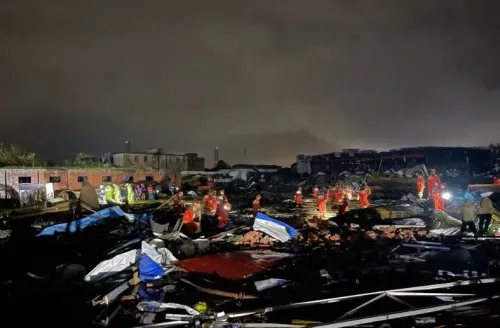
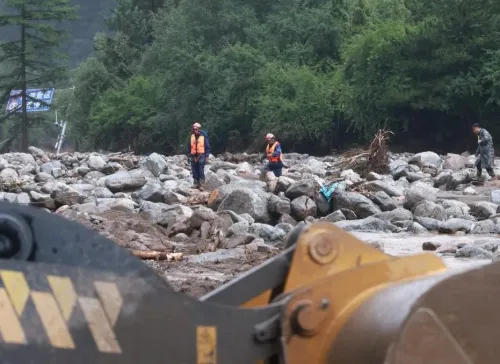
Emergency responders moved swiftly after the landslide hit, deploying 345 rescuers and 10 search dogs to comb through the rubble. Multiple teams — including emergency, fire, and police personnel — were mobilised immediately. Of the 33 trapped, five people were pulled out unharmed, while the seven injured are currently receiving treatment at local hospitals and are reported to be in stable condition.
The Longnan municipal government confirmed the completion of rescue operations at a press conference, stating that no further survivors are expected to be found.
Government Response and Medical Deployment
The Ministry of Natural Resources activated a Level III geological disaster defense response and dispatched a special working group to oversee on-site rescue and relief coordination. According to the Gansu provincial health commission, four emergency medical teams — covering intensive care, trauma treatment, and pediatric care — along with 13 medical workers were sent to the county.
Three specialists in intensive care, orthopedics, and general surgery from Gansu Provincial People's Hospital were also deployed to guide treatment on the ground. Local authorities opened dedicated green channels for medical access and established a remote consultation platform to support ongoing care.
Why China Faces Recurring Landslide Risk
China is among the world's most landslide-prone nations. Approximately 69 per cent of its territory comprises mountainous or plateau terrain, characterised by active tectonic plates, fragile soil compositions, and intense monsoon rainfall — a combination that creates persistent geological hazard across multiple provinces. Gansu, in particular, has a history of deadly slope failures, with several fatal incidents recorded over the past decade.
What Happens Next
With rescue operations now concluded, authorities are expected to shift focus to relief and rehabilitation for affected families. Investigators will assess the precise trigger of the slide — whether linked to recent rainfall, soil saturation, or underlying geological instability — as the region enters its peak monsoon period. The Level III response from the Ministry of Natural Resources remains in effect pending a full damage assessment.
Point of View
Geological disasters of this scale are increasingly predictable, if not preventable. The activation of only a Level III response — the third tier in China's four-level system — raises questions about whether early-warning infrastructure in remote Gansu counties is keeping pace with the known risk profile. The real accountability test is not in the rescue numbers, but in whether hazard mapping and village-level evacuation protocols will be upgraded before the next storm cycle.
NationPress
6 Oct 2026
Frequently Asked Questions
How many people died in the Gansu landslide on 8 July 2025?
The landslide in Tanchang County, Gansu Province killed 21 people and left seven others injured. Rescue operations were completed on Wednesday, 8 July, with five people having been pulled out unharmed.
Where exactly did the Gansu landslide occur?
The landslide struck Renzang Village of Nanhe Township in Longnan City, located in Tanchang County, northwest China's Gansu Province. It hit at approximately 6:56 a.m. on Tuesday.
What was the government's response to the Tanchang landslide?
The Ministry of Natural Resources activated a Level III geological disaster defense response and dispatched a special working group to the site. Four emergency medical teams and specialists from Gansu Provincial People's Hospital were also deployed to assist the injured.
Why is China so prone to landslides?
Approximately 69 per cent of China's territory is mountainous or plateau terrain, with highly active tectonic plates, fragile soil types, and intense monsoon rainfall. This combination creates persistent landslide risk across multiple provinces, particularly during the summer monsoon season.
Are the injured survivors in a critical condition?
No. According to the Longnan municipal government, all seven injured survivors are currently in stable condition and are being treated at local hospitals. Green channels for medical treatment and a remote consultation platform have been set up to support their care.