How Will the Global IIT Gathering Influence Future Innovation and Strengthen Ties with India?
Synopsis
The Global Pan-IIT Conference in Long Beach will attract a diverse group of Indian Institute of Technology alumni and leaders. With sessions focusing on AI, healthcare, and more, this event promises to be a vital space for innovation and collaboration, bridging the gap between India and the U.S.
Key Takeaways
The Global Pan-IIT Conference will take place in Long Beach, California from April 22-25, 2026.
Over 2,500 attendees are expected, focusing on innovation and inclusivity.
Key themes include AI, health, and sustainability.
The conference aims to strengthen ties between Indian and U.S. economies.
Participation is open to all, promoting diversity and collaboration.
Washington, Feb 9 (NationPress) As thousands of alumni, entrepreneurs, and executives from the Indian Institute of Technology come together in Long Beach, California, next April, their agenda will encompass much more than just networking and keynote presentations. The organizers of the Global Pan-IIT Conference aim to highlight how a relatively small yet impactful community of Indian-origin technologists has significantly influenced innovation, capital, and public affairs in both India and the United States.
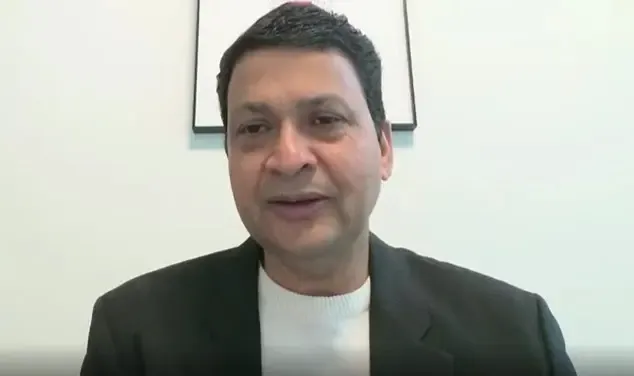
Set for April 22–25, 2026, the conference will revolve around the theme “Innovate, Ignite and Thrive,” with expectations of attracting over 2,500 attendees from around the globe. Shashi Tripathi, a venture capitalist and chair of the 2026 event, emphasized the gathering's goal to unite “some of the brightest minds and industry leaders” during a pivotal time when technology, geopolitics, and economic power are rapidly evolving.
The projected attendance is around 2,500 participants.
The conference will feature discussions on themes that highlight both opportunities and concerns in the global economy: artificial intelligence, health and sustainability, investment and venture capital, private equity, exit strategies, and what the organizers refer to as “global connect geopolitical issues.”
In an interview with IANS, Tripathi mentioned the inclusion of six grand keynotes alongside panels, fireside chats, and workshops, including a session led by Nvidia focusing on go-to-market strategies and fundraising for startups.
Tripathi stressed that the event is open to all. “Anyone is welcome to attend. You don’t have to be from IIT or even Indian,” he stated. “Inclusivity is a key aspect.”
This openness mirrors how the Indian diaspora—especially IIT alumni—have integrated into the American economic landscape while maintaining strong connections to India. “The Indian diaspora constitutes about 2% of the U.S. population, but we contribute 8% to the economy,” he explained. “Consider that ratio.”
For decades, IIT graduates have been recognized for their engineering prowess in Silicon Valley. Tripathi noted that this community has diversified into healthcare, startups, venture capital, and corporate leadership. “We are transitioning beyond tech,” he asserted. “We are involved in healthcare, businesses, and startups. We are shaping the economy within this ecosystem.”
Concerns regarding brain drain from India remain a hot topic. Tripathi did not shy away from addressing this issue. “I will confront the elephant in the room,” he remarked, referring to the ongoing worry that India's brightest minds are leaving the country. However, he argued that migration does not diminish India’s strength. “While we thrive as citizens abroad, particularly in the U.S., we remain deeply connected to the Indian ecosystem,” he told IANS.
This connection extends beyond financial remittances. “This ecosystem is not just about sending money. It’s about creating startups,” Tripathi stated, highlighting his own investment decisions. “Half of my investment portfolio is based in India because I understand the Indian ecosystem.”
Artificial intelligence is poised to be a major focus at the conference, with Tripathi likening its impact to that of the internet, suggesting that it could be an even larger revolution. “AI represents the biggest transformation,” he claimed, emphasizing its accessibility compared to previous technological advancements. “With AI, you simply open your phone and start talking without needing extensive training.”
Despite ongoing fears regarding job displacement, Tripathi was forthright. “Those who are skeptical of AI and not utilizing it will find their jobs at risk,” he stated. However, he remains optimistic that technological advancements will ultimately yield more opportunities, just as previous revolutions have.
In response to a query, Tripathi highlighted the natural partnership potential between India and the United States in the realm of artificial intelligence. He pointed out that the U.S. excels in investment and innovation, while India offers scalability and diversity through its extensive digital infrastructure. “The larger the population, the more varied the data, which enhances AI model accuracy,” he noted.
With India heavily investing in digital platforms and AI initiatives, coupled with the United States housing many of the planet's largest tech firms, Tripathi argued that collaboration between the two nations could be pivotal. “Together, they can forge a formidable AI future,” he asserted.
Beyond standard panels and policy discussions, the conference is crafted to be immersive. Organizers are planning curated lunch discussions on career paths, cultural programming in the evenings, morning yoga sessions, and workshops for children. Audience engagement will be facilitated through a conference app that allows real-time questions and interactions.
The Pan-IIT conference series has previously featured notable figures such as Narendra Modi, Bill Gates, Bill Clinton, Satya Nadella, and Sundar Pichai. For Tripathi, the 2026 iteration emphasizes continuity—a reminder that a network forged within India’s engineering institutions now spans two economies and increasingly, two futures.
Point of View
The Global Pan-IIT Conference represents an essential gathering of minds. Highlighting the synergy between India's budding startup ecosystem and the U.S.'s innovation landscape, this event underscores the importance of inclusivity and shared knowledge in shaping the future. It's a testament to the influential role of the Indian diaspora in both economies.
NationPress
20 Sept 2026
Frequently Asked Questions
What is the Global Pan-IIT Conference?
The Global Pan-IIT Conference is a major gathering of alumni from the Indian Institute of Technology aimed at fostering innovation and collaboration among Indian-origin technologists.
When and where will the conference be held?
The conference is scheduled for April 22-25, 2026, in Long Beach, California.
Who can attend the conference?
The event is open to everyone, not just IIT alumni or Indian nationals, promoting inclusivity.
What topics will be covered at the conference?
Key themes include artificial intelligence, health and sustainability, investment and venture capital, and geopolitical issues.
How many participants are expected?
The conference is expected to attract more than 2,500 participants from around the world.