Graham Act deadline October 18: India's tariff fate still unresolved
Synopsis
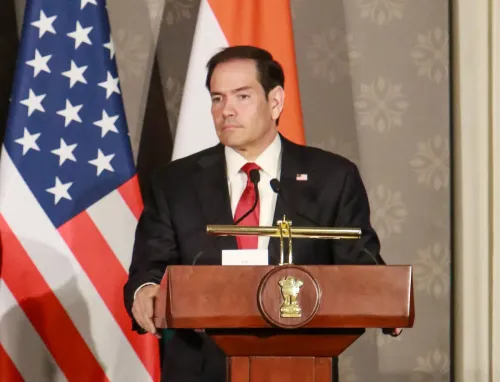
Three days before the Graham Act's October 18 deadline, Washington has published no tariff list, no duty rate and no waiver — leaving India, the world's second-largest buyer of Russian crude, in legal limbo. The silence is especially striking given that Secretary of State Rubio lands in Jamnagar, home to Reliance's giant Russian-oil refinery, the very day after the clock runs out.
Key Takeaways
The Graham Act deadline falls on Saturday, October 18 , requiring the US to impose duties of up to 100% on goods from the largest buyers of Russian oil — or issue a formal waiver.
As of Thursday morning , the White House , USTR and Treasury had published no country list, duty rate, congressional justification or waiver certification.
India is the second-largest buyer of Russian crude after China; Indian goods already face a 10% duty under Section 301 — any new Graham Act tariff would be stacked on top.
Secretary of State Marco Rubio is scheduled to arrive in Mumbai and Jamnagar on October 19–22 — one day after the deadline — including a visit to Reliance Industries' refinery complex.
US Ambassador Sergio Gor said India 'does fall in one of those buckets' but called a final decision 'a decision for the President.' Twelve senators, including Mitch McConnell and John Cornyn , urged Trump on October 13 to target China as Russia's chief enabler; India was not named in their letter.
With just three days to go before the Lindsey O. Graham Sanctioning Russia and Iran Act deadline of October 18, the Trump administration has published no list of targeted countries, no duty rate and no waiver — leaving India's exposure to potential 100% tariffs on its goods entirely unresolved. The silence comes as Secretary of State Marco Rubio prepares to visit India the day after the deadline takes effect.
What the Law Requires
Signed by President Donald Trump on 18 September 2025, the Graham Act mandates that the President 'shall' raise duties on all goods from covered countries to a rate of up to 100 per cent within 30 days of enactment — a clock that expires on Saturday, October 18. A country is covered if it was among the five largest importers of Russian crude oil or natural gas in the 12 months before enactment and 'knowingly made new purchases' on or after October 18.
As of Thursday morning, neither the White House, the Office of the US Trade Representative (USTR), nor the Treasury Department — including its Office of Foreign Assets Control (OFAC) — had released any top-five country list, duty rate, Section 113 justification or Section 115 waiver. The Federal Register's public inspection list for Thursday, carrying 131 documents, contained no Graham Act tariff notice or waiver certification.
Key Procedural Deadlines Already Missed
Under Section 113(g) of the law, the President or the USTR must send relevant congressional committees a written justification for any duty 'not later than 10 days before imposing' it. For duties starting on October 18, that window closed on or about October 8. The law requires this justification to go to Congress — not to be publicly published — meaning committee staff may have received it without releasing it publicly.
Section 115 also permits the President to waive any duty, but only after providing Congress 'a certification in writing' that the waiver serves the national interest. No such certification has been made public. The latest USTR press releases deal with the G20 trade ministers' meeting and labour disputes involving Mexico — with no mention of the Graham Act.
India's Exposure and the Rubio Visit
India is the second-largest buyer of Russian crude after China on unofficial rankings, though it does not figure among the largest buyers of Russian gas. Jamnagar, home to Reliance Industries' massive refinery complex — among the largest buyers of Russian crude in India — is directly on Rubio's itinerary. The State Department has confirmed that Rubio will attend a meeting in Samarkand, Uzbekistan, on October 17, before travelling to Mumbai and Jamnagar from October 19 to 22 — arriving the day after the deadline, precisely when the law's 'new purchases' test begins to apply.
The administration's own signals have been mixed. US Ambassador to India Sergio Gor told a forum in New Delhi on Wednesday that Trump 'has to make a determination in the next I believe 10 or so days' — a timeline that would run past October 18. Gor acknowledged that India 'does fall in one of those buckets, along with a lot of other countries', but said relief for India was 'a decision for the President.' Earlier this month, USTR Jamieson Greer confirmed: 'We have to name names — so we'll be doing that. What kind of action we'll take is for the president to decide.'
Congressional Pressure and Stacked Tariff Risk
The deadline arrives amid a parallel dispute on Capitol Hill over Trump's decision to allow imports of Russian diesel fuel. Seven senators led by Senate Foreign Relations Committee ranking member Jeanne Shaheen said on October 11 the administration had 'failed to consult with Congress or submit any explanation to justify its decision as required by statute.'
Separately, twelve senators — including Republican Mitch McConnell and India Caucus co-chair John Cornyn — wrote to Trump on October 13 urging him to deploy Graham Act authorities against Russia's 'chief enablers … in particular China.' Notably, India was not named in that letter, a signal some analysts read as softening pressure on New Delhi.
Indian goods already carry a 10 per cent duty under Section 301. Any Graham Act tariff would be stacked on top of existing duties — a potentially severe hit to bilateral trade. The Graham Act passed the Senate 86-11 on 7 August and the House 262-159 on 16 September, signalling broad bipartisan support for the legislation.
What Happens Next
The coming 72 hours will be critical: the administration must either impose tariffs, publish a waiver certification, or allow the deadline to pass in legal ambiguity. Rubio's arrival in India on October 19 will be the first face-to-face signal of where Washington ultimately stands on New Delhi's oil purchases from Moscow — and whether trade pressure or diplomatic pragmatism wins out.
Point of View
Washington keeps every covered country, including India, in a state of managed uncertainty that can be resolved through bilateral negotiation rather than blanket tariff action. The Rubio itinerary — landing in Jamnagar the morning after the clock expires — looks less like coincidence and more like choreography: a visit designed to show New Delhi that the relationship still has room to manoeuvre, even as the law's 'new purchases' test formally kicks in. The real risk for India is not the October 18 date itself, but what happens to Russian crude buying in the weeks after, and whether Washington uses the threat of stacked tariffs as a long-term lever on energy policy rather than a one-off deadline.
NationPress
15 Oct 2026
Frequently Asked Questions
What is the Graham Act and what does it require by October 18?
The Lindsey O. Graham Sanctioning Russia and Iran Act, signed by President Trump on 18 September, requires the President to impose duties of up to 100% on goods from countries that are among the five largest buyers of Russian crude oil or natural gas and continue making new purchases. The 30-day enactment deadline falls on Saturday, October 18. As of Thursday, no tariff list, rate or waiver had been published.
Is India at risk of Graham Act tariffs?
India is the second-largest buyer of Russian crude oil after China, placing it squarely within the law's coverage criteria. US Ambassador Sergio Gor confirmed on Wednesday that India 'does fall in one of those buckets.' Any Graham Act duty would be stacked on the existing 10% Section 301 tariff India already faces on its goods.
Why is Secretary of State Rubio visiting Jamnagar?
Rubio is scheduled to visit Mumbai and Jamnagar from October 19 to 22, arriving the day after the Graham Act deadline. Jamnagar is home to Reliance Industries' refinery complex, one of India's largest buyers of Russian crude — making the visit highly symbolic in the context of the law's 'new purchases' test.
What have US officials said about India's exposure?
US Ambassador Sergio Gor told a New Delhi forum on Wednesday that Trump 'has to make a determination in the next I believe 10 or so days' — a timeline running past October 18. He said India falls within the law's buckets but called final relief 'a decision for the President.' USTR Jamieson Greer said the administration 'will be naming names' but that the nature of any action is for the president to decide.
Could the October 18 deadline pass without any action?
It is legally possible. Section 115 of the Graham Act allows the President to waive tariffs with a written certification to Congress that a waiver is in the national interest, but no such certification has been made public. A congressional justification for any new duty was also required by around October 8 — a date that has already passed without a public notice, raising questions about how the administration intends to proceed.