Grand Canyon flash flood kills 2, leaves 14 missing at Phantom Ranch
Synopsis
A sudden flash flood ripped through Grand Canyon's inner canyon on 29 August, killing two and leaving 14 unaccounted for near Phantom Ranch. With 40 per cent of the park's main water pipeline reportedly destroyed and monsoon rains continuing, the disaster is far from over — and the missing count could still rise.
Key Takeaways
A flash flood struck Bright Angel Canyon and the Phantom Ranch area of Grand Canyon National Park on 29 August .
At least two people have been killed and 14 others remain missing or unaccounted for.
A total of 62 individuals were evacuated from the affected area.
Approximately 40 per cent of the Transcanyon Waterline supplying potable water to the South Rim and inner canyon was reportedly damaged or destroyed.
Phantom Ranch , Bright Angel Campground , and the entire North Kaibab Trail remain closed until further notice.
A flood watch remains in effect through at least Monday evening , with elevated flash flood risk continuing.
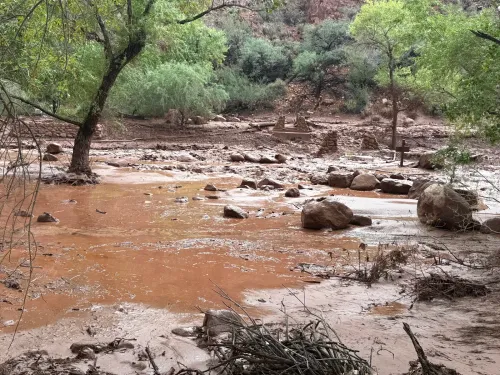
A devastating flash flood swept through Grand Canyon National Park in the US state of Arizona on 29 August, killing at least two people and leaving 14 others missing or unaccounted for, according to the US National Park Service. The disaster struck the Bright Angel Canyon and Phantom Ranch area, triggering large-scale evacuations and forcing the closure of key trails and facilities.
What Happened
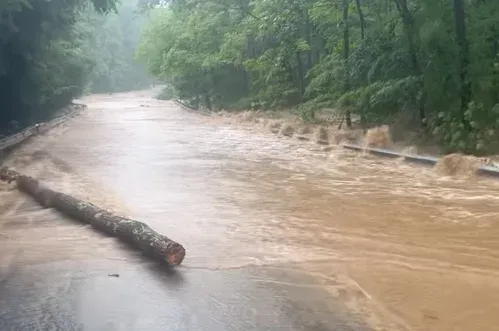
Park authorities described the incident as a 'significant flash-flood event' that tore through the inner canyon corridor along Bright Angel Creek. Two bodies were recovered in the aftermath, while search and recovery operations continued for those still unaccounted for. A total of 62 individuals were evacuated from the affected area, officials confirmed in a news release on Sunday.
Infrastructure Damage
Preliminary assessments indicate that approximately 40 per cent of the Transcanyon Waterline — the primary pipeline supplying potable water to facilities on the South Rim and the inner canyon — was damaged or destroyed. The scale of infrastructure loss adds a significant logistical challenge to an already complex rescue operation.
Closures and Appeal for Information
Authorities have shut Phantom Ranch, Bright Angel Campground, the Phantom Ranch Canteen and cabins, and the entire North Kaibab Trail from the North Kaibab Trailhead to Phantom Ranch until further notice. The National Park Service urged anyone with knowledge of hikers or backpackers who were in the inner canyon along the Bright Angel Creek corridor on 29 August, or who held campground reservations in the affected area, to contact the National Park Service Investigative Services Branch immediately.
Ongoing Flood Risk
The US National Weather Service has kept a flood watch for the Grand Canyon in effect through at least Monday evening. Showers and thunderstorms are expected to persist through Monday afternoon, with deep monsoonal moisture in place and soils already saturated in parts of the region. Authorities warned that the risk of further flash flooding remains elevated, complicating both search efforts and any restoration of access to the canyon.
This is not the first time the Phantom Ranch corridor has been struck by flash floods — the area's narrow canyon topography and seasonal monsoon patterns make it particularly vulnerable during late summer. With search operations ongoing and weather conditions still threatening, the full human toll of the disaster remains uncertain.
Point of View
The National Park Service faces pressure on two fronts: an active rescue operation and a communications gap about who exactly is missing. The absence of a full manifest of inner-canyon visitors remains a structural vulnerability that this tragedy has exposed.
NationPress
16 Oct 2026
Frequently Asked Questions
What caused the Grand Canyon flash flood on 29 August?
A significant flash-flood event struck the Bright Angel Canyon and Phantom Ranch area of Grand Canyon National Park in Arizona on 29 August, triggered by heavy monsoonal rains. Deep monsoon moisture and already-saturated soils in the region elevated the flood risk considerably.
How many people are missing after the Grand Canyon flood?
At least 14 people remain missing or unaccounted for following the flash flood, according to the National Park Service. Two bodies have been recovered and 62 individuals have been evacuated from the affected area.
Which areas of Grand Canyon National Park are closed?
Phantom Ranch, Bright Angel Campground, the Phantom Ranch Canteen and cabins, and the entire North Kaibab Trail from the North Kaibab Trailhead to Phantom Ranch are all closed until further notice while search and recovery operations continue.
How badly was the Grand Canyon's water supply affected?
Preliminary assessments indicate that approximately 40 per cent of the Transcanyon Waterline — which provides potable water to South Rim facilities and the inner canyon — was damaged or destroyed. This poses a significant infrastructure challenge for park operations.
Is there still a flood risk at the Grand Canyon?
Yes. The US National Weather Service has maintained a flood watch for the Grand Canyon through at least Monday evening. Showers and thunderstorms are expected to continue, and with monsoonal moisture in place and some soils already saturated, the risk of additional flash flooding remains elevated.