Nepal floods: Indians rescued recount 20-foot walls of water, missing companions
Synopsis
Survivors from Bihar, Chennai, and Nagpur describe flash floods that rose 20 feet in minutes, swallowed homes whole, and left companions unaccounted for. A Chennai pilgrim clung to a tree for four hours before Nepal military arrived. The accounts reveal a disaster that outpaced every warning system — and a human toll that may still be incomplete.
Key Takeaways
Indians from Bihar , Maharashtra , and Chennai were rescued from flood-hit Nepal and recounted their ordeals on 29 August .
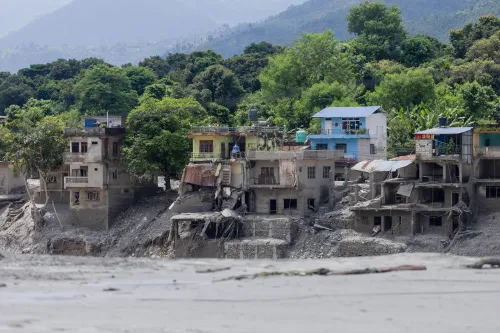
Floodwaters reportedly rose up to 20 feet in affected areas, with survivors fleeing barefoot uphill to escape.
At least three people from a group of Bihar migrant labourers remain missing after the flash floods.
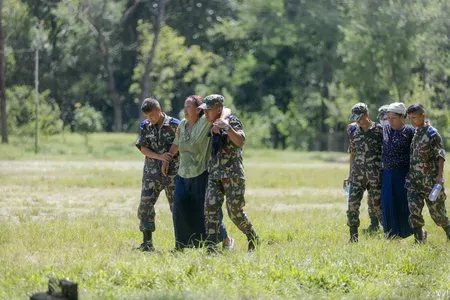
A Chennai pilgrim on a Kailash Mansarovar trip climbed a tree and remained there for three to four hours before being rescued by Nepal military personnel .
The first batch of 106 Maharashtra tourists reached India safely; Maharashtra CM Devendra Fadnavis was credited with facilitating their return.
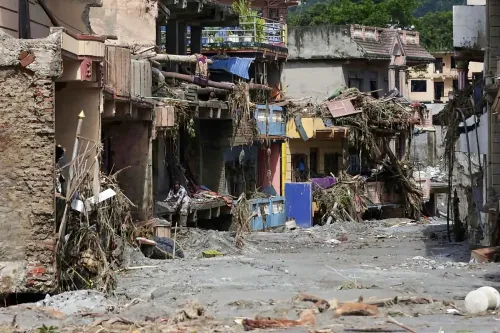
Roads were blocked and bridges washed away, trapping survivors for up to seven to eight days before evacuation was possible.
Indians rescued from flood-ravaged Nepal on Saturday, 29 August described scenes of extraordinary devastation — walls of water rising 20 feet, roads swallowed whole, bridges washed away, and companions who simply vanished in the chaos. Survivors from Bihar, Maharashtra, Chennai, and Nagpur recounted their ordeals after being evacuated from the Himalayan nation, many saying they owe their lives to split-second decisions to run.
Migrant Workers from Bihar: 'Three of Our People Went Missing'
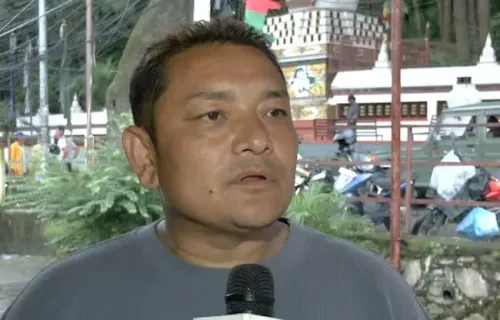
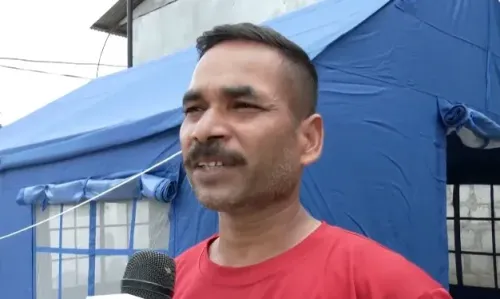
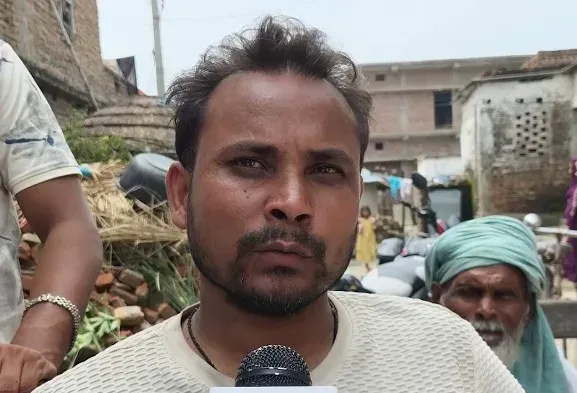
Migrant labourers from Bettiah, Bihar, who had been working in Nepal, described the flash floods as 'unimaginable' upon returning to their hometown. One labourer recounted: 'There were five to seven of us, three of our people went missing...There was a lot of water in the area, rising up to 20 feet. We took our children and ran up the hill. After an hour, when the water level receded, we went to look for them, but we could not find the three people.'
A younger survivor described the terrifying speed of the disaster. 'At around 9:30 a.m., I heard a lot of noise. I went outside to see what was happening, but I could only see dust. Moments later, I saw that there was a lot of water due to the storm...immediately I alerted the people inside. We then ran towards higher terrain but three others were left behind,' he said. 'After we came down, there was no trace of any humans nor our house.'
A third worker added: 'We got up after hearing about the massive flow of water and despite being barefoot, we started running uphill...when we came down after an hour to search for our people, they were nowhere to be found.'
Chennai Pilgrim Climbed a Tree to Survive
In Chennai, a woman who had been on a pilgrimage to Kailash Mansarovar returned safely after a harrowing ordeal near the China-Nepal border. Her son-in-law said she had reached Kathmandu on 24 August and was due to visit Mansarovar on the 26th. 'Along with her there were 21 people in the bus when the disaster struck, while they were nearing the immigration office at the China-Nepal border,' he said.
'They were unable to breathe or talk...the driver ran away, they then came down from the bus, (my mother-in-law) climbed a tree and stayed there for three to four hours. After that, they were rescued by Nepal military personnel,' he added. Another Chennai resident who returned safely credited government intervention: 'The government had initiated steps for taking us to Kathmandu. Later, the ambassador met and consoled us and we were provided food and stay. The following day, we were allowed to move to the airport.'
Maharashtra Tourists: Roads Blocked, Bridges Gone
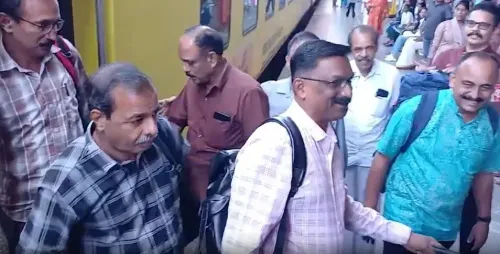
The first batch of 106 stranded Maharashtra tourists reached India and expressed relief and gratitude toward both Indian and Nepalese authorities. A woman from Nagpur said: 'We were constantly worried about whether or not we would make it out of there alive...Initially, we did not listen because there were 106 people with us, and we wanted to leave together...but after the situation escalated, we agreed to board the flight. Even though we didn't have the required documents, the (Nepal) administration helped us a lot.'
Another passenger described the deteriorating conditions: 'We were fine for about seven or eight days. But then the situation changed...the police stopped us and our vehicles could not proceed because of the disaster. The roads were blocked and bridges had been washed away.' He thanked Maharashtra Chief Minister Devendra Fadnavis for making arrangements to bring them back.
Scale of the Crisis and What Lies Ahead
The floods have affected multiple regions of Nepal, cutting off roads and communication links that connect remote communities to urban centres. The accounts from Indian survivors point to the speed and ferocity of the flash floods — conditions that left little time for organised evacuation. Notably, several survivors mentioned that companions remain unaccounted for, suggesting the human toll may not yet be fully known.
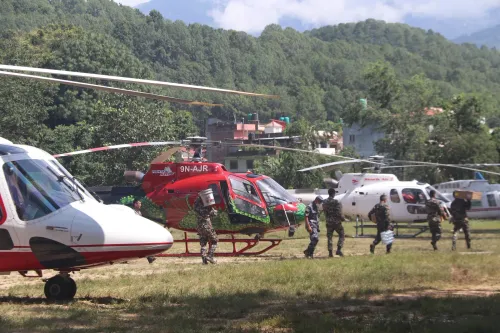
Indian diplomatic missions in Kathmandu have been coordinating evacuations, and state governments including Maharashtra have activated emergency response mechanisms. As rescue operations continue, the focus is now shifting to locating those still missing and restoring essential supply routes into the affected zones.
Point of View
And when a pilgrim bus of 21 is abandoned by its driver mid-disaster, the organised evacuation narrative looks incomplete. India's diplomatic machinery moved — but the accounts suggest it moved after survivors had already made life-or-death decisions on their own. The deeper question is whether pre-monsoon coordination between India and Nepal on cross-border labour migration and pilgrimage safety is adequate for a Himalayan risk environment that is visibly intensifying.
NationPress
13 Oct 2026
Frequently Asked Questions
What happened to Indians caught in the Nepal floods?
Indians working and travelling in Nepal were caught in severe flash floods that rose up to 20 feet in minutes, destroying homes and blocking roads. Survivors from Bihar, Chennai, and Maharashtra were evacuated by a combination of Nepal military personnel, Indian diplomatic missions, and state government arrangements.
Are any Indians still missing after the Nepal floods?
According to survivor accounts, at least three people from a group of Bihar migrant labourers remain unaccounted for after the flash floods. Survivors said they searched after water levels receded but found no trace of the missing individuals.
How were the Maharashtra tourists brought back from Nepal?
A first batch of 106 stranded Maharashtra tourists was evacuated and flown back to India. Survivors credited Maharashtra Chief Minister Devendra Fadnavis with coordinating their return, and said Nepalese authorities helped even when passengers lacked required travel documents.
What conditions did survivors describe in flood-hit Nepal?
Survivors described floodwaters rising to 20 feet within minutes, roads completely blocked, bridges washed away, and entire houses disappearing. Some fled barefoot uphill; one Chennai pilgrim climbed a tree and remained there for three to four hours before Nepal military rescued her.
Who coordinated the rescue of Indian nationals in Nepal?
Nepal military personnel conducted on-ground rescues, while the Indian ambassador in Kathmandu met survivors and arranged food and shelter. State governments, particularly Maharashtra under CM Devendra Fadnavis, coordinated flights to bring tourists home.