Nepal floods: Miraculous escapes, brave rescues amid death and destruction
Synopsis
Nepal's floods have produced not just tragedy but extraordinary human stories — a dam worker saved by a late shift, a pilgrim who fashioned a sari into a rescue rope, a six-year-old pulled alive from debris by police. Amid the devastation, these accounts reveal a pattern of community resilience and individual courage that rarely makes the headline count.
Key Takeaways
Bikash Tharu , a technician at Bhote Koshi hydropower station , survived because a late arrival to work allowed him to spot the flood surge and flee uphill before army helicopters evacuated him.
Pilgrim Poonguzhali Ponmambadan used her sari as a makeshift rope to help elderly travellers climb to safety on the Kailash-Mansarovar route.
Nepal's Armed Police Force rescued a six-year-old girl alive from debris in Timure , stabilising her on-site amid bad weather.
The Nepal Army's Ranger Battalion saved workers trapped in intake tunnels buried under slurry in terrain where landmarks had vanished.
Actor Sonu Sood reportedly reached Nepal personally with essential relief supplies for flood-affected communities.
Sikh community groups reached flood-hit Rasuwa district with aid despite damaged bridges and washed-out roads.
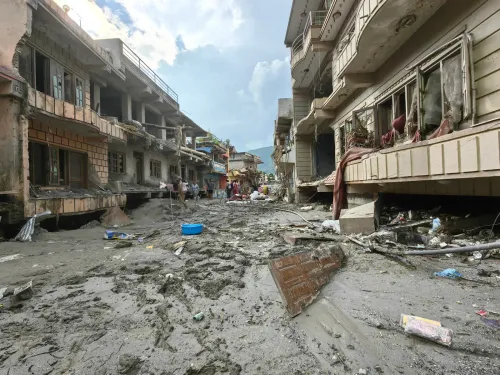
Nepal's catastrophic floods have left a trail of death and devastation, but emerging from the wreckage are remarkable stories of survival, selfless heroism, and near-miraculous escapes that underscore the extraordinary resilience of ordinary people. From community volunteers braving washed-out roads to unnamed helicopter pilots ferrying survivors out of inaccessible valleys, the human response to the disaster has been as striking as the disaster itself.
Miraculous Escapes From the Floodwaters
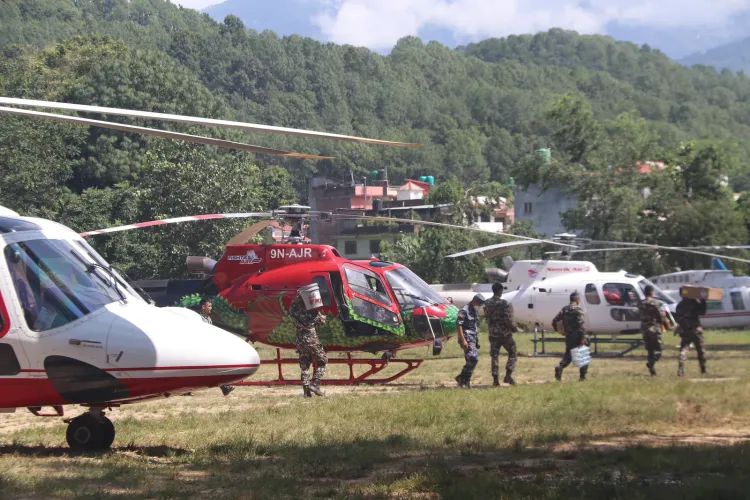
Among the most striking survival accounts is that of Bikash Tharu, an electrical technician at the Bhote Koshi hydropower station. Tharu and his colleagues were late arriving for work after an exhausting previous shift — a delay that inadvertently saved their lives. Spotting the surge of water in time, they fled uphill and spent nights in the open before army helicopters evacuated them. They later learnt that the floodwaters had swept away the very dam they had been working to build.
In Trishuli Bazaar, an elderly couple — Jari and Bhakta Bardewa — were alerted by neighbours shouting 'Aayo, aayo' (It is coming, coming). As they rushed to higher ground, the water and slush caught up with the septuagenarian husband, but he managed to pull himself to safety alongside his wife.
At another dam site, worker Buddha Tamang survived because he happened to be inside a tunnel when the flood struck. He emerged hours later and was airlifted after being stranded for nearly 24 hours. A young Indian engineer, Ananay Sharma, was reportedly saved after heeding a warning to evacuate a building when a loud sound and seepage on the walls signalled imminent collapse.
Pilgrims on the Kailash-Mansarovar Route Face Mixed Fates
Pilgrims travelling to Kailash-Mansarovar — whose route passes through Nepal's Rasuwagadhi border into the Tibet region — encountered the floods with varying outcomes. Among a group of 56 pilgrims from Tamil Nadu, Sivaranjani Muthunathan managed to climb to safety with fellow travellers, even as they watched vehicles being swept away by the torrent below.
Another pilgrim, Poonguzhali Ponmambadan, used her sari to fashion a makeshift rope and helped elderly co-travellers climb to higher ground — an act of quick-thinking courage that reportedly saved multiple lives.
Heartbreak Alongside Hope
Not every story ended in survival. Sangke Dolma Tamang managed to climb uphill with other family members, but her husband was swept away even as the family made desperate attempts to save him. Across affected villages, families lost spouses and children in separate incidents as floodwaters and slush inundated settlement after settlement.
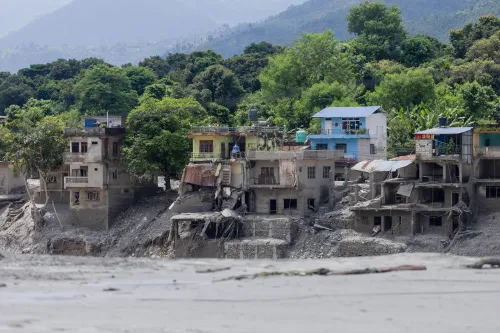
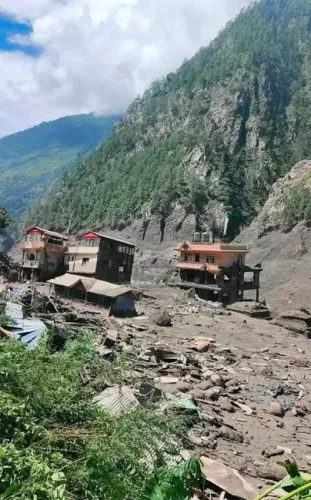
This comes amid a broader pattern of devastation that has claimed dozens of lives and displaced thousands across Nepal's northern and central districts, with Rasuwa and Nuwakot among the worst-hit areas.
Community Heroes and Rescue Operations
Sikh community groups reportedly headed for the flood-hit district of Rasuwa with relief supplies despite damaged bridges, washed-out roads, and inclement weather. Actor Sonu Sood reportedly reached Nepal personally to distribute essential supplies to those affected, even as the Hindi film fraternity mourned the loss of lives.
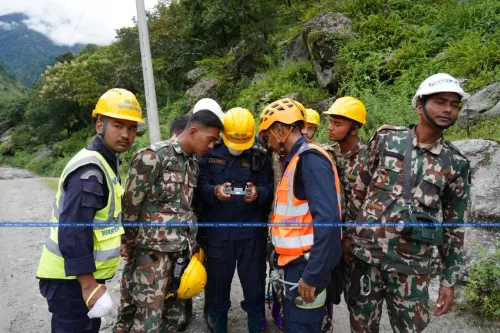
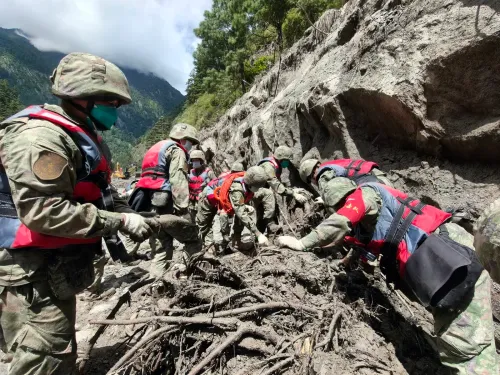
Nepal's Armed Police Force rescue teams heard a six-year-old girl crying beneath debris in Timure, dug through collapsed structures, and pulled her out alive, stabilising her on-site as bad weather prevented immediate evacuation. The Nepal Army's elite Ranger Battalion navigated terrain where landmarks had disappeared entirely to save workers trapped inside intake tunnels buried under slurry.
Relief camps in Nuwakot and Bidur functioned as lifelines, providing medical aid and trauma counselling to survivors. Helicopter pilots — largely unnamed in coverage — repeatedly flew into treacherous conditions to ferry survivors from valleys cut off by landslides and collapsed roads.
What Comes Next
Rescue and relief operations are ongoing across multiple districts, with army helicopters and volunteer teams continuing to reach remote pockets. The full scale of casualties and displacement is still being assessed as roads remain cut off in several areas. The stories of those who survived — and those who did not — are likely to define Nepal's collective memory of this disaster for years to come.
Point of View
Police) and informal networks (Sikh aid groups, celebrity volunteers, neighbours shouting warnings) operate in parallel, and it is often the informal layer that reaches people first. What is missing from most coverage is accountability for the infrastructure failures — collapsed dams, washed-out roads — that made these heroics necessary in the first place. The Bhote Koshi incident, where workers narrowly escaped a dam being swept away, raises pointed questions about early-warning systems at hydropower sites in flood-prone Himalayan corridors. Resilience is real, but it should not become a substitute for prevention.
NationPress
17 Oct 2026
Frequently Asked Questions
What happened to workers at the Bhote Koshi hydropower station during the Nepal floods?
Electrical technician Bikash Tharu and his colleagues survived because they were late arriving for work after a gruelling previous shift, giving them time to spot the floodwaters and flee uphill. They spent nights in the open before being evacuated by army helicopters, and later learnt that the dam they had been working on was swept away entirely.
How did pilgrims on the Kailash-Mansarovar route cope with the Nepal floods?
Pilgrims travelling through Nepal's Rasuwagadhi border faced mixed outcomes. Among 56 pilgrims from Tamil Nadu, Sivaranjani Muthunathan climbed to safety while watching vehicles being washed away. Pilgrim Poonguzhali Ponmambadan used her sari as a makeshift rope to help elderly co-travellers reach higher ground.
What rescue operations have taken place in flood-hit Nepal?
Nepal's Armed Police Force rescued a six-year-old girl alive from debris in Timure, while the Nepal Army's elite Ranger Battalion saved workers trapped inside intake tunnels buried under slurry. Helicopter pilots have repeatedly flown into treacherous conditions to evacuate survivors from cut-off valleys.
Which areas of Nepal have been worst affected by the floods?
The districts of Rasuwa and Nuwakot are among the worst-hit areas, with roads, bridges, and settlements severely damaged. Relief camps in Nuwakot and Bidur have been providing medical aid and trauma counselling to survivors.
Who has been providing relief to Nepal flood victims?
Sikh community groups have reached the flood-hit Rasuwa district with aid despite damaged infrastructure. Actor Sonu Sood reportedly travelled to Nepal personally to distribute essential supplies. Army personnel, helicopter pilots, and medical teams continue to operate across affected zones.