Guangxi floods: 6 dead, 11 missing as Typhoon Maysak batters south China
Synopsis
Typhoon Maysak has pushed Guangxi Zhuang Autonomous Region to its highest flood alert, with six dead, 11 missing, and 375,000 people affected. With 341 reservoirs above flood-limit levels and three more days of heavy rain forecast, the crisis is far from over — and neighbouring Guangdong is already on red alert too.
Key Takeaways
Six people killed and 11 missing after Typhoon Maysak-driven floods hit Guangxi Zhuang Autonomous Region as of 7 July .
375,000 people affected; 130,000 evacuated from flood zones.
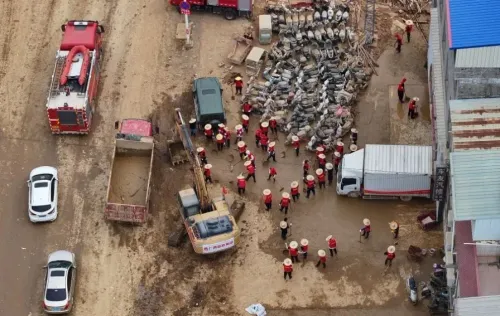
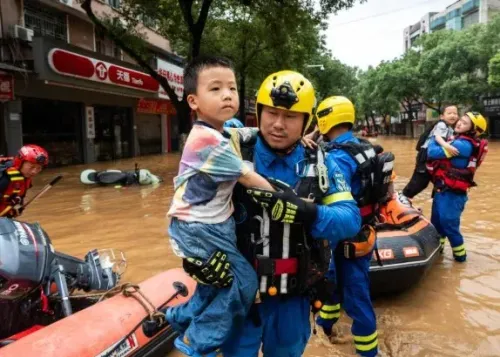
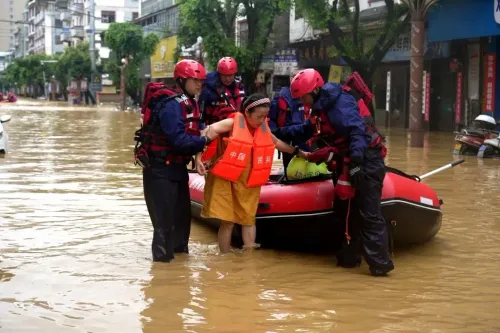
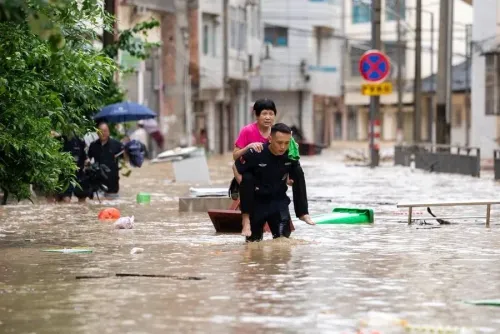
More than 8,000 rescue personnel , 1,700 vehicles , and 5,700 boats deployed for search and rescue.
341 reservoirs above flood-limit levels; 70 monitoring stations on 55 rivers recording above-warning water levels.
Guangxi upgraded to highest-level red flood warning ; neighbouring Guangdong issued its own red alert.
China's Ministry of Emergency Management has dispatched over 36,000 relief items to the region.
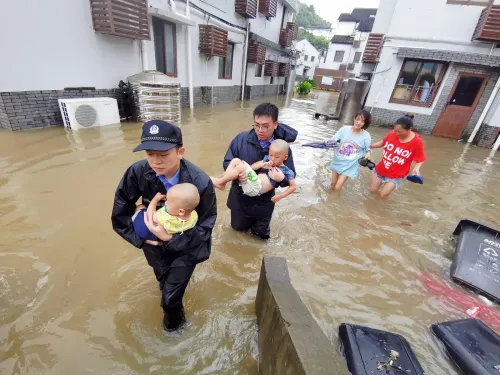
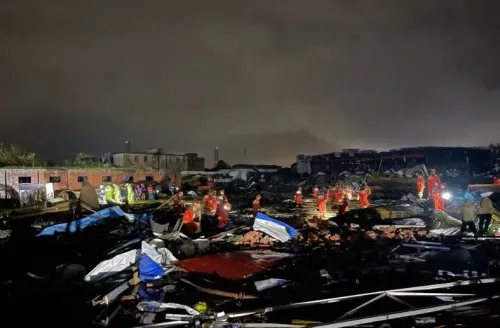
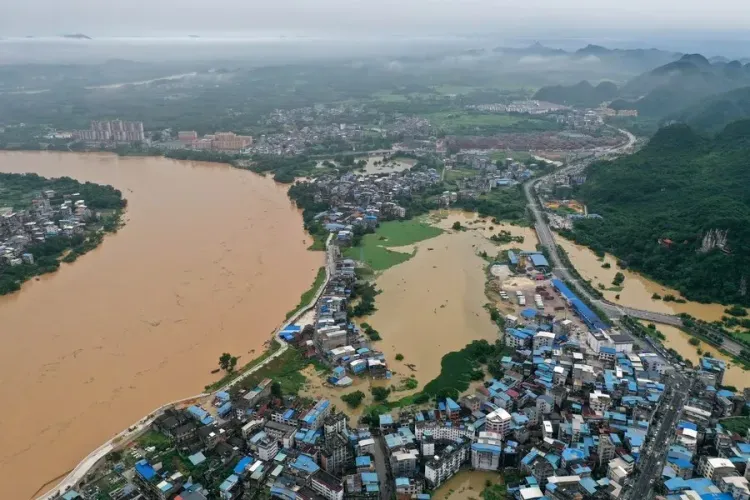
At least six people have died and 11 others remain missing after torrential rains driven by Typhoon Maysak triggered severe flooding across Guangxi Zhuang Autonomous Region in southern China, local authorities confirmed as of Tuesday evening, 7 July. The disaster has affected an estimated 375,000 people, prompting mass evacuations and the deployment of a large-scale rescue operation.
Scale of the Disaster
Authorities have evacuated 130,000 residents from flood-affected areas across Guangxi. More than 8,000 rescue personnel, along with over 1,700 vehicles and 5,700 boats, have been mobilised for search, rescue, and hazard removal operations. The region upgraded its flood alert to the highest-level red warning at 7:00 am on Tuesday, with neighbouring Guangdong Province issuing its own red flood alert shortly after.
Rivers Breaching Warning Levels
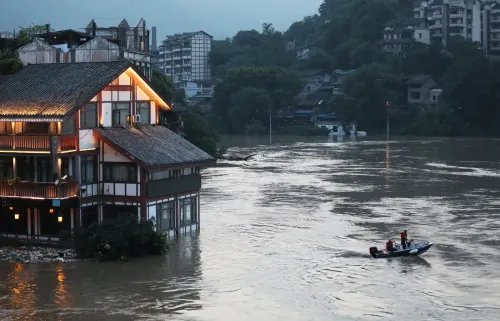
By 7:00 am Tuesday, water levels at 70 monitoring stations across 55 rivers in Guangxi were recorded between 0.01 and 7.46 metres above warning thresholds, according to the regional hydrology centre. A total of 341 reservoirs in the region have surpassed their flood-limit water levels, while 56 monitoring stations on 41 rivers are reporting levels above warning marks. The hydrology centre warned that elevated water levels would persist across several river sections over the next 24 hours.
Government Response and Relief
China's Ministry of Emergency Management has allocated more than 36,000 disaster relief items to Guangxi, including woven bags and rubber boats. The supplies were jointly dispatched by the office of the State Flood Control and Drought Relief Headquarters and the National Food and Strategic Reserves Administration. Local officials stated they will continue to strengthen early warning systems, resident relocation efforts, and post-disaster recovery measures.
What Comes Next
Parts of Guangxi are forecast to receive heavy rainfall for the next three days, raising concerns about further flooding and infrastructure damage. China operates a four-tier emergency response system, with Level I being the most severe — the red alert currently in effect signals the gravest level of flood risk. Authorities are expected to maintain heightened vigilance as the typhoon's impact persists across the region.
Point of View
The risk of cascading failures is real. The simultaneous red alerts in both Guangxi and Guangdong suggest the typhoon's footprint is wider than initial reports indicated. What deserves scrutiny is whether early-warning systems translated into timely evacuations — the gap between 375,000 affected and 130,000 evacuated points to a significant population still in harm's way.
NationPress
6 Oct 2026
Frequently Asked Questions
How many people have died in the Guangxi floods caused by Typhoon Maysak?
As of Tuesday evening, 7 July, six people have been confirmed dead and 11 others remain missing following floods triggered by Typhoon Maysak in China's Guangxi Zhuang Autonomous Region. Rescue operations are ongoing across the affected areas.
How many people have been affected and evacuated in Guangxi?
The flooding has affected approximately 375,000 people across Guangxi, with authorities evacuating 130,000 residents from the worst-hit areas. Over 8,000 rescue personnel, 1,700 vehicles, and 5,700 boats have been deployed.
What flood alert level has Guangxi issued?
Guangxi Zhuang Autonomous Region upgraded its flood alert to the highest-level red warning at 7:00 am on Tuesday. Under China's four-tier emergency response system, a red alert represents the most severe level of risk.
How are China's authorities responding to the disaster?
The Ministry of Emergency Management has dispatched more than 36,000 relief items — including woven bags and rubber boats — to Guangxi. Local authorities have pledged to strengthen early warnings, continue resident relocations, and accelerate post-disaster recovery.
Is the flooding expected to worsen in Guangxi?
Yes, parts of Guangxi are forecast to receive heavy rainfall for at least the next three days. With 341 reservoirs above flood-limit levels and water levels on 55 rivers still above warning thresholds, authorities have warned that conditions could deteriorate further before improving.