NFSU deploys 10-member forensic team to Nepal to identify flood victims
Synopsis
As Nepal's flash flood death toll crosses 669 with nearly 2,000 still missing, India has deployed a specialised 10-member DNA forensics team from NFSU to identify victims — a mission that also carries weight for at least 25 Gujarat-linked individuals reported missing and families waiting on both sides of the border.
Key Takeaways
NFSU dispatched a 10-member forensic team to Nepal on 29 August for Disaster Victim Identification.
The team is led by Bhargav Patel , Head of NFSU's Centre of Excellence in DNA Forensics.
Nepal's flash flood death toll stood at 669 as of Saturday, with nearly 2,000 people still missing.
At least 25 Gujarat-linked individuals , including overseas citizens, are among those reported missing.
The team operates under joint supervision of the Ministry of External Affairs and Ministry of Home Affairs .
NFSU previously completed DNA identification of all victims of the AI-171 crash within 10 days .
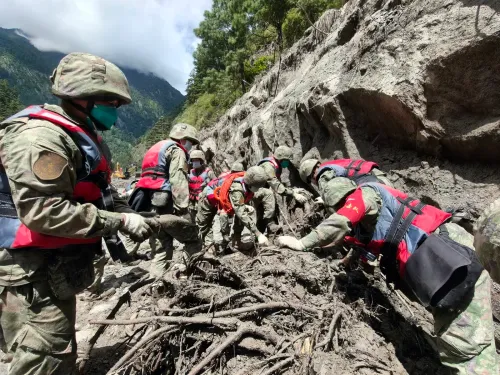
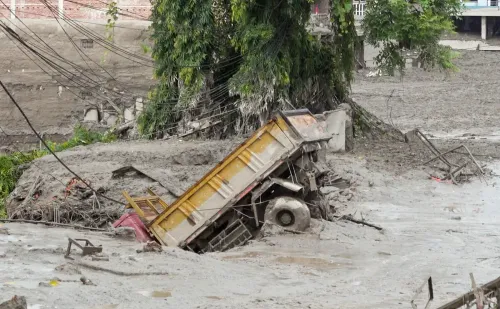
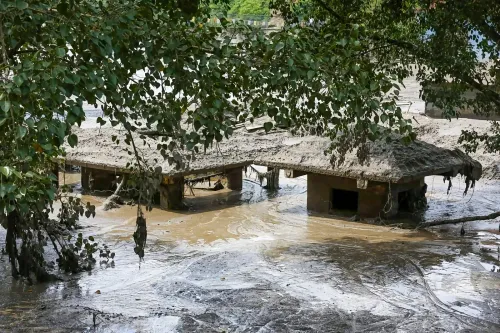
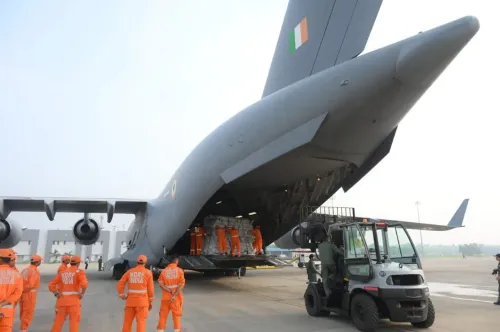
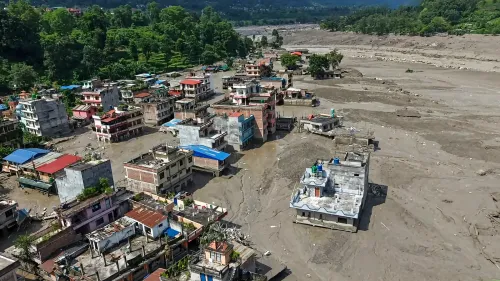
Gujarat's National Forensic Sciences University (NFSU) has dispatched a 10-member forensic team to Nepal to assist in identifying victims of the devastating flash floods that struck central Nepal and the Nepal-Tibet border region on 26 August, as families across India await news of missing relatives. The deployment, confirmed on 29 August, reflects the growing scale of a disaster that has already claimed at least 669 lives with nearly 2,000 people still unaccounted for.
Team Composition and Mandate
The team is led by Bhargav Patel, Head of NFSU's Centre of Excellence in DNA Forensics, and will carry out Disaster Victim Identification (DVI) procedures, including DNA sample collection and matching from recovered remains. It will operate under the joint supervision of the Union Ministry of External Affairs and the Ministry of Home Affairs.
According to NFSU, experts will collect DNA samples from recovered remains and cross-match them against samples provided by relatives, following internationally established DVI protocols. 'The team would provide families of missing people with complete details about their relatives once the identification process is completed,' the university stated.
Scale of the Disaster
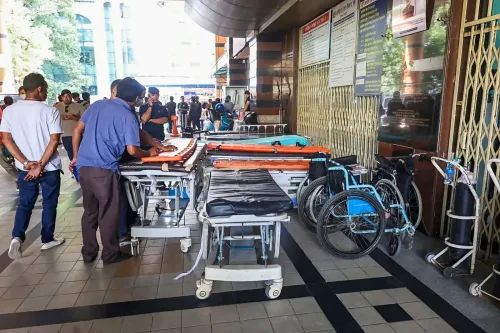
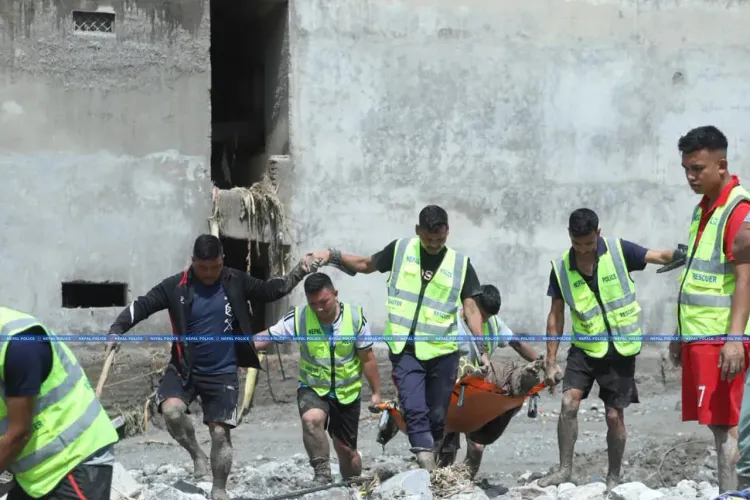
Nepal's death toll had risen to 669 by Saturday, with close to 2,000 people still reported missing following the flash floods. Thousands have been rescued or evacuated, but damaged roads, bridges, and other infrastructure have severely complicated access to the worst-affected districts. Search and recovery operations remain ongoing across the region.
Indian Nationals Among the Affected
The disaster has affected a significant number of Indian nationals. The Ministry of External Affairs stated in its 28 August briefing that efforts are continuing to locate Indian citizens caught in the floods and to coordinate their evacuation and repatriation. At least 25 Gujarat-linked individuals, including several overseas citizens of Indian origin, have been reported missing.
NFSU's Track Record in Mass Casualty Identification
NFSU cited its experience from the AI-171 aircraft crash on 12 June last year, when DNA-based identification of all deceased was completed within 10 days. The university also noted that its forensic experts have collaborated with the US Department of Defense to locate American soldiers who went missing in India during World War II, with the mortal remains of three soldiers successfully recovered through that effort.
This deployment underscores India's expanding role in regional disaster response and forensic diplomacy. With identification of victims emerging as a critical challenge, the NFSU team's work will be closely watched by hundreds of families on both sides of the border.
Point of View
However, is domestic: with 25 Gujarat-linked individuals unaccounted for and families waiting, the team's speed and transparency will matter as much as its technical credentials. NFSU's 10-day turnaround on the AI-171 crash sets a high benchmark. Whether that standard holds in a multi-country, field-based operation amid damaged infrastructure is the question that will define this mission's legacy.
NationPress
29 Aug 2026
Frequently Asked Questions
Why has India sent a forensic team to Nepal after the flash floods?
India deployed a 10-member DNA forensics team from the National Forensic Sciences University (NFSU) to Nepal to help identify victims of the flash floods that struck central Nepal and the Nepal-Tibet border region on 26 August 2025. The move was prompted by the scale of the disaster and the presence of Indian nationals, including at least 25 Gujarat-linked individuals, among the missing.
What is Disaster Victim Identification (DVI) and how does it work?
Disaster Victim Identification (DVI) is a forensic process used to identify the deceased following mass-casualty events, primarily through DNA sample collection and matching. NFSU's team will collect DNA from recovered remains and cross-reference them with samples provided by relatives of missing persons, following internationally established protocols.
How many people have died or gone missing in the Nepal floods?
As of Saturday, 29 August, Nepal's flash flood death toll had risen to 669, with nearly 2,000 people still reported missing. Thousands have been rescued or evacuated, though damaged infrastructure continues to hinder access to affected areas.
Which Indian government bodies are overseeing the NFSU deployment?
The NFSU team is operating under the joint supervision of the Union Ministry of External Affairs and the Ministry of Home Affairs. The Ministry of External Affairs confirmed in its 28 August briefing that efforts are ongoing to locate Indian nationals and coordinate their evacuation and return.
What is NFSU's experience in mass casualty identification?
NFSU completed DNA-based identification of all victims of the AI-171 aircraft crash within 10 days last year. The university's forensic experts have also worked with the US Department of Defense to recover the mortal remains of three American soldiers missing in India since World War II.