Guterres urges UN uniformed presence in Lebanon after UNIFIL exits by end-2025
Synopsis
With UNIFIL set to cease operations on 31 December 2025, UN Secretary-General Guterres is already lobbying the Security Council for a successor uniformed presence — a signal that the UN fears a security vacuum in southern Lebanon could reignite full-scale conflict. Seven peacekeepers dead and over a million civilians displaced give that warning urgent weight.
Key Takeaways
UN Secretary-General António Guterres called for a continued UN 'uniformed presence' in Lebanon after UNIFIL departs.
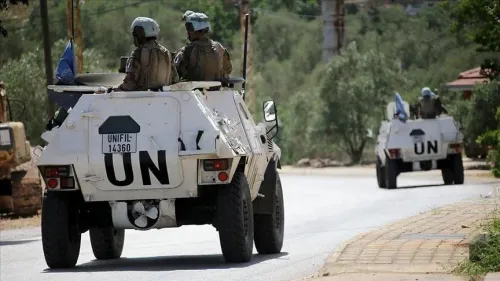
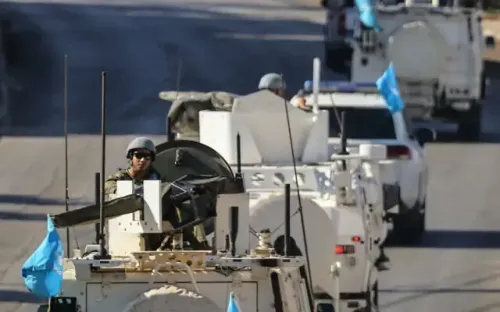
UNIFIL will cease operations on 31 December 2025 under Security Council Resolution 2790 , with a one-year drawdown window thereafter.
Guterres warned the situation could 'trigger a full resumption of conflict' and noted displacement of over a million civilians in southern Lebanon.
Seven UN peacekeepers have been killed since escalation intensified, including one in the week before his address.
The proposal for a successor UN presence was submitted in writing to the Security Council the week prior to the open debate.
Any new UN uniformed mission would require a fresh Security Council resolution , making P5 consensus the critical hurdle.
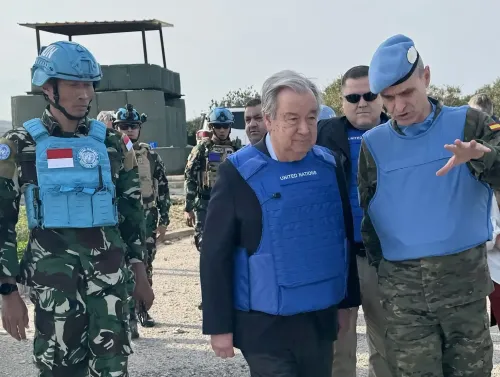
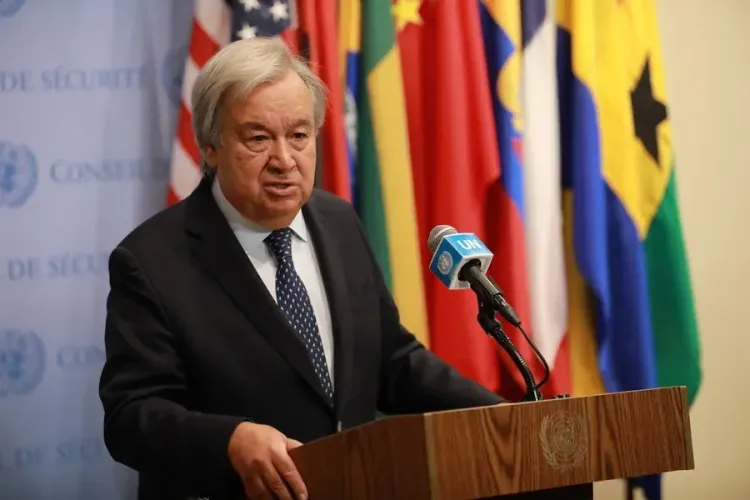
UN Secretary-General António Guterres on Wednesday called for a continued United Nations 'uniformed presence' in Lebanon following the scheduled departure of the UN Interim Force in Lebanon (UNIFIL), whose drawdown is set to begin on 31 December 2025 under Security Council Resolution 2790. Addressing an open debate of the UN Security Council on the Middle East situation, Guterres warned that the region is being pulled deeper into crisis with consequences that 'reach far beyond the region.'
Guterres's Warning on Escalation
The UN chief expressed deep alarm over the trajectory of the conflict, stating: 'I am profoundly concerned it could trigger a full resumption of conflict.' He cautioned that escalation in the Middle East reverberates across borders and continents, with 'a brutal price being paid by the region's people' — a toll he said is extending to the wider world, particularly the most vulnerable countries and communities.
Guterres pointed specifically to the escalation in Lebanon since March, as Israel intensified operations in Lebanese territory and Hezbollah fired deeper into Israeli territory. 'We have seen the killing of civilians. Entire communities uprooted, and extensive demolition of homes and civilian infrastructure, in southern Lebanon. The forced displacement of over a million civilians,' he said.
Seven UN Peacekeepers Killed
The secretary-general disclosed that seven UN peacekeepers have been killed since hostilities intensified, including one in the week preceding his address. The deaths underscore the mounting danger to international personnel operating in the conflict zone and add urgency to deliberations over what form any successor UN presence should take after UNIFIL's exit.
The Call for a Successor Presence
Guterres formally urged all parties to pursue a diplomatic settlement that fully respects Lebanon's territorial integrity, sovereignty, and political independence within its internationally recognised borders, consistent with Security Council Resolution 1701. He then went further, telling the Council: 'I urge a continued United Nations uniformed presence following the departure of UNIFIL — as proposed last week in my letter to this Council.'
The proposal, submitted in writing to the Security Council the previous week, signals that the UN leadership is actively seeking a mandate framework to maintain a peacekeeping footprint in southern Lebanon even after UNIFIL formally ceases operations on 31 December 2025. Under Resolution 2790, UNIFIL will then have one year — until end-2026 — to complete its drawdown and withdrawal of all personnel from Lebanese territory.
What Comes Next
The open debate marks an early but significant moment in what is expected to be a complex negotiation among Security Council members over the shape, mandate, and troop contributions of any replacement force. Notably, any new uniformed UN presence would require a fresh Council resolution, making consensus among the P5 — particularly the United States, Russia, and China — a prerequisite. With the Lebanon ceasefire architecture already under strain and civilian displacement exceeding a million, the diplomatic window to agree on a successor arrangement before the December deadline is narrowing.
Point of View
Unchanged in substance since Resolution 1701 in 2006, has failed to prevent the very escalation it was designed to deter. The real question the Security Council must answer is not whether to maintain a UN footprint, but whether any replacement mission will have a mandate robust enough to matter, or whether it will replicate UNIFIL's structural limitation of being present without being effective. With seven peacekeepers already dead and P5 divisions over the Middle East deeper than at any point in a decade, the diplomatic arithmetic for a new resolution is daunting. The December deadline is not a soft target — it is a hard cliff.
NationPress
19 Sept 2026
Frequently Asked Questions
Why is UNIFIL departing Lebanon?
UNIFIL is ceasing operations on 31 December 2025 under Security Council Resolution 2790, which mandated the force's termination and gave it one additional year — until end-2026 — to complete the full withdrawal of personnel from Lebanese territory.
What is Guterres proposing to replace UNIFIL?
Guterres has proposed a continued UN 'uniformed presence' in Lebanon following UNIFIL's departure, a concept he formally submitted to the Security Council in a letter the week before his 11 June address. The specific mandate and structure of such a force would require a new Security Council resolution.
How many UN peacekeepers have been killed in Lebanon?
Seven UN peacekeepers have been killed since hostilities intensified, including one in the week immediately preceding Guterres's address to the Security Council on Wednesday.
What is the humanitarian situation in Lebanon?
According to Guterres, over a million civilians have been forcibly displaced, with entire communities uprooted and extensive demolition of homes and civilian infrastructure reported in southern Lebanon since Israel intensified operations and Hezbollah escalated cross-border fire from March onwards.
What is Security Council Resolution 1701?
Resolution 1701, adopted in 2006, called for a cessation of hostilities between Israel and Hezbollah and established the framework for Lebanese sovereignty and territorial integrity that UNIFIL was tasked with supporting. Guterres invoked it on Wednesday as the baseline for any diplomatic settlement.