Haiti gang violence displaces 7,600+ in Artibonite and Cite Soleil
Synopsis
More than 7,600 Haitians have been forced from their homes in just weeks as rival gang clashes escalate across Artibonite and Cite Soleil. With MSF's maternity unit shuttered, 117,000 people forcibly returned this year, and the UN's $880 million appeal barely a quarter funded, Haiti's humanitarian crisis is deepening faster than the international response can keep pace.
Key Takeaways
More than 2,600 people were displaced in Haiti's Artibonite department in a single week, with over three-quarters sheltering in Marchand Dessalines .
Renewed clashes in Cite Soleil since 13 June have displaced more than 5,000 additional people .
Doctors Without Borders (MSF) suspended its maternity facility in Cite Soleil on 19 June , cutting off maternal care in a densely populated area.
More than 117,000 people have been forcibly returned to Haiti in 2026 so far; 24% are women and nearly 8% are children.
The 2026 Haiti humanitarian appeal of $880 million is only 27 per cent funded , severely limiting the relief response.
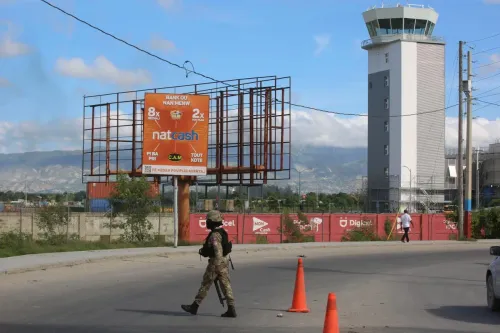
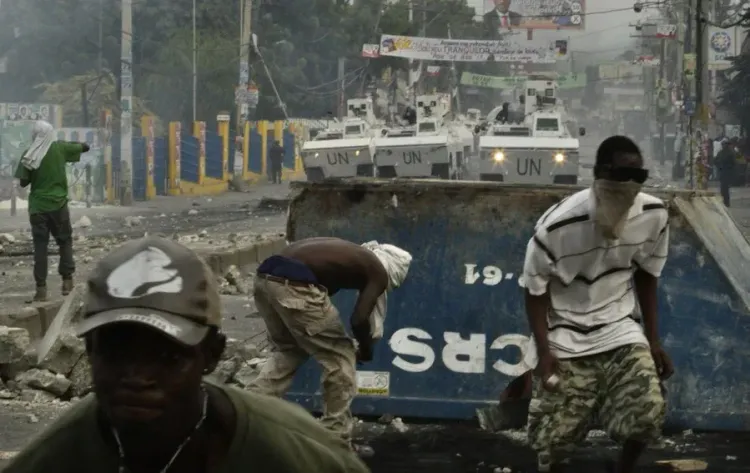
Gang-fuelled armed clashes have displaced more than 7,600 people across Haiti's Artibonite and West departments in recent weeks, the United Nations Office for the Coordination of Humanitarian Affairs (OCHA) said on Friday, 27 June 2026, warning of deepening protection and health crises in one of the Western Hemisphere's most fragile states.
Scale of Displacement
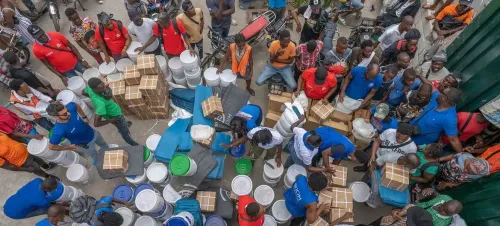
According to the International Organization for Migration (IOM), more than 2,600 people were uprooted in the Artibonite department in a single week, with over three-quarters of them seeking refuge in the commune of Marchand Dessalines. Separately, renewed armed clashes in Cite Soleil — one of Port-au-Prince's most densely populated neighbourhoods — since 13 June have displaced more than 5,000 additional people, compounding displacement that had already been building between March and May.
'Continuing violence in the Artibonite department is raising serious protection concerns,' OCHA said in its statement.
Health Services Under Severe Strain
Ongoing violence has severely disrupted health services, with women and girls bearing a disproportionate burden. Doctors Without Borders (MSF), the international medical non-governmental organisation, was forced to suspend operations at its maternity facility in Cite Soleil on 19 June, cutting off thousands of women from maternal and reproductive healthcare in the area. Health facilities across the affected zones have simultaneously reported a sharp rise in the number of wounded patients requiring treatment, according to OCHA.
Forced Returns Add to the Crisis
The displacement crisis is compounded by a surge in forced returns. The IOM reported that more than 25,500 people were forcibly returned to Haiti last month alone, bringing the cumulative total for 2026 to over 117,000 people. Of those returned, 24 per cent were women and nearly 8 per cent were children — populations already at heightened risk in a country where gang control over territory continues to expand.
Humanitarian Funding Critically Short
OCHA confirmed it is working alongside humanitarian partners to assess needs and deliver assistance, but acknowledged significant access constraints in gang-controlled areas. The 2026 Haiti humanitarian appeal, valued at $880 million, remains only 27 per cent funded — a critical shortfall that threatens the scale and continuity of relief operations. Without a substantial injection of donor support, aid agencies warn that response capacity will continue to fall well short of the need.
What Comes Next
With gang violence showing no sign of abating and the rainy season adding logistical pressure, humanitarian agencies face an increasingly difficult operating environment. The suspension of MSF's maternity services and the mounting displacement figures signal that without a security breakthrough and fresh funding, Haiti's humanitarian situation is likely to deteriorate further in the weeks ahead.
Point of View
But the real crisis is the international community's failure to fund its own appeal — 27 per cent of $880 million after six months is not a funding gap, it is a policy choice. The suspension of MSF's maternity services in Cite Soleil is a direct consequence: when security collapses and money dries up simultaneously, it is always healthcare that goes first and women who pay the price. The forced-return figure — 117,000 people pushed back into a country where gangs control large swathes of territory — raises hard questions about the deportation policies of receiving nations that have signed humanitarian conventions. Haiti's crisis is not a natural disaster; it is a governance and funding failure with identifiable authors.
NationPress
25 Sept 2026
Frequently Asked Questions
How many people has gang violence displaced in Haiti recently?
More than 7,600 people have been displaced across Haiti's Artibonite and West departments in recent weeks, according to the IOM. Over 2,600 were uprooted in Artibonite in a single week, while clashes in Cite Soleil since 13 June displaced more than 5,000 more.
Why did Doctors Without Borders suspend services in Cite Soleil?
Doctors Without Borders (MSF) suspended operations at its maternity facility in Cite Soleil on 19 June due to ongoing armed violence in the area. The closure has deprived thousands of women in one of Port-au-Prince's most densely populated neighbourhoods of access to maternal and reproductive healthcare.
How many people have been forcibly returned to Haiti in 2026?
More than 117,000 people have been forcibly returned to Haiti so far in 2026, with over 25,500 returned in May alone, according to the IOM. Of those returned, 24 per cent are women and nearly 8 per cent are children.
How funded is the 2026 Haiti humanitarian appeal?
The 2026 Haiti humanitarian appeal, which seeks $880 million, is only 27 per cent funded as of late June 2026. OCHA has warned that this critical shortfall is severely limiting the scale and continuity of humanitarian operations on the ground.
Which areas of Haiti are most affected by the current violence?
The Artibonite department and the West department — particularly the Cite Soleil neighbourhood of Port-au-Prince — are the worst-affected areas. Marchand Dessalines in Artibonite has become a major refuge point, hosting the majority of recently displaced residents.