Did a US City Just Honor Bangladesh's Former PM Khaleda Zia?
Synopsis
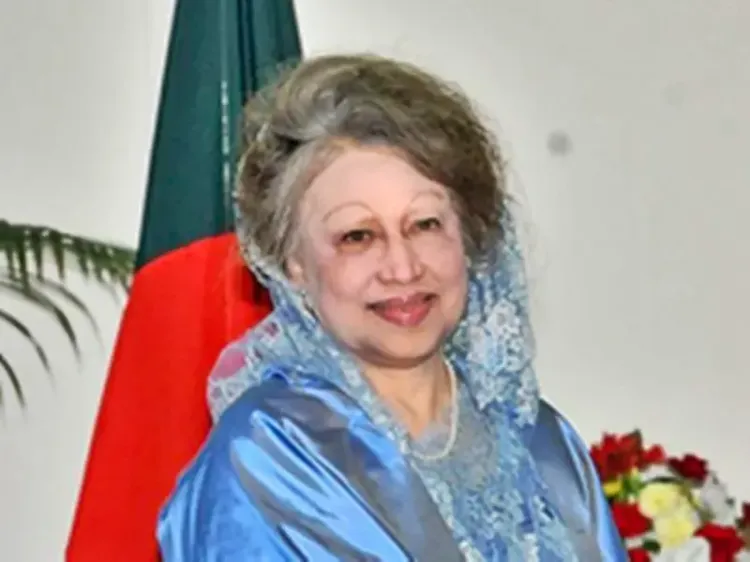
Hamtramck, Michigan, has renamed a portion of Carpenter Street to Khaleda Zia Street, honoring the former Prime Minister of Bangladesh who recently passed away. This decision reflects the city's evolving demographics and the significant impact of its Bangladeshi community.
Key Takeaways
Hamtramck has renamed Carpenter Street to Khaleda Zia Street.
The renaming honors the late former Prime Minister of Bangladesh .
This decision reflects the growing influence of the Bangladeshi community.
Hamtramck has become a significant Muslim-majority municipality.
The change symbolizes the evolving identity of the city.
New Delhi, Jan 8 (NationPress) The city of Hamtramck in Michigan, USA, has officially renamed a section of Carpenter Street to Khaleda Zia Street in tribute to the late former prime minister of Bangladesh, who passed away on December 30 at the age of 80.
The Hamtramck City Council sanctioned the renaming of the stretch located between Joseph Campau and Conault Streets. This initiative was primarily championed by council members of Bangladeshi heritage who sought to honor Khaleda Zia’s political impact and her importance to the local Bangladeshi community.
This decision reflects the evolving demographic landscape of Hamtramck, which has attracted national and international attention.
The city gained notoriety when it elected an all-Muslim city council and Mayor Amer Ghalib. These political changes have sparked discussions about identity, governance, and religion's role in civic matters. However, officials maintain that these decisions mirror the community's desires and the realities of a diversifying electorate, as reported.
For many immigrants and their descendants in Hamtramck, this renaming serves as both a symbol and a deeply meaningful acknowledgment. The city has the highest concentration of Bangladeshi residents in Michigan, and the new street name is viewed as recognition of a community that has significantly influenced the city's social and political realm.
Proponents of the renaming framed it as a celebration of the community's contributions to Hamtramck's civic life.
Once referred to as “Little Warsaw” due to its Polish-American roots, Hamtramck has seen a remarkable demographic transformation since the late 20th century. Significant immigration from Yemen and Bangladesh has established the city as the first Muslim-majority municipality in the United States, with nearly 70% of residents identifying as Muslim and over 40% born outside the country, based on recent census data.
This demographic shift is evident in the city hall, where the mayor, police chief, and the entire city council are Muslim, as well as in the multilingual signs now featuring English, Arabic, and Bengali.
The renaming has prompted varied reactions. Supporters view it as a rightful recognition of a community’s heritage and a respectful nod to a leader who continues to hold influence among many Bangladeshis.
According to media reports, local historians and civic leaders are drawing historical parallels to provide context for the renaming. Similar to how Polish immigrants shaped Hamtramck’s identity and public spaces in the early 20th century, critics then shared concerns akin to those expressed today.
The passing of Khaleda Zia in late December sparked tributes and discussions in both Bangladesh and the diaspora. The renaming in Hamtramck is part of a broader trend in which immigrant communities in the United States commemorate leaders and significant events from their home countries, establishing civic markers that fulfill both local and transnational purposes.
Point of View
I believe that the renaming of a street in Hamtramck to honor Khaleda Zia is a significant acknowledgment of the contributions and heritage of the Bangladeshi community. It reflects the changing demographics of cities across the U.S. and the importance of recognizing diverse backgrounds in shaping local identities.
NationPress
19 Sept 2026
Frequently Asked Questions
Why was Carpenter Street renamed?
Carpenter Street was renamed to Khaleda Zia Street in honor of the late former Prime Minister of Bangladesh, Khaleda Zia, recognizing her influence and the contributions of the Bangladeshi community in Hamtramck.
What is the significance of this renaming for the local community?
The renaming symbolizes recognition of the Bangladeshi community's impact on Hamtramck's social and political landscape and serves as a tribute to a leader who remains influential among many residents.
How has Hamtramck's demographic changed over the years?
Hamtramck has transformed from a Polish-American enclave to a diverse city with a significant Muslim population, primarily due to immigration from countries like Yemen and Bangladesh.
What other changes have occurred in Hamtramck's governance?
Hamtramck has made headlines for electing an all-Muslim city council and mayor, reflecting the city's demographic evolution and the will of its residents.
What does this renaming indicate about immigrant communities in the U.S.?
The renaming is part of a broader trend where immigrant communities memorialize their leaders and cultural heritage, creating civic markers that bridge local and international identities.