Harvard, MIT among 9 US universities probed for J-1 visa fraud
Synopsis
The Trump administration has served subpoenas on nine elite US universities — including Harvard, MIT, and Stanford — alleging they used J-1 visas to staff federally funded research at roughly 61% foreign nationals, paying them $20,000 less than American peers. With national security concerns over China also on the table, the probe could redraw how American research institutions hire international talent, with direct implications for Indian academics.
Key Takeaways
The Trump administration launched formal J-1 visa fraud probes against nine universities on 8 October 2026 , including Harvard , MIT , Stanford , and Yale .
Subpoenas have already been served by the Department of Labour's Inspector General .
Vice President JD Vance alleged foreign researchers were paid approximately $20,000 less than comparable American workers.
The nine institutions reportedly used J-1 visa holders for federally funded grants at 61% , against a national average of 38% .
Labour IG Anthony DiEsposito flagged possible national security risks and named China as a specific concern over intellectual property exposure.
A new visa fraud strike team has been formed; broader task-force efforts have already yielded 171 indictments and 203 convictions .
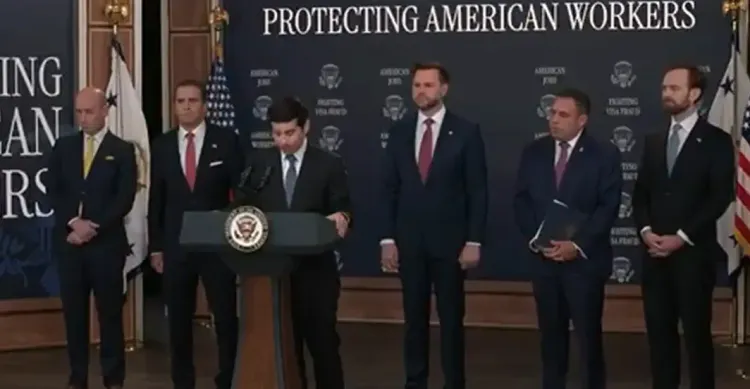
The Trump administration on Thursday, 8 October 2026, launched formal investigations into nine leading American universities — including Harvard, Yale, Stanford, and the Massachusetts Institute of Technology (MIT) — over suspected misuse of J-1 exchange visitor visas to hire foreign researchers and graduate students at lower cost than their American counterparts. The Department of Labour's Inspector General confirmed that subpoenas have already been served as part of the probe, which also covers potential national security risks linked to federally funded research programmes.
Nine Universities Named in the Probe
The institutions under scrutiny are Harvard University, Yale University, Stanford University, Brown University, the University of Pittsburgh, the University of California Davis, the California Institute of Technology (Caltech), Arizona State University, and MIT. The administration did not identify specific researchers accused of wrongdoing or release university-specific evidence at the time of the announcement.
What Vice President Vance Alleged
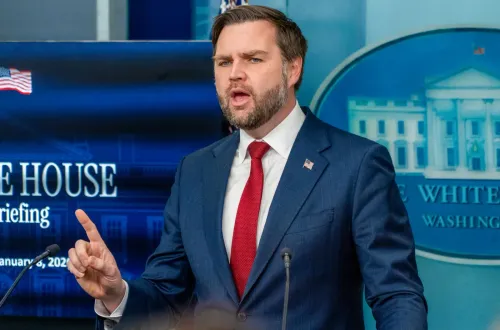
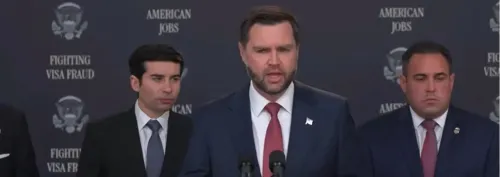
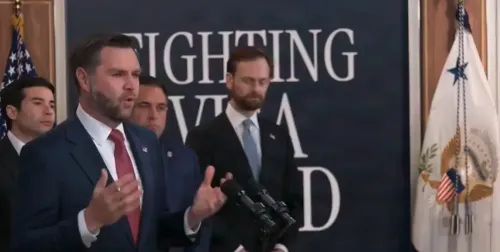
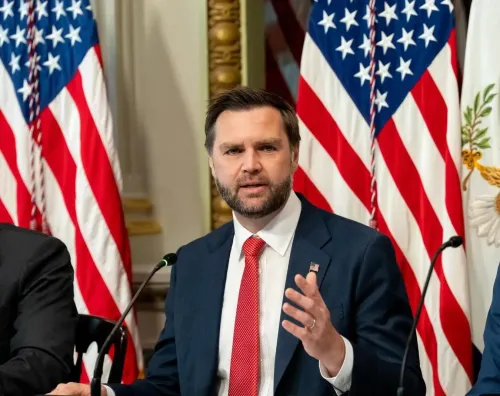
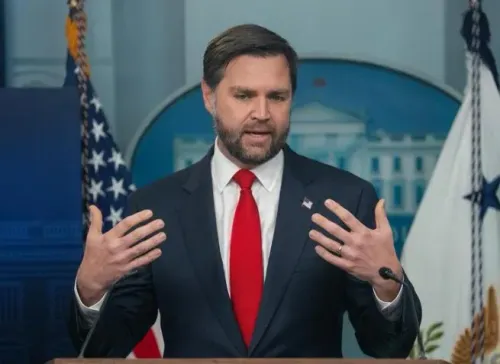
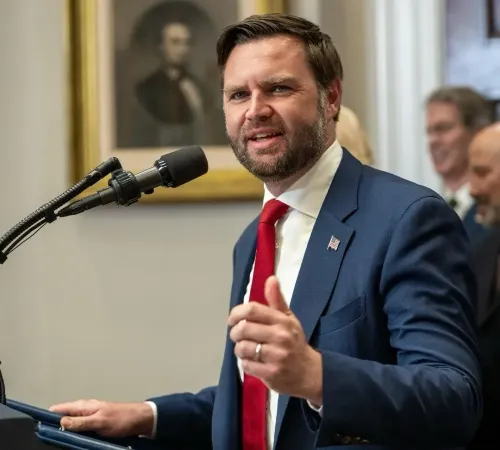
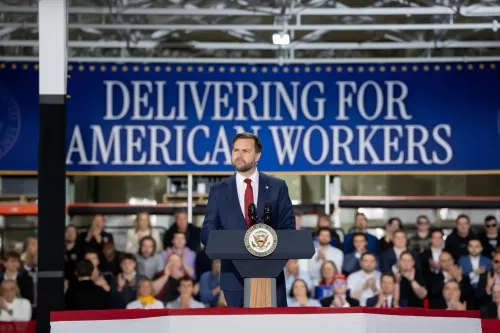
Vice President JD Vance alleged that the targeted universities were systematically using J-1 visas to undercut American researchers on pay. He claimed that domestic graduate students and researchers earned approximately $20,000 more than comparable workers brought in under J-1 classifications. Vance further alleged that the nine institutions were deploying J-1 visa holders for federally funded grants at a rate of about 61 per cent, nearly double the national average of 38 per cent.
'Something weird is going on at these universities,' Vance said, adding: 'Now there are nine universities in particular that we believe merit an investigation.'
Inspector General: 'Nobody Gets a Free Pass'
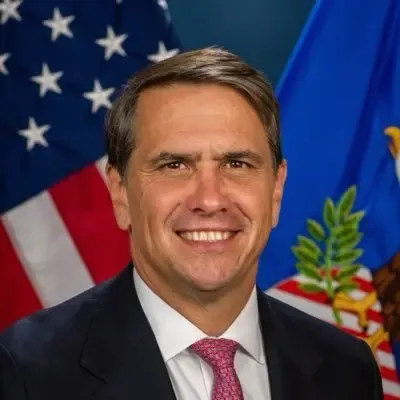
Labour Inspector General Anthony DiEsposito said investigators would examine whether the universities had improperly used visa classifications to avoid standard employment obligations or exploit taxpayer-funded research programmes. DiEsposito noted that roughly 61 per cent of postdoctoral researchers and federally funded workers at the named institutions were foreign nationals.
'Subpoenas have been served, investigations are underway, and nobody will be getting a free pass because their name is carved into an expensive building,' DiEsposito said.
He also announced the formation of a visa fraud strike team drawing investigators from across the federal government. The broader task force's work has, according to DiEsposito, contributed to 171 indictments, 203 convictions, and 80 arrests to date.
National Security and China Concerns
DiEsposito specifically raised concerns about the exposure of American research and intellectual property to foreign influence, naming China as a particular risk. Investigators will examine whether 'foreign influence, improper financial relationships or visa abuse are compromising federally funded research,' he said. The national security dimension broadens the investigation well beyond a labour-compliance dispute, potentially implicating export-control and research-integrity frameworks.
Implications for Indian Researchers and International Academics
The J-1 programme enables foreign nationals to participate in approved educational, research, and cultural exchange activities in the United States. American universities routinely use it to host international scholars — including a significant number from India — across scientific and technological disciplines. The investigations could therefore introduce fresh uncertainty for Indian academics and researchers currently at, or applying to, these institutions. This comes amid a broader tightening of US immigration and visa policy under the Trump administration, which has already drawn scrutiny from governments and academic bodies worldwide.
How the nine universities respond to the subpoenas — and whether the probe expands further — will set the tone for US higher education's relationship with both federal funding and international talent pipelines in the months ahead.
Point of View
But without controlling for research field mix or programme design, it is not self-evidently damning. The China national security angle is the wildcard: if investigators find credible IP-leakage evidence, the fallout could extend far beyond labour compliance into federal funding eligibility. For Indian researchers, the timing is particularly fraught — it layers uncertainty atop an already tightening US visa environment, and the absence of named individuals makes it difficult to assess who is genuinely at risk.
NationPress
8 Oct 2026
Frequently Asked Questions
Which universities are under investigation for J-1 visa fraud?
Nine universities have been named: Harvard, Yale, Stanford, Brown, the University of Pittsburgh, the University of California Davis, the California Institute of Technology (Caltech), Arizona State University, and MIT. Subpoenas were served as part of formal investigations announced on 8 October 2026.
What is a J-1 visa and why is it under scrutiny?
The J-1 exchange visitor visa allows foreign nationals to participate in approved educational, research, and cultural exchange programmes in the United States. Investigators allege that the named universities may have misused the classification to staff federally funded research with lower-cost foreign workers, potentially bypassing standard employment obligations.
What did Vice President JD Vance claim about the universities?
Vance alleged that the nine institutions used J-1 visa holders for federally funded grants at a rate of about 61 per cent, compared with a national average of 38 per cent, and that American researchers were paid roughly $20,000 more than their foreign counterparts under the programme.
Are there national security concerns linked to the investigation?
Yes. Labour Inspector General Anthony DiEsposito specifically raised concerns about China and the potential exposure of American research and intellectual property to foreign influence. Investigators will examine whether foreign influence or improper financial relationships are compromising federally funded research.
How could this affect Indian researchers and students at US universities?
Indian nationals make up a significant share of J-1 visa holders at US research institutions. The investigations introduce uncertainty for Indian academics currently at the named universities or planning to apply, as scrutiny of J-1 usage may lead to tighter compliance requirements or slower visa processing across elite US campuses.