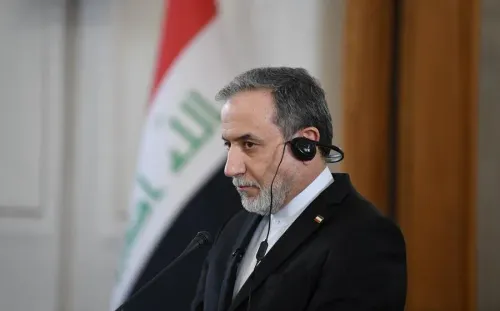
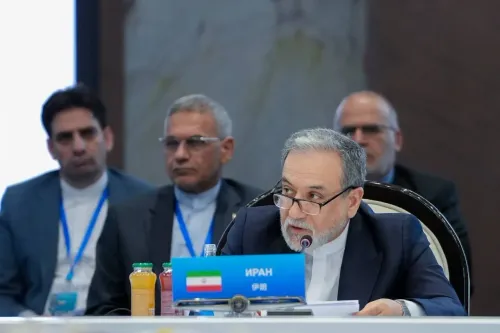
Ukraine-Iran foreign ministers speak after Caspian ship attack kills sailor
Synopsis
A Ukrainian strike in the Caspian Sea — a body of water where Kyiv has never previously struck — killed an Iranian sailor and set off a rare direct diplomatic crisis between Ukraine and Iran. Both foreign ministers have now spoken and called for calm, but Tehran's demand for restitution signals the fallout is far from over.
Key Takeaways
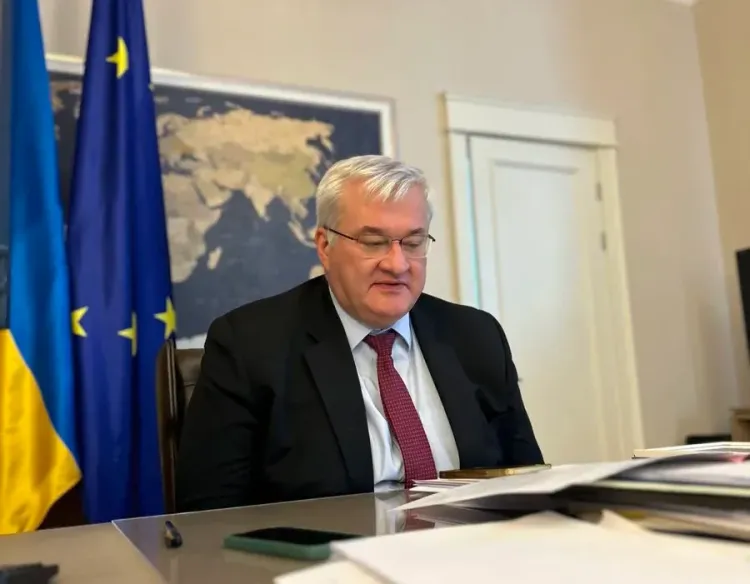
Acting Ukrainian Foreign Minister Andrii Sybiha called Iranian counterpart Seyed Abbas Araghchi on 29 July following a disputed Caspian Sea ship attack.
Iran accused Ukraine of striking an Iranian commercial vessel, causing an explosion that killed one sailor and injured three others .
Sybiha said Ukraine's actions were 'never intended to target civilian vessels or people' and called the incident unintentional.
Araghchi stated Iran 'does not seek escalation' but insisted 'there must be restitution for losses.' President Volodymyr Zelensky had earlier said Ukrainian forces targeted a Russian warship and vessels carrying Iran-linked military cargo in the Caspian Sea.
This is the first publicly acknowledged Ukrainian military action in the Caspian Sea .
Ukraine's acting Foreign Minister Andrii Sybiha held a phone call with Iranian Foreign Minister Seyed Abbas Araghchi on 29 July, following Iran's accusation that a Ukrainian strike on an Iranian commercial vessel in the Caspian Sea caused an explosion that killed one sailor and injured three others. The diplomatic outreach came as both sides signalled a desire to prevent further escalation.
What Was Said in the Call
In a post on X, Sybiha described the exchange as a 'frank conversation,' stressing that Ukraine's actions are 'aimed solely at defending our country' and were 'never intended to target civilian vessels or people.' He also 'emphasised the necessity to refrain from any escalatory steps.'
Araghchi, posting on X following the call, said Sybiha had assured him the Saturday strike on the Iranian commercial ship was 'unintentional' and that Ukraine 'does not seek escalation.' However, Araghchi made clear that 'Iran does not seek escalation either, but made clear any attack on our citizens or interests is unacceptable. There must be restitution for losses.'
The Incident That Triggered the Crisis
Ukrainian President Volodymyr Zelensky said on Saturday that Ukrainian forces had struck a Russian warship and vessels used to transport Iran-linked military cargo in the Caspian Sea. Iran's Foreign Ministry condemned the attack in a statement the same day, confirming the vessel's explosion and the death of one sailor. The semi-official Mehr news agency subsequently reported that three additional sailors were injured.
Diplomatic Stakes and Regional Context
The incident marks a rare direct flashpoint between Ukraine and Iran, two countries whose relationship has already been strained by Tehran's reported supply of drones to Russia for use in the war. Ukraine's targeting of what it described as vessels carrying Iran-linked military cargo signals a broadening of its operational reach beyond the conventional theatre. Notably, this is the first publicly acknowledged Ukrainian strike in the Caspian Sea, a landlocked body of water bordered by Russia, Iran, Azerbaijan, Kazakhstan, and Turkmenistan.
What Comes Next
Iran's demand for 'restitution for losses' introduces a new diplomatic variable. Whether Kyiv formally acknowledges responsibility — or maintains ambiguity — will shape the trajectory of Ukraine-Iran ties in the months ahead. Both foreign ministers have publicly committed to avoiding escalation, but Iran's insistence on accountability leaves the channel under pressure.
Point of View
Directly targeting supply chains that feed Russian military capacity. But the civilian casualty complicates Kyiv's narrative: Ukraine has built its international standing on the principle of protecting civilians, and a dead Iranian sailor aboard a commercial vessel creates a contradiction that adversaries will exploit. Iran's demand for restitution is not merely rhetorical — it sets a precedent that could constrain Ukraine's future operational flexibility in grey-zone maritime actions. The phone call buys time; it does not resolve the underlying tension.
NationPress
29 Jul 2026
Frequently Asked Questions
What happened to the Iranian ship in the Caspian Sea?
An Iranian commercial vessel was struck in the Caspian Sea on Saturday, causing an explosion that killed one sailor and injured three others, according to Iranian authorities and the semi-official Mehr news agency. Iran accused Ukraine of carrying out the attack.
What did Ukraine's foreign minister say about the attack?
Acting Foreign Minister Andrii Sybiha said Ukraine's actions are aimed solely at defending the country and were never intended to target civilian vessels or people. He described the strike as unintentional and stressed the need to avoid escalation.
What did Iran's foreign minister demand after the call?
Seyed Abbas Araghchi said Iran does not seek escalation but made clear that any attack on Iranian citizens or interests is unacceptable, stating 'there must be restitution for losses.' He confirmed Sybiha had described the strike as unintentional.
Why did Ukraine strike vessels in the Caspian Sea?
President Volodymyr Zelensky said Ukrainian forces targeted a Russian warship and vessels used to transport Iran-linked military cargo in the Caspian Sea. Ukraine frames such strikes as defensive actions aimed at disrupting Russian military supply lines.
What is the significance of a Ukrainian strike in the Caspian Sea?
This is reportedly the first publicly acknowledged Ukrainian military action in the Caspian Sea, a landlocked body of water bordered by Russia, Iran, and three other nations. It signals a significant expansion of Ukraine's operational reach and directly implicates Iran, which has reportedly supplied drones to Russia.