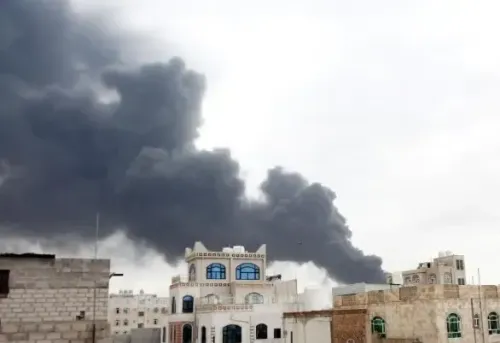
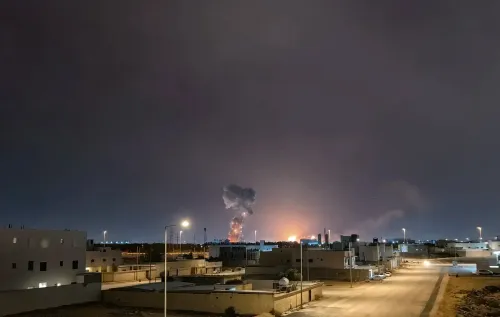
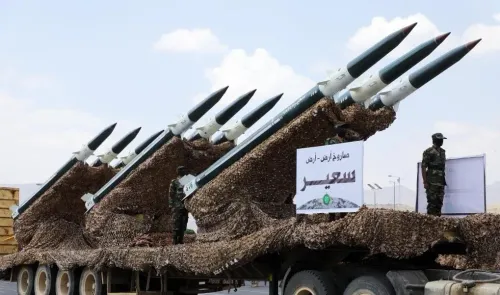
Houthi attack on Riyadh airport kills 12, Saudi coalition vows firm response
Synopsis
A Houthi missile strike on Riyadh's busiest airport killed 12 people — including nationals from seven countries — and wounded 309 others on October 10, one of the deadliest single attacks on Saudi civilian infrastructure in recent memory. The Saudi-led coalition has vowed a firm military response, while India has called the strikes 'completely unacceptable' and urged an immediate ceasefire, highlighting the attack's rapidly widening international fallout.
Key Takeaways
A Houthi strike on King Khalid International Airport , Riyadh, on 10 October killed 12 people and injured 309 others .
Fatalities included 4 Saudi citizens and 8 foreign nationals from Bangladesh, the US, Egypt, Jordan, Syria, Palestine, and Sudan.
Saudi-led coalition spokesperson Turki Al-Malki called the strike a war crime and vowed a firm response under international humanitarian law.
Airport operations were temporarily suspended for damage assessment and safety checks.
India's MEA strongly condemned the attack, called strikes on civilian infrastructure 'completely unacceptable,' and expressed solidarity with Saudi Arabia .
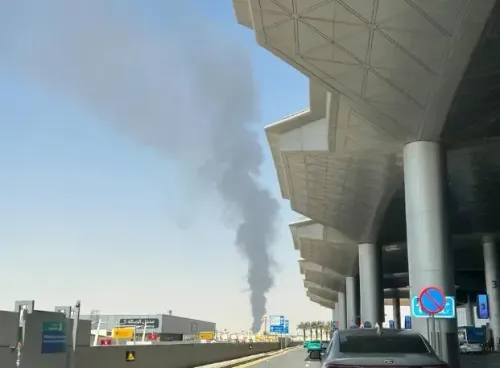
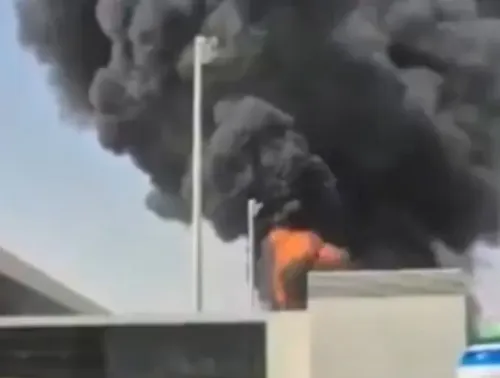
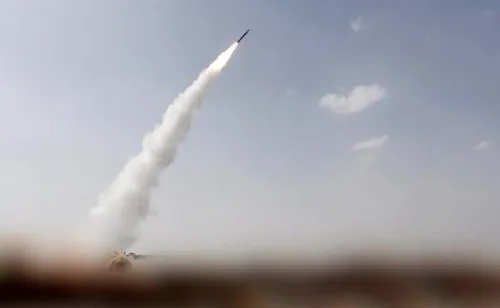
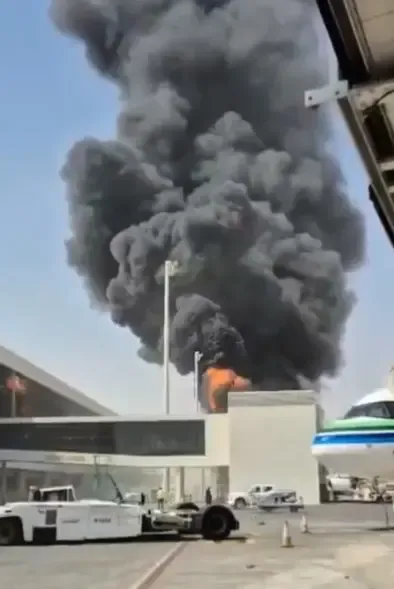
A Houthi missile strike on a passenger terminal at King Khalid International Airport in Riyadh on Saturday, 10 October killed 12 people and injured 309 others, according to the Saudi General Authority of Civil Aviation. The Saudi-led coalition in Yemen vowed on Sunday to respond firmly, calling the strike a war crime under international humanitarian law.
Details of the Attack and Casualties
The strike targeted the airport's passenger terminal on Saturday afternoon, temporarily forcing a suspension of flight operations pending damage assessments and safety checks, the civil aviation authority said. Among the 12 fatalities, four were Saudi citizens and eight were foreign residents — including two Bangladeshi nationals and one each from the United States, Egypt, Jordan, Syria, Palestine, and Sudan. The 309 injured are receiving treatment at multiple hospitals, with some reported to be in serious condition.
Coalition's Strong Warning
Coalition spokesperson Turki Al-Malki issued a statement on his official account on X describing the attack as 'a heinous act that violates humanitarian principles, values and morals.' Al-Malki said the strike constitutes a war crime under international humanitarian law and its customary rules, and stressed that the coalition's Joint Forces Command would respond firmly to what he characterised as a 'terrorist attack' in full accordance with international humanitarian law. The statement marks one of the coalition's sharpest public warnings in recent months, as Saudi Arabia and Yemen's Houthi group have continued exchanging strikes on major airports.
India Condemns the Strike, Calls for Ceasefire
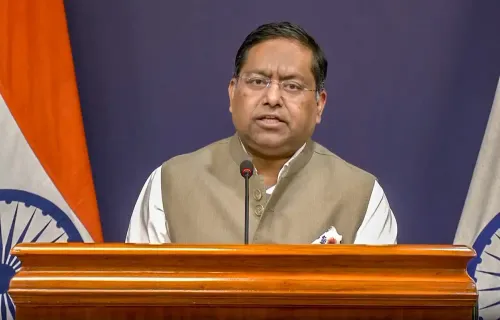
New Delhi moved swiftly to condemn the attack, expressing solidarity with Saudi Arabia in defence of its sovereignty. India's Ministry of External Affairs (MEA) released a formal statement saying, 'We strongly condemn the repeated attacks on Riyadh's King Khalid International Airport over the past few days, including the dastardly attack on October 10, which have led to loss of lives, injuries and damage to property.' The MEA extended condolences to the families of the deceased and wished speedy recovery to the injured. The statement added that 'repeated attacks on civilians and civilian infrastructure are completely unacceptable and must cease immediately,' urging a return to peace and normalcy in the region at the earliest.
Broader Context: Escalating Airport Strikes
This is not an isolated incident — Saudi Arabia and the Houthi movement have been locked in an escalating exchange of cross-border strikes targeting civilian infrastructure, including airports, for several years. The Yemen conflict, now in its second decade, has drawn in a Saudi-led coalition since 2015. Houthi attacks on Riyadh have periodically intensified during diplomatic deadlocks, and strikes on civilian aviation infrastructure represent a particularly sensitive escalation given the potential for mass civilian casualties. Notably, the involvement of foreign nationals among the dead — from seven countries — underscores the international dimension of the toll exacted by such strikes. The attack also comes at a time of heightened regional tensions, adding pressure on diplomatic channels that have sought, with limited success, to broker a durable ceasefire.
What Happens Next
The coalition's vow of a 'firm response' signals the likelihood of retaliatory strikes in Yemen, raising humanitarian concerns from international observers. Airport operations at King Khalid International Airport remained subject to safety reviews as of Sunday. India's call for an immediate cessation of hostilities reflects a broader international consensus, though a concrete diplomatic pathway remains elusive. The situation is expected to remain volatile in the coming days.
Point of View
Deploying the word 'dastardly,' reflects the reality that a large Indian diaspora in Saudi Arabia makes any Riyadh strike a domestic concern for New Delhi as well. The coalition's war-crime framing is legally significant but strategically familiar: similar declarations have preceded retaliatory strikes in Yemen without producing a lasting ceasefire. The harder question is whether this attack, given the breadth of its foreign-national casualties, generates enough international pressure to revive stalled peace talks — or whether it simply accelerates the next round of escalation.
NationPress
11 Oct 2026
Frequently Asked Questions
What happened at King Khalid International Airport in Riyadh?
Yemen's Houthi group carried out a missile strike on a passenger terminal at King Khalid International Airport in Riyadh on Saturday, 10 October, killing 12 people and injuring 309 others. The Saudi General Authority of Civil Aviation confirmed the toll and said airport operations were temporarily suspended.
Who were the victims of the Riyadh airport attack?
Of the 12 people killed, four were Saudi citizens and eight were foreign residents — two Bangladeshis and one national each from the United States, Egypt, Jordan, Syria, Palestine, and Sudan. The 309 injured are being treated at multiple hospitals, with some in serious condition.
How did the Saudi-led coalition respond to the attack?
Coalition spokesperson Turki Al-Malki called the attack a war crime under international humanitarian law and a 'heinous act' violating humanitarian principles. He said the coalition's Joint Forces Command would respond firmly to the 'terrorist attack' in accordance with international law.
What did India say about the Riyadh airport attack?
India's Ministry of External Affairs strongly condemned the strike, calling attacks on civilians and civilian infrastructure 'completely unacceptable.' New Delhi expressed condolences to victims' families, called for an immediate ceasefire, and stated its solidarity with Saudi Arabia's sovereignty.
Is this the first Houthi attack on Riyadh's airport?
No. The MEA's reference to 'repeated attacks over the past few days' and the Saudi-Houthi pattern of exchanging strikes on major airports indicate this is part of an ongoing escalation, not an isolated incident. Saudi Arabia and the Houthi movement have been engaged in cross-border strikes since the Yemen conflict escalated in 2015.