Houthis report 52 Saudi airstrikes across Yemen in 24 hours
Synopsis
In one of the most intense 24-hour escalations of the Yemen war in recent memory, the Houthis claim Saudi warplanes launched 52 strikes across five provinces — hitting schools, bridges, and civilian infrastructure. With Mocha and Mayun Island already in Houthi hands, and the Bab al-Mandab strait under pressure, this is no longer just a civil war: it is reshaping one of the world's most critical shipping corridors.
Key Takeaways
Houthi spokesperson Yahya Sarea alleged 52 Saudi airstrikes across five Yemeni provinces within 24 hours on Tuesday .
Strikes reportedly targeted Taiz , Al-Jawf , Al-Bayda , Saada , and Amran , with civilian infrastructure allegedly hit.
Houthi-affiliated media reported 3 civilians killed , including 2 children , in Taiz province.
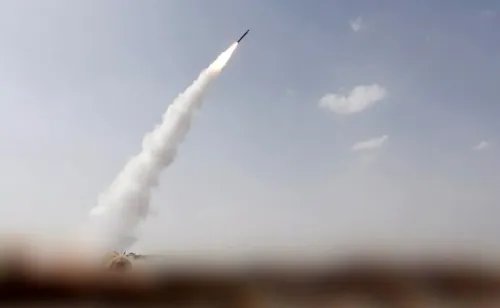
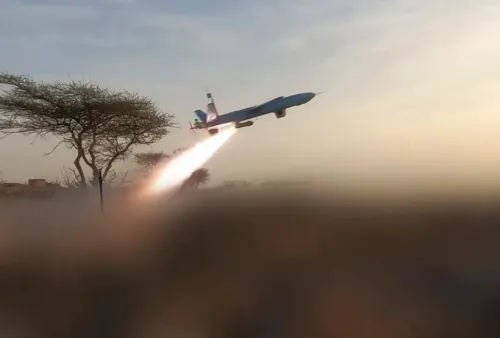
The strikes followed Houthi missile and drone attacks on Khamis Mushait , Abha , and Taif on Monday, which injured 13 Saudi civilians .
Houthis captured the port city of Mocha on 10 September and seized Mayun Island at the Bab al-Mandab strait on 11 September .
Saudi authorities had issued no immediate response to the Houthi allegations.
Yemen's Houthi group has alleged that Saudi warplanes launched 52 airstrikes across five Yemeni provinces within a 24-hour period, as cross-border hostilities between the two sides continue to escalate sharply. The claims, made on Tuesday, come amid one of the most intense phases of fighting in the years-long conflict.
What the Houthis Alleged
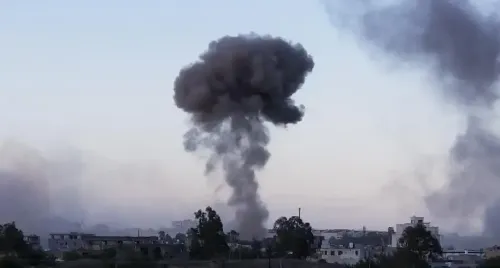
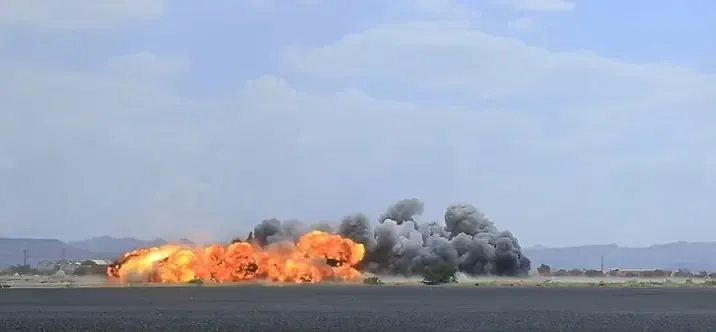
Houthi military spokesperson Yahya Sarea said in a statement posted on social media platform X that F-15 and Typhoon fighter jets carried out the strikes, taking off from air bases in the southwestern Saudi city of Khamis Mushait and the western city of Taif. Sarea claimed the raids targeted the southwestern province of Taiz, northern Al-Jawf, central Al-Bayda, and the northern provinces of Saada and Amran.
He further alleged that schools, bridges, roads, and other civilian infrastructure were among the targets — allegations that have not been independently verified. Saudi authorities had not issued any immediate response to the Houthi claims.
Civilian Casualties Reported
Houthi-run broadcaster al-Masirah TV reported on Tuesday that 3 civilians, including 2 children, were killed and 2 others wounded in airstrikes on the Dhubab and Maqbanah districts of Taiz province. The broadcaster also reported additional strikes on a government complex in Khadir district, southeast of Taiz province, describing unspecified casualties without further details. These reports originate from Houthi-affiliated media and have not been independently confirmed.
Tit-for-Tat Escalation
The Saudi airstrikes reportedly followed Houthi missile and drone attacks on Khamis Mushait, Abha, and Taif on Monday, which the Saudi-led coalition said injured 13 civilians. The coalition vowed a 'responsible and firm' response to those attacks. Sarea, for his part, warned that the latest Saudi strikes 'will not go unanswered,' signalling further Houthi retaliation.
Strategic Gains Reshaping the Conflict
The current flare-up is inseparable from a broader Houthi offensive launched on 3 September, which has significantly redrawn front lines along Yemen's Red Sea coast. The group captured the strategic port city of Mocha on 10 September, before advancing into the Bab al-Mandab area and seizing Mayun Island — situated at the heart of the strategically vital strait — on 11 September. Control of Mayun Island gives the Houthis a commanding position over one of the world's most critical shipping lanes.
Background: A Decade of War
Yemen's conflict erupted in late 2014 when the Houthis seized Sanaa and much of northern Yemen. A Saudi-led coalition intervened in March 2015 in support of the internationally recognised government. More than a decade on, the war has produced one of the world's worst humanitarian crises. The latest escalation, with territorial gains, retaliatory strikes, and civilian casualties on multiple fronts, suggests a significant deterioration that could complicate any future ceasefire efforts.
Point of View
But airpower alone has not dislodged the group in a decade. The escalation cycle — Houthi offensive, coalition strikes, Houthi vow of retaliation — is structurally unchanged, but the geography of Houthi gains is now qualitatively different, and any ceasefire framework that ignores Mayun and Mocha will not hold.
NationPress
16 Sept 2026
Frequently Asked Questions
What did the Houthis claim about Saudi airstrikes on Tuesday?
The Houthis alleged that Saudi warplanes carried out 52 airstrikes across five Yemeni provinces — Taiz, Al-Jawf, Al-Bayda, Saada, and Amran — within a 24-hour period on Tuesday. Spokesperson Yahya Sarea said F-15 and Typhoon jets launched the raids from bases in Khamis Mushait and Taif, and alleged that civilian infrastructure was targeted.
Were there civilian casualties in the Yemen airstrikes?
Houthi-affiliated broadcaster al-Masirah TV reported that 3 civilians, including 2 children, were killed and 2 others wounded in strikes on the Dhubab and Maqbanah districts of Taiz province. These figures come from Houthi-run media and have not been independently verified; Saudi authorities have not commented.
Why have the Houthis captured Mocha and Mayun Island?
As part of a broader offensive launched on 3 September 2026, Houthi forces captured the strategic port city of Mocha on 10 September and seized Mayun Island at the Bab al-Mandab strait on 11 September. The captures give the Houthis significant leverage over one of the world's busiest shipping corridors.
What prompted the latest Saudi airstrikes on Yemen?
The Saudi-led coalition carried out the 52 strikes in response to Houthi missile and drone attacks on the Saudi cities of Khamis Mushait, Abha, and Taif on Monday, which the coalition said injured 13 civilians. The coalition had vowed a 'responsible and firm' response before the strikes were launched.
How did the Yemen conflict begin?
Yemen's war began in late 2014 when the Houthis seized the capital Sanaa and much of northern Yemen. A Saudi-led coalition intervened in March 2015 in support of the internationally recognised government, triggering a conflict that has since produced one of the world's worst humanitarian crises.