HRCP report flags sharp civic space decline, judicial erosion in Pakistan in 2025
Synopsis
Pakistan's top rights body has documented one of its most alarming annual assessments yet — systematic suppression of dissent, a constitutional amendment that expanded executive control over the judiciary, and anti-terror laws enabling three-month detention without charge. The HRCP's 2025 report paints a picture of a state where legal mechanisms themselves have become instruments of repression.
Key Takeaways
The HRCP released its 'State of Human Rights in 2025' report on 4 May 2025 , flagging grave deterioration across multiple rights fronts.
Amendments to the Prevention of Electronic Crimes Act and use of sedition and anti-terror laws led to widespread targeting of journalists, activists, and lawyers .
The Anti-Terrorism Act 1997 was amended to allow detention of individuals for up to three months without charge or judicial oversight, particularly in Balochistan .
The 27th Constitutional Amendment reportedly reconfigured judicial appointments, expanding executive influence over the judiciary.
Court rulings in 2025 permitted military trials of civilians and stripped PTI of reserved seats won in 2024.
Climate disasters in Pakistan-occupied Gilgit-Baltistan caused civilian deaths, with authorities criticised for reactive rather than resilience-focused responses.
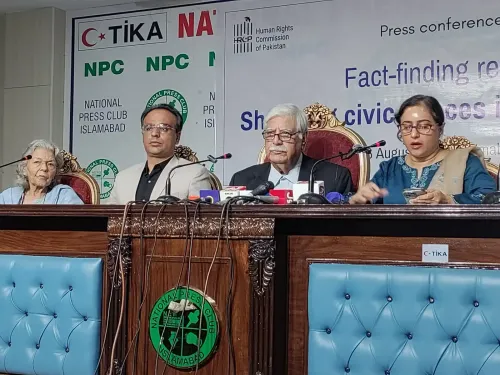
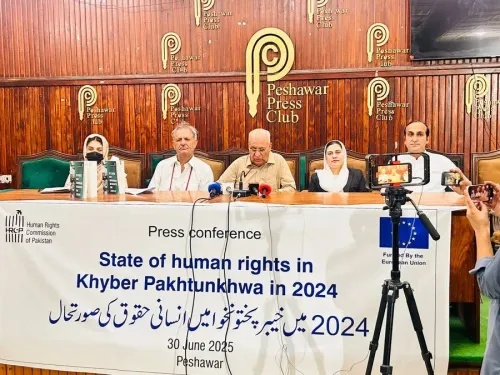
The Human Rights Commission of Pakistan (HRCP) on Monday, 4 May 2025 expressed grave concern over the rapid shrinking of civic space, the erosion of judicial independence, and deepening insecurity across Pakistan over the past year. In its annual report titled 'State of Human Rights in 2025', the rights body documented a systematic suppression of freedoms with far-reaching consequences for the rule of law.
Suppression of Free Expression and Dissent
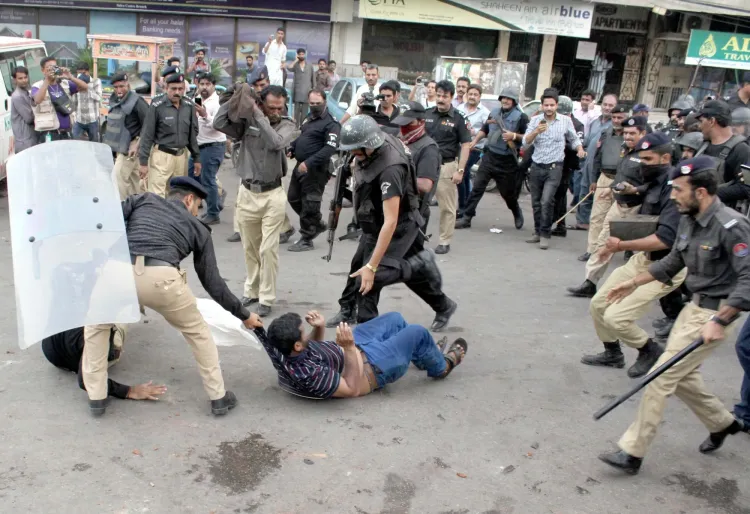
The HRCP found that the right to freedom of expression — particularly the right to question authority and demand accountability — was significantly suppressed in 2025. According to the report, legal and institutional mechanisms were increasingly weaponised to curb dissent. Amendments to the Prevention of Electronic Crimes Act (PECA), alongside the use of sedition and anti-terrorism laws, led to the widespread targeting of journalists, political workers, activists, and lawyers.
"Reports of intimidation, enforced disappearances, and restrictions on movement contributed to a climate of fear and self-censorship, limiting public discourse and obscuring human rights violations," the report stated. Critics argue this represents one of the most concerted crackdowns on civil liberties in Pakistan's recent history.
Anti-Terrorism Laws Expand Arbitrary Detention
The HRCP flagged amendments to Pakistan's Anti-Terrorism Act 1997 at both federal and provincial levels — particularly in Balochistan — that reportedly allowed law enforcement agencies and the armed forces to detain individuals for up to three months without charge or judicial oversight. The rights body said these changes expanded the scope for arbitrary detention while undermining protections of liberty and due process.
This comes amid a broader pattern of legislative amendments that critics say have progressively narrowed the space for legal challenge and civilian oversight of security operations.
Judicial Independence Under Threat
The report documented a marked deterioration in judicial independence, particularly following the passage of the 27th Constitutional Amendment, which, according to the HRCP, "reconfigured judicial appointments and expanded executive influence." Key court decisions in 2025 further narrowed democratic space, raising serious concerns about due process and the separation of powers.
Notably, these included rulings that allowed the military trials of civilians and effectively stripped the Pakistan Tehreek-i-Insaf (PTI) of the reserved seats it had been granted in 2024. The HRCP described these developments as raising "serious concerns" about institutional checks and balances.
Security Crisis and Vulnerable Groups
Security challenges compounded human rights violations across the country, with militancy and counterterrorism operations disproportionately affecting Khyber Pakhtunkhwa and Balochistan, resulting in significant civilian and law enforcement casualties. The report stated that enforced disappearances, extrajudicial killings, and collective punishments persisted throughout the year.
Vulnerable groups — including women, children, religious minorities, and transgender persons — continued to face violence and discrimination without adequate redress, according to the HRCP. Miners and sanitation workers were identified as particularly at risk, with little reported progress in improving their occupational safety.
Climate Disasters and Institutional Failures
The HRCP also flagged climate-related disasters, especially in Pakistan-occupied Gilgit-Baltistan, which caused multiple civilian deaths and destroyed infrastructure. The authorities' response, the report noted, remained reactive rather than focused on long-term resilience — a recurring criticism levelled at successive Pakistani administrations during climate emergencies.
With the HRCP's findings now formally on record, pressure is expected to mount on Islamabad from international human rights bodies and foreign governments ahead of Pakistan's upcoming universal periodic review cycle.
Point of View
But because it documents how Pakistan's own legal architecture has been systematically repurposed to suppress dissent. When anti-terrorism statutes permit three-month detention without judicial oversight and a constitutional amendment reshapes who appoints judges, the problem is no longer one of rogue actors — it is structural. The targeting of PTI through court rulings adds a sharp political dimension that international observers cannot easily dismiss as routine law enforcement. Pakistan's trajectory in 2025 suggests a state consolidating executive power through legal form rather than brute force — a more durable and harder-to-challenge mode of democratic backsliding.
NationPress
1 Oct 2026
Frequently Asked Questions
What is the HRCP's 'State of Human Rights in 2025' report?
It is the Human Rights Commission of Pakistan's annual assessment of the human rights situation in Pakistan, released on 4 May 2025. The report documents suppression of free expression, erosion of judicial independence, arbitrary detention, and violence against vulnerable groups throughout 2025.
How did Pakistan's 27th Constitutional Amendment affect judicial independence?
According to the HRCP, the 27th Constitutional Amendment reconfigured judicial appointments and expanded executive influence over the judiciary. The rights body said this contributed to a marked deterioration in judicial independence and raised concerns about the separation of powers.
What new detention powers did Pakistan's amended Anti-Terrorism Act grant?
Amendments to the Anti-Terrorism Act 1997, particularly at the provincial level in Balochistan, allowed law enforcement agencies and the armed forces to detain individuals for up to three months without charge or judicial oversight. The HRCP said this expanded the scope for arbitrary detention and undermined due process protections.
How was PTI affected by court rulings in 2025?
According to the HRCP report, key court decisions in 2025 effectively stripped Pakistan Tehreek-i-Insaf (PTI) of the reserved seats it had been granted following the 2024 elections. The rulings were cited as evidence of narrowing democratic space and due process concerns.
Which regions of Pakistan were most affected by security-related human rights violations?
Khyber Pakhtunkhwa and Balochistan were disproportionately affected by militancy and counterterrorism operations, resulting in significant civilian and law enforcement casualties. Enforced disappearances, extrajudicial killings, and collective punishments were reported to have persisted in these regions throughout 2025.