Human Rights Commission Raises Alarm on Pakistan's Democratic Decline Amid NGO Restrictions

Synopsis
The HRCP has sounded the alarm over the alarming erosion of civic space in Pakistan, particularly in Punjab, where NGOs face severe restrictions. This trend signals a troubling democratic decline requiring urgent attention.
Key Takeaways
HRCP's report highlights democratic backsliding .
NGOs face severe operational restrictions .
Women-led and minority organizations are most vulnerable .
Legal protections for NGOs are urgently needed .
Administrative overreach continues to threaten civic space .
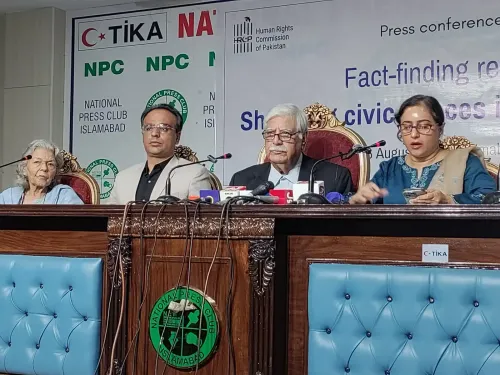
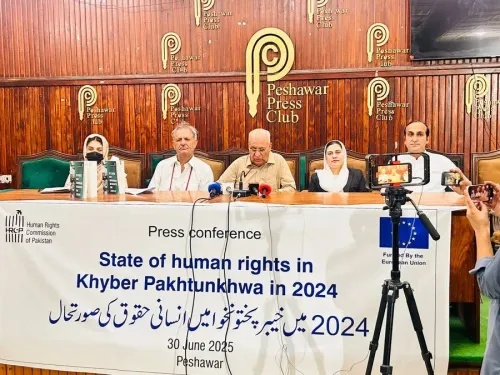
Islamabad, March 28 (NationPress) The Human Rights Commission of Pakistan (HRCP) raised alarms regarding the ongoing diminishment of civic space and the imposition of restrictions on rights-focused non-governmental organizations (NGOs) throughout Punjab. This trend is perceived as a clear indication of the democratic regression currently afflicting the nation.
In its comprehensive report titled 'Regulation or Restriction?', the HRCP detailed that civil society entities, particularly NGOs—which play an essential role in Pakistan's civic infrastructure—are often viewed as “challenges to state authority” that can mitigate the slide toward authoritarianism.
The report emphasized that rather than facilitating the contributions of these organizations, the Pakistani government has enacted restrictive laws and policies that have undermined the legitimacy of NGOs and dramatically limited their operational capacity, thereby eroding a crucial defense against the decay of democracy.
The HRCP pointed out that NGOs are now subjected to a convoluted approval framework, which includes obligatory Memoranda of Understanding (MOUs) with the Economic Affairs Division (EAD), district-level no-objection certificates, and security clearances prior to their registration.
“These stipulations are further complicated by mandatory re-registration with provincial charity commissions. Such measures not only obstruct the breadth of NGO operations but have also led to the suspension or termination of critical initiatives focused on human rights and democracy. While courts have intermittently intervened, notably by nullifying the 2022 EAD policy, the lack of a coherent, rights-respecting legislative framework continues to permit administrative overreach,” the report stated.
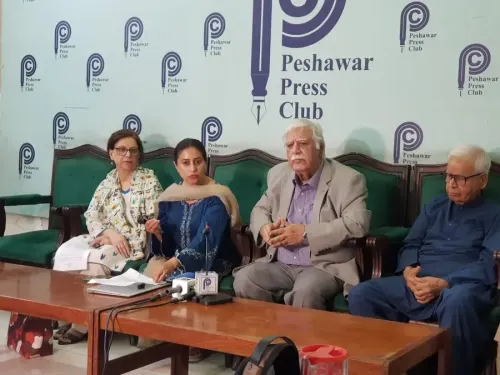
During a seminar convened to discuss the report's insights on Friday, HRCP member Zeeshan Noel remarked that Pakistan is experiencing a gradual erosion of democratic principles through the incremental constriction of civic space via legal and policy measures.
In meetings conducted in Lahore and Multan, the HRCP observed that women-led organizations and minority groups in Punjab are among those most severely impacted by the reduction of civic spaces.
Participants noted that in addition to grappling with diminished institutional and financial backing for grassroots initiatives, these groups face increasing risks of harassment and intimidation. Many reported existing in a “constant state of uncertainty”, feeling perpetually precarious about their safety, legitimacy, and capacity to continue their work.
“The challenges they confront are particularly multifaceted due to the pressures from various directions. They are not only subjected to scrutiny and bureaucratic obstacles imposed by state entities but also face threats from non-state actors including extremist factions, local power brokers, and conservative societal elements,” the HRCP elaborated.
The HRCP urged Pakistani authorities to ensure swift and accessible legal protections for NGOs facing harassment, deregistration, or threats—whether from state or non-state actors—while reinforcing judicial oversight, providing interim relief against arbitrary administrative actions, and protecting at-risk human rights defenders.
Point of View
It is crucial to highlight that the ongoing restrictions on NGOs in Pakistan reflect a significant challenge to democratic principles. The HRCP's findings underscore the need for immediate action to protect civic rights and ensure that organizations can operate freely, essential for a healthy democracy.
NationPress
20 Sept 2026
Frequently Asked Questions
What is the main concern raised by the HRCP?
The HRCP is concerned about the ongoing restrictions on NGOs in Pakistan, particularly in Punjab, which they view as a sign of democratic backsliding.
How are NGOs affected by these restrictions?
NGOs are subjected to complex approval processes and stringent regulations, which limit their ability to operate and have resulted in the suspension of important programs.
What specific groups are most affected?
Women-led organizations and minority groups in Punjab are particularly impacted by the shrinking civic spaces.
What actions does the HRCP recommend?
The HRCP calls for the government to provide legal protections for NGOs facing harassment and to strengthen judicial oversight.
Why are NGOs important in Pakistan?
NGOs are vital for promoting human rights and democracy, acting as a check on state power and ensuring accountability.