Challenges Faced by NGOs in Punjab, Pakistan: An HRCP Report

Synopsis
A recent HRCP report reveals alarming restrictions faced by NGOs in Punjab, Pakistan, highlighting bureaucratic, legal, and financial pressures that hinder their operations. The findings call for a rights-compliant legal framework to ensure NGOs can effectively serve communities.
Key Takeaways
NGOs in Punjab face severe operational constraints.
Regulatory requirements often lead to delays and interruptions.
Rights-based organizations encounter more challenges than service delivery groups.
Women-led and minority-focused NGOs face additional societal pressures.
A rights-compliant legal framework is essential for NGO effectiveness.
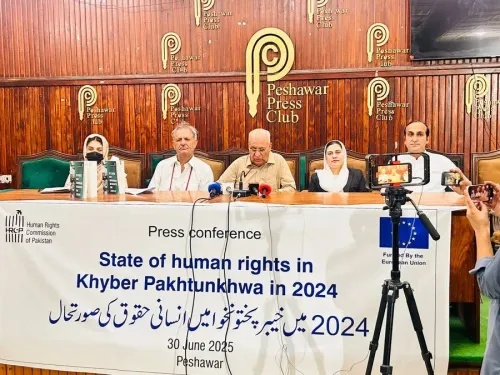
Islamabad, March 31 (NationPress) A recent report from the Human Rights Commission of Pakistan (HRCP) has shed light on the various challenges confronted by Non-Governmental Organisations (NGOs) in Pakistan, especially in the Punjab province. The report indicates that the civic landscape has significantly diminished due to bureaucratic, legal, and financial pressures.
According to an editorial in the prominent daily Dawn, "The demand for regulation is neither new nor unreasonable. Governments have the right to ensure transparency, accountability in finances, and adherence to the law. However, the report highlights that the issue lies not just in the sheer number of requirements—from approvals by the Economic Affairs Division to district permits and security clearances—but in their implementation as well."
Even NGOs that adhere to these stipulations often endure extensive delays, repeated evaluations, or abrupt halts in their operations. Approval processes can stretch on for months or even years, bank accounts may be frozen, and projects can be stalled while applications are under consideration.
This environment fosters a situation where compliance does not ensure operational capability. Consequently, NGOs are compelled to allocate more time and resources to navigate administrative challenges, frequently at the cost of their primary missions.
Organisations focused on rights advocacy, particularly those addressing governance and human rights, appear to encounter greater obstacles than those providing service delivery. Many have scaled back their advocacy efforts and adopted safer programming strategies, with some altering their operations to elude delays, scrutiny, or disruptions, or ceasing activities altogether. Groups led by women and those focusing on minorities, which already deal with societal pressure, face heightened difficulties in pursuing their initiatives.
The repercussions of such a system extend beyond individual organisations. When NGOs operate under uncertainty, both their efforts and the communities they serve experience adverse impacts.
Dawn's editorial adds, "Fortunately, there are indications of slight improvements, including judicial interventions and some procedural leniency. However, the long-term consequences—such as weakened networks and restricted funding—persist. Achieving a balanced approach is essential."
The report advocates for a rights-compliant legal framework rooted in legislation, alongside streamlined, time-bound approval mechanisms and structured dialogue between government entities and civil society. It further emphasizes the need for clearer oversight, accessible legal remedies, enhanced coordination among NGOs, and more adaptable donor support. A state that trusts its citizens allows space for them to organise. In the absence of this space, governance and societal integrity are compromised.
Point of View
It is crucial to recognize the vital role NGOs play in society. Their work is fundamental to addressing governance and human rights issues. Thus, understanding the constraints they face is imperative for fostering an environment that allows for effective civil society engagement.
NationPress
11 Oct 2026
Frequently Asked Questions
What challenges do NGOs face in Punjab, Pakistan?
NGOs in Punjab face bureaucratic, legal, and financial pressures that hinder their operations, including lengthy approval processes and increased scrutiny.
How does the HRCP report suggest improving the situation for NGOs?
The HRCP report advocates for a rights-compliant legal framework, streamlined approval processes, and better coordination between government and civil society.
What impact do these challenges have on communities?
The obstacles faced by NGOs not only affect their operations but also have negative repercussions on the communities they serve.
Are women-led NGOs more affected by these challenges?
Yes, women-led and minority-focused NGOs often encounter more significant difficulties due to existing societal pressures.
What is the role of the government in facilitating NGO operations?
The government should ensure a transparent and supportive environment that allows NGOs to function effectively and serve their communities.