Pakistan religious freedom under threat, activists warn at Lahore symposium
Synopsis
At an HRCP symposium in Lahore, Pakistani human rights activists laid bare a damning picture: Zia-era laws still distort judicial thinking, Ahmadis face cybercrime charges for practising their faith online, and school textbooks continue to marginalise minority children. The gap between Pakistan's constitutional promises and lived reality, they warned, is widening — not closing.
Key Takeaways
Human rights activists raised alarm over Pakistan's religious freedom crisis at an HRCP symposium in Lahore on 19 June .
Lawyer Hina Jilani said laws introduced under General Zia-ul-Haq have entrenched religious discrimination and 'seeped into judicial understandings.' Ahmadis face increasing cybercrime proceedings for expressing their faith on digital platforms.
Speaker Neelam Hussain warned that military-era educational policies have embedded religious-nationalist bias in textbooks, harming minority students.
Peter Jacob flagged compulsory religious content in curricula and challenges faced by minority-run educational institutions.
The HRCP has tracked religious freedom as a core concern since its founding in 1986 .
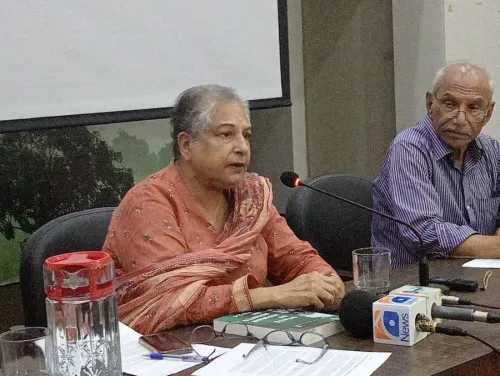
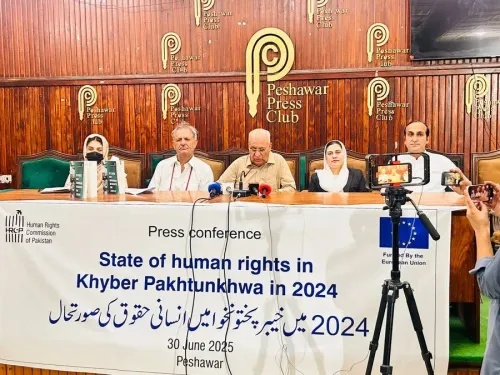
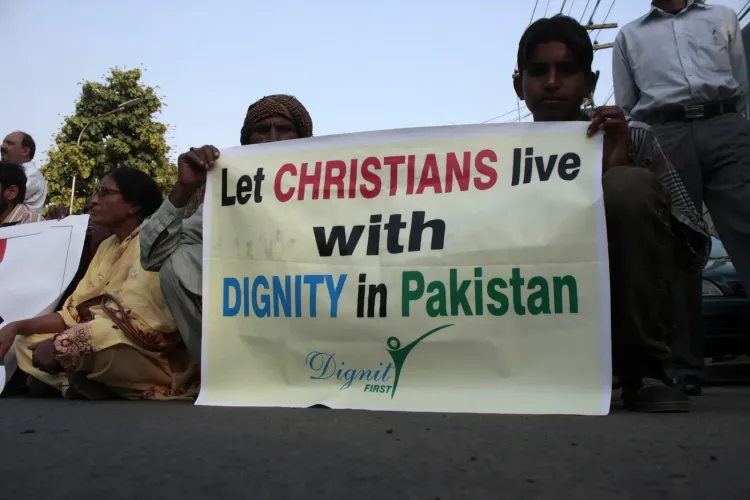
Human rights activists in Pakistan have raised serious alarm over the deteriorating state of religious freedom in the country, pointing to discriminatory laws, entrenched social attitudes, and the persistent failure to enforce constitutional protections. The concerns were voiced at a symposium titled 'Advancing Religious Freedom Through Education: Emerging Challenges, Opportunities and Responses', held at the Human Rights Commission of Pakistan (HRCP) Secretariat in Lahore on 19 June.
Constitutional Guarantees, Ground Realities
Pakistani lawyer and human rights advocate Hina Jilani told attendees that religious freedom has remained one of Pakistan's most pressing human rights issues despite constitutional safeguards and decades of advocacy. She noted that Article 20 of Pakistan's constitution guarantees freedom of religion and protection of minority rights, yet its implementation has been deeply inconsistent.
'We are ashamed that the laws we have today show a stark difference between the Constitution and its implementation. Where we took one step forward, we moved two steps behind,' Jilani said, according to reports. She added that the HRCP, since its founding in 1986, has consistently identified religious freedom as a core concern.
Jilani argued that policies and legislation introduced during the rule of former Pakistani President General Zia-ul-Haq entrenched perceptions of religious superiority among the majority population and systematically deepened discrimination against minority communities. 'In our country, it has been the policies, legislation and social attitudes which have unfortunately seeped into judicial understandings,' she said.
Ahmadis Face Escalating Persecution
Jilani reserved particular concern for the Ahmadi community, whose members face legal restrictions on the public expression of their faith. 'My major concern today has been for the Ahmadis. We have not just violated their freedom, but if they are a minority, they have the right to profess their religion,' she said.
Notably, she flagged a troubling new front: expressions of faith by Ahmadis on digital platforms have increasingly resulted in cybercrime proceedings against them, effectively extending state-backed religious restrictions into online spaces.
Education System Reinforcing Bias
Speaker Neelam Hussain argued that educational policies shaped during successive military governments have fostered a singular religious-nationalist narrative, crowding out critical thinking and diversity. The resulting biases in textbooks and classrooms, she said, continue to shape societal attitudes and restrict opportunities for minority students.
Fellow speaker Peter Jacob drew attention to constitutional provisions stating that children should not be compelled to receive religious instruction inconsistent with their own beliefs. He voiced concern over the inclusion of compulsory religious content in national curricula and the persistent difficulties faced by educational institutions run by minority communities.
A Pattern With Deep Roots
This is not an isolated moment of concern. The HRCP has documented a sustained pattern of minority persecution in Pakistan over multiple decades, with blasphemy laws frequently cited as instruments of targeted harassment. The symposium reflects a growing push by civil society to link educational reform with the protection of fundamental rights — an approach that critics of the current policy environment say is long overdue.
Whether the Pakistani government will respond with concrete legislative or curricular reform remains to be seen. Activists at the symposium signalled they would continue to press for accountability, even as the gap between constitutional promise and ground reality widens.
Point of View
Not incidental — built into statute books by Zia-ul-Haq and reinforced by four decades of unchallenged curricula. The extension of blasphemy-adjacent enforcement into cybercrime law is a significant and underreported escalation: it means minority communities now face legal jeopardy for digital speech in addition to physical expression. Civil society pressure alone has historically not been sufficient to move the needle in Islamabad; without international accountability mechanisms and domestic judicial reform, the gap Hina Jilani describes — one step forward, two steps back — is likely to persist.
NationPress
18 Sept 2026
Frequently Asked Questions
What was the HRCP symposium in Lahore about?
The symposium, titled 'Advancing Religious Freedom Through Education: Emerging Challenges, Opportunities and Responses,' was held at the Human Rights Commission of Pakistan (HRCP) Secretariat in Lahore on 19 June. It brought together human rights activists, lawyers, and educators to discuss the growing threats to religious freedom in Pakistan and the role of education in either reinforcing or remedying discrimination.
What concerns did Hina Jilani raise about Pakistan's religious freedom?
Hina Jilani said that despite constitutional guarantees under Article 20, religious freedom remains one of Pakistan's most unresolved human rights issues. She specifically blamed Zia-ul-Haq-era laws for entrenching religious discrimination and warned that these attitudes have penetrated judicial thinking. She also highlighted escalating cybercrime proceedings against Ahmadis for expressing their faith online.
Why are Ahmadis particularly at risk in Pakistan?
Ahmadis face legal restrictions on publicly professing or practising their faith under Pakistani law. According to Hina Jilani, this persecution has now extended to digital platforms, where expressions of faith have increasingly led to cybercrime charges — adding a new legal front to an already severe pattern of marginalisation.
How does Pakistan's education system affect religious minorities?
According to speaker Neelam Hussain, educational policies shaped during successive military governments have embedded a singular religious-nationalist narrative in textbooks, suppressing diversity and critical thinking. Peter Jacob added that compulsory religious content in curricula and obstacles facing minority-run schools further disadvantage minority students.
What constitutional protections exist for religious minorities in Pakistan?
Article 20 of Pakistan's constitution guarantees freedom of religion and protects minority rights. Separately, constitutional provisions state that children cannot be compelled to receive religious instruction contrary to their beliefs. However, activists at the symposium argued that enforcement of these protections has been consistently inadequate.