Pakistan's blasphemy laws weaponised against minorities, HRCP report warns
Synopsis
Pakistan's Human Rights Commission has released a damning report documenting the systematic weaponisation of blasphemy laws, normalised hate speech, forced conversions, and employment discrimination against minorities — even as the government's own National Commission for Minorities Act 2025 remains unimplemented. The Narang Mandi mob attack on a Christian community is the latest evidence that the gap between legislative promise and ground-level protection is dangerously wide.
Key Takeaways
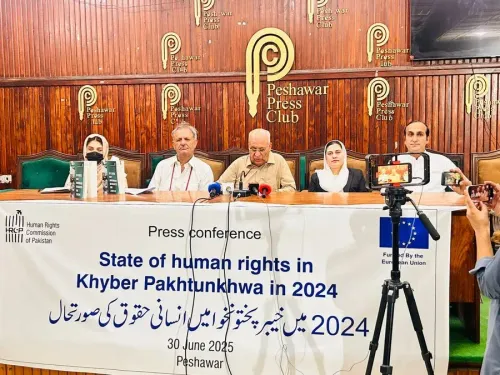
The HRCP report 'Sanctuary Denied: Freedom of Religion or Belief in 2025/26' documents systematic violations against Pakistan's religious minorities.
Blasphemy laws are being continuously weaponised; hate speech against minorities has become increasingly normalised , the report warns.
The National Commission for Minorities Act 2025 has been passed but remains unimplemented .
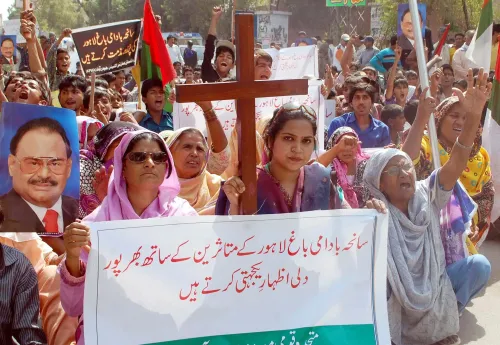
In Narang Mandi, Sheikhupura , mob violence and arson targeted the Christian community following a blasphemy allegation against Kamran Gill Masih .
The HRCP has called for legal action against online incitement to violence and mandatory law enforcement training on FORB-related crimes.
Rights observers note that violations of minority rights intersect with poverty, gender-based violence, and child exploitation.
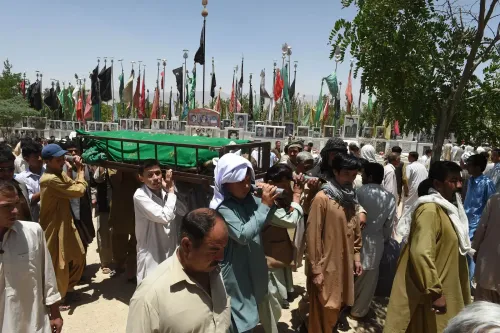
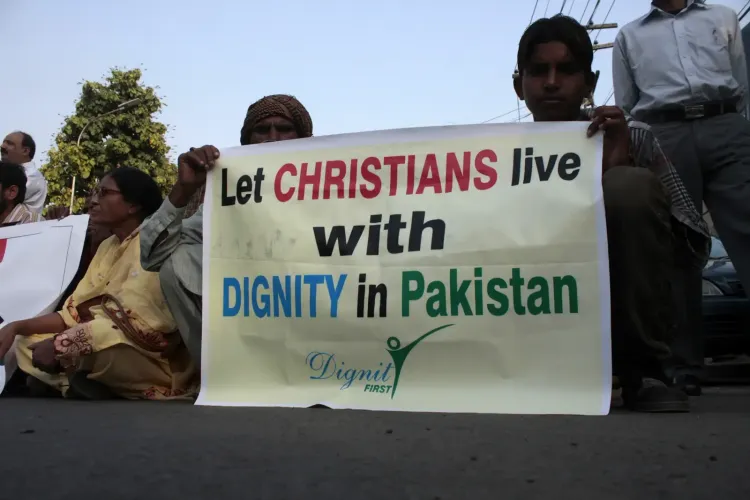
Pakistan's Human Rights Commission (HRCP) has flagged a deepening crisis for religious minorities in the country, warning that recent legislative gestures towards minority protection are being outpaced by systematic violations on the ground. The commission's new report, titled 'Sanctuary Denied: Freedom of Religion or Belief in 2025/26', documents the continuing weaponisation of blasphemy laws, the normalisation of hate speech, forced conversions of girls, and shrinking employment opportunities for minority communities.
Key Findings of the HRCP Report
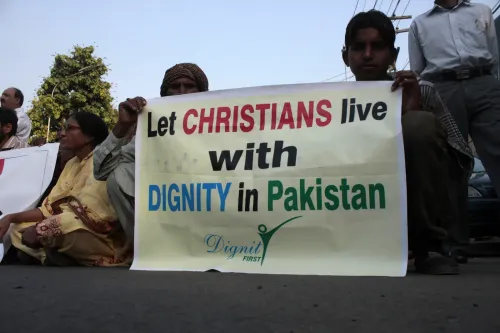
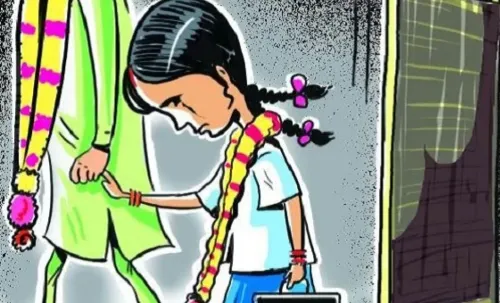
The HRCP report identifies several interlocking crises facing Pakistan's religious minorities. Blasphemy laws continue to be wielded as instruments of persecution, while hate speech targeting minority groups has, according to the report, become increasingly normalised in public discourse. Girls from minority communities continue to be abducted and forced into marriages, and discriminatory hiring practices — particularly evident in the sanitation sector — are trapping minority workers in dangerous, low-paid jobs with little legal protection.
The report further notes that these violations do not exist in isolation. As cited by the Pakistani daily The News International in an editorial, the HRCP observed: 'It is also notable how the violation of minority rights intersects with other problems that the state has not done enough to address, such as poverty, gender-based discrimination and violence and the exploitation and abuse of children.'
National Commission for Minorities Act 2025: Still Unimplemented
Despite Pakistan passing the National Commission for Minorities Act 2025, the legislation has yet to be implemented, according to the editorial in The News International. The newspaper also called on Khyber Pakhtunkhwa to raise the minimum age of marriage to 18, underscoring the particular vulnerability of young women from minority backgrounds. Critics argue that the gap between legislative announcement and actual enforcement represents a pattern in Pakistan's approach to minority rights — one where headline reforms rarely translate into ground-level protection.
Hate Speech and the Environment of Intimidation
The HRCP report called for immediate legal action against all incitements to violence, with particular attention to social media platforms, which are increasingly being used to spread anti-minority content. It also recommended mandatory training for law enforcement in handling crimes related to Freedom of Religion or Belief (FORB). The commission's position is clear: protecting minorities requires not just policy, but a direct challenge to the narratives and mindsets that perpetuate hatred and discrimination.
Narang Mandi Violence: A Case in Point
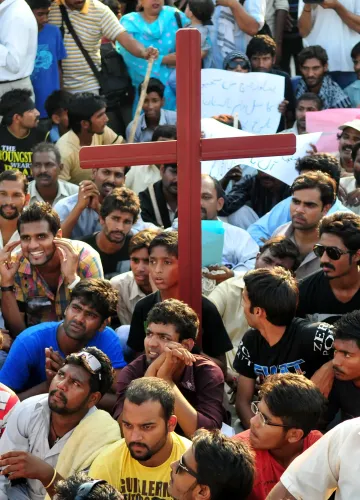
The report's warnings are underscored by a recent incident in Narang Mandi, Sheikhupura district, Punjab. Following a blasphemy allegation against a Christian man identified as Kamran Gill Masih — accused of sharing allegedly blasphemous content on social media — mob violence erupted in the area. According to a report in the Pakistan Christian Post, Human Rights Focus Pakistan (HRFP) strongly condemned the violence, which included arson targeting Masih's traditional medical clinic, attached residence, and small pharmacy. Members of the local Christian community were reportedly forced to flee their homes amid fears of further attacks. Masih was subsequently arrested by the police.
Human rights organisations have strongly condemned the violence, with HRFP calling it a stark illustration of how blasphemy allegations — regardless of their veracity — can instantly trigger organised mob violence against entire communities. This comes amid a pattern of such incidents that has persisted for years across Pakistan's Punjab province.
What Needs to Happen Next
The HRCP's 'Sanctuary Denied' report charts a forward-looking agenda: full implementation of the National Commission for Minorities Act 2025, legal accountability for those inciting violence online, enforcement reform, and a broader societal reckoning with anti-minority narratives. Whether Pakistan's government will move from legislation to enforcement remains, according to rights observers, the central question. All eyes will now be on whether the National Commission for Minorities is operationalised — and how the state responds to the ongoing violence in Narang Mandi.
Point of View
Headlines are generated, and enforcement never follows. The National Commission for Minorities Act 2025 is the latest entry in that ledger — passed, unimplemented, and already being cited in condemnation reports. What the Narang Mandi violence makes clear is that the failure is not merely administrative; it is structural. Blasphemy allegations function as a mob-activation mechanism with near-zero legal consequence for perpetrators, and no amount of legislation changes that without a parallel crackdown on those who incite violence. The HRCP is saying what independent observers have said for years — the question is whether Islamabad's international partners will finally make it a condition of engagement rather than a footnote in bilateral meetings.
NationPress
19 Oct 2026
Frequently Asked Questions
What does the HRCP 'Sanctuary Denied' report say about Pakistan's religious minorities?
The Human Rights Commission of Pakistan's 'Sanctuary Denied: Freedom of Religion or Belief in 2025/26' report documents the weaponisation of blasphemy laws, normalised hate speech, forced marriages of minority girls, and discriminatory employment practices against minorities. It concludes that recent legislative steps fall far short of addressing systematic violations on the ground.
What is the National Commission for Minorities Act 2025 and why is it significant?
The National Commission for Minorities Act 2025 is a Pakistani law intended to strengthen protections for religious minority communities. However, as of October 2026, it has not been implemented, according to reporting in The News International, meaning its protections remain theoretical rather than enforceable.
What happened in Narang Mandi, Sheikhupura?
Mob violence, arson, and threats were directed at the Christian community in Narang Mandi, Punjab, after a blasphemy allegation was made against a Christian man, Kamran Gill Masih, who was accused of sharing allegedly blasphemous content on social media. His clinic, residence, and pharmacy were set on fire, and members of the Christian community were forced to flee their homes. Masih was subsequently arrested by police.
What reforms has the HRCP recommended to protect minorities in Pakistan?
The HRCP has called for full implementation of the National Commission for Minorities Act 2025, legal action against all incitement to violence — particularly on social media — and mandatory training for law enforcement in handling Freedom of Religion or Belief-related crimes. It also urged Khyber Pakhtunkhwa to raise the minimum age for marriage to 18.
How does Pakistan's blasphemy law affect minority communities?
Blasphemy allegations in Pakistan — even unverified ones — routinely trigger mob violence against minority individuals and their communities. Rights groups say the laws are being weaponised as a tool of persecution, and that the absence of accountability for those who incite mob violence creates a cycle where entire communities face collective punishment based on accusations against individuals.