HRCP report: Pakistan minorities face forced marriages, blasphemy abuse in 2025-26
Synopsis
Pakistan's own top rights body has documented 36 Hindu girl abductions in 2025 and 32 more in just seven months of 2026 — and warns those are only the reported cases. The HRCP's 'Sanctuary Denied' report exposes a state that prosecutes minorities under blasphemy laws, ignores forced marriages, and allows Ahmadis to be attacked, all while mainstream media looks away.
Key Takeaways
The Human Rights Commission of Pakistan (HRCP) released 'Sanctuary Denied: Freedom of Religion or Belief in 2025/26' on 16 October 2026 .
36 underage Hindu girls were abducted in 2025 ; 32 more cases were recorded in the first seven months of 2026 , per activist Faqir Shiva Kachhi .
Hundreds accused under Pakistan's blasphemy laws remain in legal limbo; an alleged entrapment network has not been investigated.
The Ahmadiyya community faced two extremist attacks in Chenab Nagar and escalating exclusion from public life.
Police inaction , discriminatory employment, Islamisation of school curricula, and media apathy were identified as structural drivers of minority marginalisation.
The HRCP warned of a widening gap between Pakistan's protective legislation and ground-level violations of freedom of religion or belief.
The Human Rights Commission of Pakistan (HRCP) has issued a stark warning about the systematic persecution of religious minorities in Pakistan, documenting abductions, forced marriages of Hindu and Christian girls, the weaponisation of blasphemy laws, and extremist attacks in its latest report titled 'Sanctuary Denied: Freedom of Religion or Belief in 2025/26'. The findings underscore what the rights body describes as the state's persistent failure to guarantee equal citizenship to vulnerable communities.
Forced Marriages and Abductions of Minority Girls
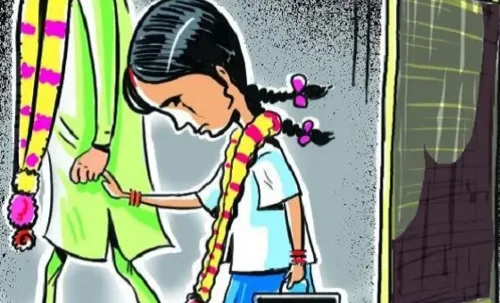
According to the HRCP report, girls from Christian and Hindu communities continued to be abducted and coerced into marriage by older Muslim men, with the crisis compounded by widespread poverty and inadequate police responses. The report cites the case of an underage Christian girl alongside multiple accounts involving Hindu girls.
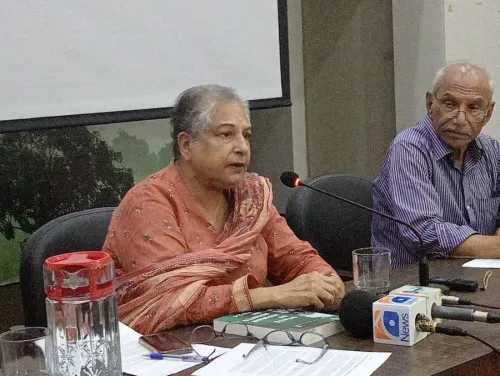
The commission quoted Faqir Shiva Kachhi, a Hindu minority rights activist from Sindh province, who has spent nearly a decade fighting for the rights of underage Hindu girls — particularly those from lower-caste communities — against forced conversions. Citing data provided by Kachhi, the HRCP noted that 36 underage Hindu girls were abducted in 2025, while 32 such cases were reported in just the first seven months of 2026.
'And these are the ones we know of. There might have been countless others,' the HRCP quoted Kachhi as saying. He further highlighted police inaction, stating: 'We have to stage sit-ins in front of the police station and superintendent's office just to get an FIR registered.'
The report also flagged that a Hindu human rights activist posted on a social platform about alleged threats from a right-wing party for his activism against forced marriages of Hindu girls in Sindh — a signal that those documenting abuses face intimidation.
Blasphemy Laws and the Ahmadiyya Community
The HRCP report highlighted the persistent misuse of blasphemy laws in Pakistan, noting that hundreds of accused remain in legal limbo. An alleged organised entrapment network linked to blasphemy charges has yet to be investigated by authorities, according to the report.
'The weaponisation of blasphemy law continued during the reporting period, with recurring patterns of personal vendetta, extortion and misguided religiosity driving the accusations,' the HRCP stated. Notably, even a scholar from the majority religious community was reportedly accused of blasphemy after making comments about the Christian faith — illustrating how the law's reach has expanded beyond minority targets.
The Ahmadiyya community faced particular violence, with the report documenting two extremist attacks in Chenab Nagar and increasingly overt attempts to exclude Ahmadis from public and commercial life.
Structural Discrimination and Marginalisation
Beyond individual incidents, the HRCP identified systemic factors deepening minority marginalisation: discriminatory employment practices, the Islamisation of school curricula, and the near-absence of minority concerns from mainstream Pakistani media. 'Apathy towards minority issues in mainstream media has not only continued but become more pronounced. Social media, which is more susceptible to fake news and propaganda, has become the major news source,' the report warned.
This pattern is not new. Rights groups have consistently flagged Pakistan's structural discrimination against minorities across successive governments, making the HRCP's latest findings part of a long-documented continuum rather than an isolated crisis.
HRCP's Core Warning
The Commission concluded that existing legislation intended to protect religious minorities stands in stark contrast to the ground reality — one defined by the weaponisation of blasphemy laws, forced marriages and conversions, escalating hate speech, and state inaction. The gap between law and enforcement, the HRCP argued, effectively denies minorities the equal citizenship that Pakistan's constitution nominally guarantees.
With 32 abduction cases already recorded in under seven months of 2026, the data suggests the situation is not improving — and pressure from international human rights bodies and diaspora advocacy groups is likely to mount ahead of upcoming UN Human Rights Council reviews.
Point of View
The accountability deficit is institutional, not incidental. What the mainstream coverage tends to miss is the data dimension: Kachhi's figures are the floor, not the ceiling, of actual cases. Pakistan faces mounting pressure at the UN Human Rights Council, and these domestic admissions will be difficult for Islamabad to contest on the international stage.
NationPress
16 Oct 2026
Frequently Asked Questions
What does the HRCP 'Sanctuary Denied' report say about Pakistan's minorities?
The HRCP's 'Sanctuary Denied: Freedom of Religion or Belief in 2025/26' report documents systematic persecution of religious minorities in Pakistan, including abductions and forced marriages of Hindu and Christian girls, misuse of blasphemy laws, and attacks on the Ahmadiyya community. The commission warns that existing protective legislation is routinely undermined by state inaction and structural discrimination.
How many Hindu girls were abducted in Pakistan according to the HRCP report?
According to data cited by rights activist Faqir Shiva Kachhi and referenced in the HRCP report, 36 underage Hindu girls were abducted in 2025, and 32 cases were reported in just the first seven months of 2026. Kachhi cautioned that the actual numbers are likely higher, as many cases go unreported.
How are blasphemy laws being misused against minorities in Pakistan?
The HRCP found that blasphemy accusations in Pakistan are frequently driven by personal vendettas, extortion, and extremist ideology rather than genuine religious grievances. Hundreds of accused remain in legal limbo, and an alleged organised entrapment network linked to blasphemy charges has yet to be investigated by authorities.
What attacks did the Ahmadiyya community face?
The HRCP documented two extremist attacks on the Ahmadiyya community in Chenab Nagar during the reporting period, alongside increasingly deliberate efforts to exclude Ahmadis from public and commercial life in Pakistan.
Why does the HRCP say Pakistan's media is failing minorities?
The HRCP noted that mainstream Pakistani media's apathy towards minority issues has grown more pronounced, pushing affected communities to rely on social media — a platform more vulnerable to misinformation and propaganda. The commission identified media marginalisation as one of several structural factors, alongside discriminatory employment and the Islamisation of school curricula, that deepen minority exclusion.