Pakistan minority girls: 210 abduction, forced conversion cases documented since 2019
Synopsis
A study presented at the European Parliament has documented 210 verified cases of minority girls being abducted, forcibly converted, and married to their abductors in Pakistan between 2019 and 2025 — with the average victim aged just 12.8 years. Rights groups are now calling on the EU and US to make minority protection a hard condition of their engagement with Islamabad.
Key Takeaways
The 'Stolen Girls' study documented 210 verified cases of abduction, forced conversion, child marriage and sexual violence involving minority girls in Pakistan between 2019 and 2025 .
More than 83% of victims were under 18 ; the average victim age was 12.8 years , against an average perpetrator age of 35.8 years .
Amber Nadeem , a 13-year-old Christian girl from Faisalabad , was allegedly abducted on 12 June 2026 ; a court later handed her to the accused despite a magistrate ordering an age assessment.
The study was unveiled on 14 July 2026 at the European Parliament by Voice for Justice and Jubilee Campaign .
Voice for Justice chairman Joseph Janssen has urged the EU and US to make minority girl protection a binding condition of engagement with Pakistan .
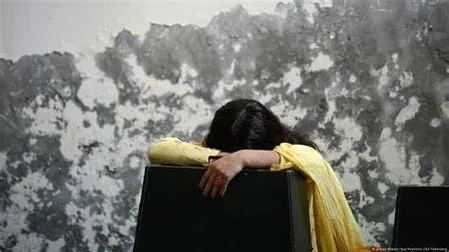
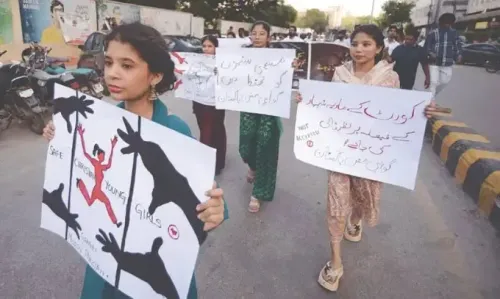
Minority women and girls in Pakistan continue to face systematic persecution, with Christian and Hindu girls among those abducted, sexually assaulted, forcibly converted, and coerced into marrying their abductors, according to a newly spotlighted human rights report. The findings, based on a study titled 'Stolen Girls', were formally presented on 14 July 2026 at the European Parliament by human rights organisations Voice for Justice and Jubilee Campaign.
Scale and Pattern of Abuse
The 'Stolen Girls' study documented 210 verified cases of abduction, forced religious conversion, child marriage, and sexual violence involving Christian and other minority girls in Pakistan between 2019 and 2025. Turkish journalist Uzay Bulut analysed the report's findings in American publication PJ Media, highlighting the deeply troubling age profile of victims.
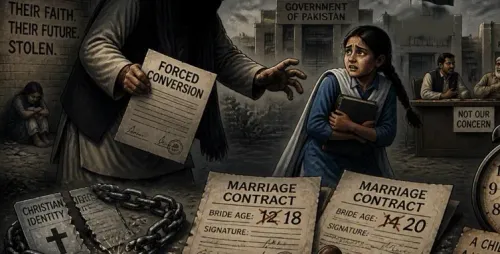
According to the study, more than 83 per cent of the victims were younger than 18 years old. Of those, 134 victims were aged between 14 and 17, representing 63.8 per cent of total cases, while 41 victims were younger than 14 years old (19.5 per cent). Only 35 victims (16.7 per cent) were adults over 18. The average victim age was 12.8 years, while the average perpetrator was 35.8 years old — a gap of 23 years. In several documented cases, the age difference reportedly exceeded 30 years.
Bulut wrote that such abuses 'were not isolated criminal acts, but rather part of a widespread pattern enabled by fraudulent documentation, legal manipulation, and institutional failures that allow perpetrators to evade accountability.'
Case in Focus: Amber Nadeem of Faisalabad
Among the cases detailed in the study is that of Amber Nadeem, a 13-year-old Christian girl from Faisalabad, who was allegedly abducted on 12 June 2026 by Mohsin Liaquat, a Muslim man, according to reports. Following her recovery, Amber reportedly told a Judicial Magistrate that the accused's family had pressured and coached her into claiming she was an adult, had converted to Islam voluntarily, and had entered the marriage of her own free will.
Despite a Magistrate ordering an age assessment and placing Amber in a shelter, a Faisalabad court subsequently handed her over to the accused and granted him bail, according to the report. Rights advocates have cited this case as a direct example of systemic judicial and institutional failures in protecting minority girls.
What Rights Groups Are Demanding
Joseph Janssen, chairman of Voice for Justice, said in an interview that Amber Nadeem's case 'exposes Pakistan's alarming failure to protect minority girls from abduction, forced conversion and child marriage.' He stated that 'Christian and Hindu girls in Pakistan continue to be abducted, forcibly converted to Islam and married to their abductors, in some cases, with police and the judiciary failing to protect victims and facilitating the process.'
Janssen urged both the European Union and the United States government to adopt a zero-tolerance policy towards abduction, forced religious conversion, and child marriage of minority girls in Pakistan. He argued that such abuses cannot be dismissed as individual criminal incidents or purely domestic matters, as they reflect deeper institutional failures to protect vulnerable children and religious minorities.
'There must be clear consequences when minority girls are abducted, forcibly converted and married against their will. The EU and US must make the protection of these children a clear condition of their engagement with Pakistan and demand measurable action, accountability and effective enforcement from Pakistani authorities,' Janssen was quoted as saying.
Broader Context and International Scrutiny
Pakistan's treatment of its religious minorities has long drawn international criticism. The country's blasphemy laws and gaps in its legislative framework on child marriage have previously been flagged by United Nations bodies and international human rights organisations. The presentation of the 'Stolen Girls' study at the European Parliament marks an escalation in efforts to internationalise the issue and link it explicitly to diplomatic and trade conditions. Notably, this is not the first such report to document forced conversion of minority girls in Pakistan, but its presentation before a multilateral legislative forum gives it added political weight.
As pressure mounts on Islamabad from Washington and Brussels, the next phase will likely depend on whether the EU and US translate advocacy demands into tangible policy conditionalities in their bilateral engagement with Pakistan.
Point of View
Coached testimony, and courts overriding age assessments are not aberrations, they are the pattern. The presentation at the European Parliament is a deliberate escalation strategy, designed to shift the issue from a domestic human rights complaint to a foreign policy variable. Whether the EU and US are willing to act on that framing — against a Pakistan they depend on for regional stability calculations — is the real test. Past international pressure on Islamabad over minority rights has produced statements, not structural reform.
NationPress
19 Sept 2026
Frequently Asked Questions
What is the 'Stolen Girls' report on Pakistan?
The 'Stolen Girls' report is a human rights study documenting 210 verified cases of abduction, forced religious conversion, child marriage, and sexual violence against Christian and other minority girls in Pakistan between 2019 and 2025. It was unveiled on 14 July 2026 at the European Parliament by organisations Voice for Justice and Jubilee Campaign.
How many victims were minors in the Pakistan forced conversion cases?
More than 83 per cent of the 210 documented victims were younger than 18 years old. The average victim age was 12.8 years, while the average perpetrator age was 35.8 years — a gap of 23 years.
Who is Amber Nadeem and what happened in her case?
Amber Nadeem is a 13-year-old Christian girl from Faisalabad, Pakistan, who was allegedly abducted on 12 June 2026 by a Muslim man named Mohsin Liaquat. Despite a magistrate ordering an age assessment and placing her in a shelter, a Faisalabad court later handed her over to the accused and granted him bail.
What are rights groups demanding from the EU and US over Pakistan?
Voice for Justice chairman Joseph Janssen has urged the European Union and the United States to adopt a zero-tolerance policy on abduction, forced conversion, and child marriage of minority girls in Pakistan. He has called on both powers to make minority protection a clear and enforceable condition of their diplomatic and economic engagement with Islamabad.
Are these cases isolated incidents or part of a broader pattern in Pakistan?
According to the 'Stolen Girls' report, these cases are not isolated criminal acts but part of a widespread pattern enabled by fraudulent documentation, legal manipulation, and institutional failures. Rights advocates say police and judiciary have, in several documented cases, failed to protect victims and have at times facilitated the process instead.