Forced conversions, child marriages target minority girls in Pakistan: Report
Synopsis
A report presented at the European Parliament documents 210 cases of abduction, forced conversion, and child marriage targeting Christian girls in Pakistan between 2019 and 2025. With victims averaging just 12.8 years of age and Punjab accounting for 89% of cases, rights groups say institutional failure — not isolated bad actors — is the defining feature of this crisis.
Key Takeaways
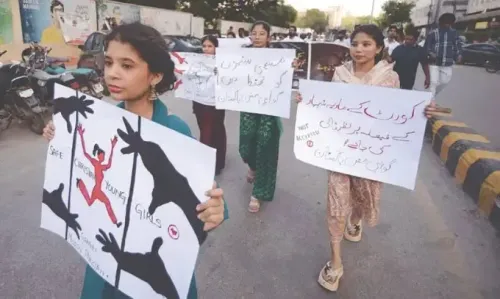
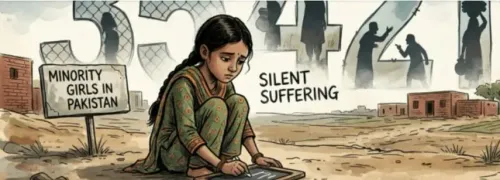
The Voice of Pakistan Minority (VOPM) has flagged a systematic pattern of forced conversions and child marriages targeting minority girls in Pakistan .
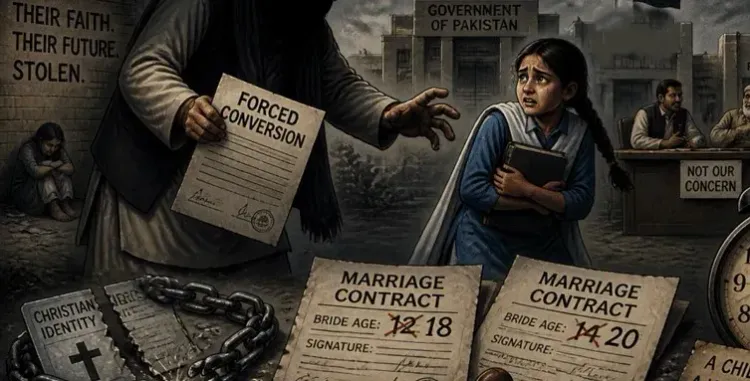
The 'Stolen Girls' report, presented at the European Parliament , documents at least 210 cases involving Christian girls between 2019 and 2025 .
More than 83 per cent of victims are minors, with an average age of just 12.8 years ; average perpetrators are around 35 years old .
Punjab province accounts for nearly 89 per cent of reported cases, with Lahore and Faisalabad among the worst-affected cities.
The case of 13-year-old Maria Shahbaz from Lahore illustrates systemic legal failure, with a court reportedly granting custody to her alleged abductor despite document irregularities.
Rights groups cite failures across police, judiciary, and administrative authorities as enabling near-total impunity for perpetrators.
A leading minority rights organisation has raised serious alarm over a systematic pattern of forced conversions and child marriages targeting minority girls in Pakistan, with a new report revealing that more than 83 per cent of documented victims are minors. The findings point to deep institutional failures across the country's police, judiciary, and administrative bodies, creating what advocates describe as near-total impunity for perpetrators.
Key Findings of the Report
The Voice of Pakistan Minority (VOPM) cited a report titled 'Stolen Girls', presented at the European Parliament by the US-based advocacy group Jubilee Campaign. The report documented at least 210 cases of abduction, forced conversion, and child marriage involving Christian girls in Pakistan between 2019 and 2025.
The data paints a deeply troubling picture: the average age of victims is just 12.8 years, while the average perpetrator is approximately 35 years old — an age gap that frequently exceeds 20 to 30 years. According to the VOPM, these children 'should be in school, playing with friends, and dreaming about their future' rather than being forced into marriages with men nearly three times their age.
Punjab at the Epicentre
The report identifies Punjab province as the primary hotspot, accounting for nearly 89 per cent of all reported cases. Cities including Lahore and Faisalabad top the list, underlining that these abuses are not confined to remote or rural areas — they are occurring openly in some of Pakistan's largest urban centres.
The Case of Maria Shahbaz
Among the cases highlighted is that of Maria Shahbaz, a 13-year-old Pakistani Christian girl from Lahore, whose abduction was formally reported but met with systemic failure. Despite clear irregularities in her marriage documents — including missing identity details and false claims about her age — a Pakistani court reportedly granted custody to the man accused of abducting her. Her parents, according to the VOPM, were left helpless as the legal system appeared to legitimise what they maintain was a criminal act.
Institutional Failures and Cycle of Abuse
The VOPM stressed that these are not isolated incidents but form part of a broader, entrenched pattern. The organisation said that affected families are routinely left to navigate a legal and administrative system stacked against them, while victims are denied both protection and a meaningful voice in proceedings that determine their futures.
'Each case documented in 'Stolen Girls' represents a life interrupted, a childhood stolen, and a family left searching for answers. These are not just numbers in a report presented in distant halls of power. They are urgent calls for justice,' the rights body said.
What Comes Next
The presentation of the 'Stolen Girls' report at the European Parliament signals growing international scrutiny of Pakistan's record on minority protections. Rights groups are calling on Pakistani authorities to overhaul institutional responses, ensure accountability for perpetrators, and provide legal protection for minority girls and their families. Whether domestic political will exists to act on these demands remains an open question.
Point of View
Pakistan's most populous and politically powerful province, is particularly significant: it rules out the easy explanation of governance deficits in peripheral regions. What the data describes is a structural problem, not a peripheral one. International pressure through forums like the European Parliament may raise visibility, but without domestic legal reform and enforceable accountability mechanisms, reports risk becoming a ritual of documentation without consequence.
NationPress
15 Sept 2026
Frequently Asked Questions
What is the 'Stolen Girls' report on Pakistan?
'Stolen Girls' is a report presented at the European Parliament by the US-based advocacy group Jubilee Campaign, documenting at least 210 cases of abduction, forced conversion, and child marriage involving Christian girls in Pakistan between 2019 and 2025. It was cited by the Voice of Pakistan Minority to highlight systemic institutional failures in protecting minority girls.
How many victims of forced conversions in Pakistan are minors?
According to the report cited by the Voice of Pakistan Minority, more than 83 per cent of documented victims are minors. The average age of victims is 12.8 years, while perpetrators average around 35 years old — with age gaps frequently exceeding 20 to 30 years.
Which region of Pakistan has the most cases of child marriage and forced conversions?
Punjab province accounts for nearly 89 per cent of reported cases, with cities like Lahore and Faisalabad topping the list. The data indicates these abuses are occurring in major urban centres, not only in remote areas.
Who is Maria Shahbaz and why is her case significant?
Maria Shahbaz is a 13-year-old Pakistani Christian girl from Lahore whose abduction was formally reported to authorities. Despite irregularities in her marriage documents — including false age claims and missing identity details — a court reportedly granted custody to the man accused of abducting her, illustrating what rights groups describe as systemic legal failure.
What are rights groups demanding in response to these findings?
Rights organisations are calling on Pakistani authorities to overhaul institutional responses across the police, judiciary, and administration; ensure accountability for perpetrators; and guarantee legal protection for minority girls and their families. The presentation at the European Parliament is intended to increase international pressure on Pakistan to act.