Child marriage in Pakistan's Punjab: 15% of girls wed before 18, rights group warns
Synopsis
Pakistan's Voice of Pakistan Minority has flagged that 15% of girls in Punjab province are married before the age of 18 — a crisis the group attributes to laws that set different minimum marriage ages for boys and girls, and to reform efforts that are routinely blocked by fear of religious backlash. The organisation's statement is a rare, direct challenge to institutional inertia on child marriage.
Key Takeaways
The Voice of Pakistan Minority (VOPM) issued a formal warning on 15 May over rampant child marriage in Punjab province, Pakistan .
According to Pakistan's Bureau of Statistics , 15 per cent of children in Punjab are married before turning 18 .
Pakistan's law sets the minimum marriage age at 18 for boys but only 16 for girls , which the VOPM calls 'institutional normalisation of inequality.' The VOPM says legal loopholes enable exploitation and provide cover for those who abuse ambiguities in the statute.
Reform efforts are routinely deflected through religious arguments, with advocates facing fears of being labelled blasphemous.
The organisation warns child marriage inflicts not only physical harm but lasting psychological trauma on girls.
A leading minority rights organisation in Pakistan has sounded the alarm over the persistent prevalence of child marriage in Punjab province, warning that discriminatory legislation and deeply entrenched social norms are systematically stripping young girls of their childhood, education, and fundamental rights. The warning, issued on Friday, 15 May, comes from the Voice of Pakistan Minority (VOPM), one of the country's prominent minority advocacy bodies.
The Scale of the Crisis
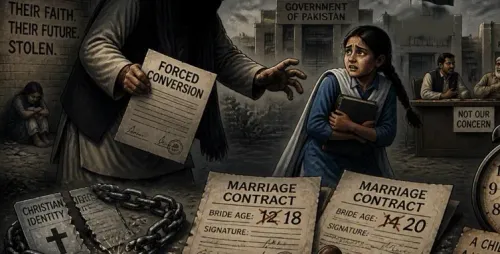
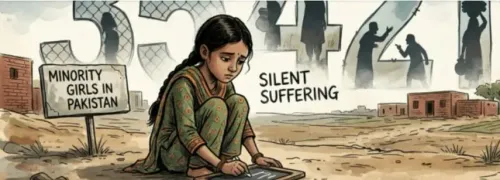
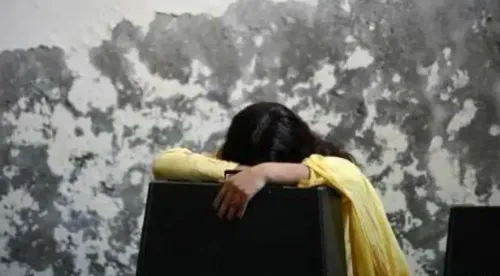
Citing data from Pakistan's Bureau of Statistics, the VOPM disclosed that 15 per cent of children in Punjab are married before the age of 18. The organisation described the figures as a portrait of 'stolen childhoods', where girls are pulled out of classrooms and pushed into unwanted marriages before they have had the chance to grow.
The rights body stressed that the harm extends well beyond lost schooling. 'What does that say about us? Are we so detached that we allow cycles of abuse — rape, maternal death, violence — to continue simply because they remain unseen?' the VOPM said in its statement.
A Legal Framework That Reinforces Inequality
The VOPM pointed to Pakistan's existing legal architecture as a core part of the problem. Under current law, the minimum marriageable age is set at 18 for boys and 16 for girls — a disparity the organisation characterised as 'institutional normalisation of inequality.' The rights body argued that loopholes within these provisions erode their protective purpose, offering legal cover to those who seek to exploit ambiguities in the statute.
According to the organisation, discriminatory legal provisions 'ignore the reality of what child marriage inflicts: not just physical harm, but psychological scars that last a lifetime.'
Religion Invoked to Block Reform
The VOPM noted that opponents of legislative reform in Pakistan rarely defend child marriage directly. Instead, critics shift the conversation — invoking religious authority to deflect scrutiny and sidestep meaningful debate.
'And perhaps the most suffocating barrier of all is fear. Fear of being labelled blasphemous. Fear of questioning interpretations presented as absolute. Under the banner of the Islamic Republic of Pakistan, many argue that reform itself becomes a threat,' the organisation stated.
The rights body was emphatic that the debate is not a contest between faith and law, but a question of national responsibility — whether a state that takes pride in its identity can guarantee the protection of its children.
Impact on Girls and What Advocates Demand
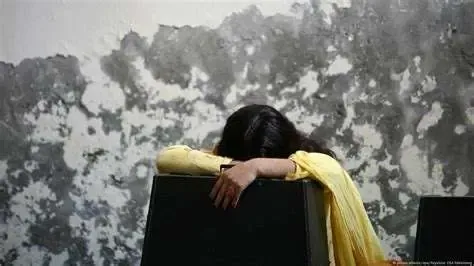
Beyond the legal and political dimensions, the VOPM underscored the lived consequences for girls forced into early marriage: interrupted education, heightened risks of maternal mortality, domestic violence, and lasting psychological trauma. The organisation called on Pakistani authorities to close legal loopholes, equalise the minimum marriage age for both sexes, and move beyond rhetoric toward enforceable child protection.
This is not the first time advocacy groups have raised these concerns — similar alarms have been sounded repeatedly over the past decade, with reform efforts consistently stalled by a combination of legislative inertia and social resistance. Whether the latest intervention prompts concrete governmental action remains to be seen.
Point of View
Not merely inadequate. A two-year gap in minimum marriage age between boys and girls is not a technicality — it is a legislative endorsement of unequal childhood. What is striking is that reform has been stalled not by a lack of evidence but by a political calculus that treats religious optics as more urgent than child welfare. Until Pakistan's legislature is willing to equalise the minimum age and close exploitable loopholes, advocacy statements — however forceful — will remain precisely that.
NationPress
27 Sept 2026
Frequently Asked Questions
What did the Voice of Pakistan Minority report about child marriage in Punjab?
The Voice of Pakistan Minority (VOPM) reported on 15 May that 15 per cent of children in Punjab province are married before the age of 18, citing data from Pakistan's Bureau of Statistics. The group described the situation as 'stolen childhoods' driven by discriminatory laws and entrenched social norms.
What is the minimum legal marriage age in Pakistan?
Under Pakistan's current law, the minimum marriage age is 18 for boys and 16 for girls. The VOPM has criticised this disparity as an example of institutionalised gender inequality embedded in the legal system.
Why is child marriage reform difficult to achieve in Pakistan?
According to the VOPM, opponents of reform rarely defend child marriage outright but invoke religious arguments to deflect scrutiny. Advocates face the risk of being labelled blasphemous for questioning prevailing interpretations, making legislative reform politically fraught.
What are the consequences of child marriage highlighted by the VOPM?
The VOPM states that child marriage inflicts physical harm — including risks of maternal death and domestic violence — as well as lasting psychological trauma. Girls are also pulled out of education, compounding the long-term impact on their lives.
What does the VOPM want Pakistani authorities to do?
The VOPM has called for closing legal loopholes that enable exploitation, equalising the minimum marriage age for boys and girls, and moving beyond policy statements to enforceable child protection measures.