Pakistan poverty rate hits 29% as 70 million fall below poverty line
Synopsis
Pakistan's poverty rate has jumped to 29%, pushing 70 million people below the national poverty line — while a mental health survey finds every third Pakistani lives with a diagnosable disorder. Multiple global indices from the World Bank, UNDP, and Global Hunger Index converge on the same conclusion: Pakistan's human development crisis is deepening on multiple fronts simultaneously.
Key Takeaways
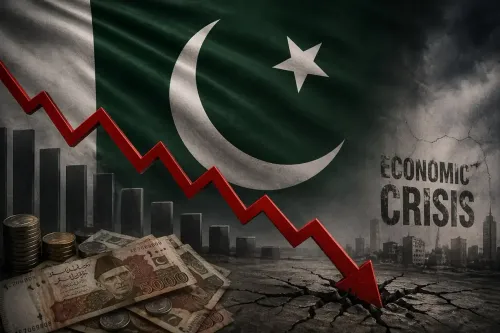
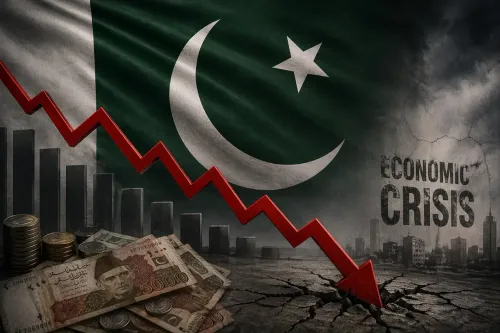
Pakistan's national poverty rate rose from 22% in 2018-19 to 29% in 2024-25 , with roughly 70 million people now below the poverty line, per the World Bank .
The Gini index climbed from 28.4% to 32.7% , reflecting widening income inequality.
The UNDP's 2025 Global Multidimensional Poverty Index finds 38.3% of Pakistan's population multidimensionally poor, with 32 million more vulnerable.
Pakistan ranked 106th out of 122 countries on the 2026 Global Hunger Index with a score of 25.5 — the worst in South Asia outside Afghanistan.
A British Medical Journal survey found one in three Pakistanis lives with a diagnosable mental disorder, and 6% reported suicidal thoughts.
Economic shocks — the Covid-19 pandemic , 2022 floods , high inflation, and currency depreciation — are cited as primary drivers of the reversal.
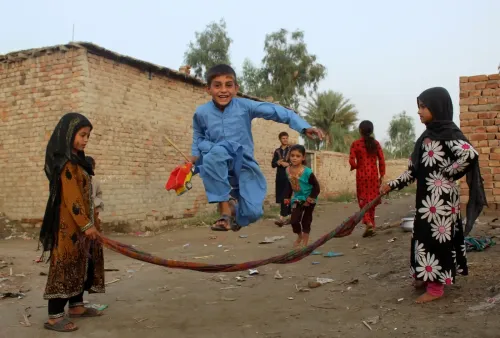
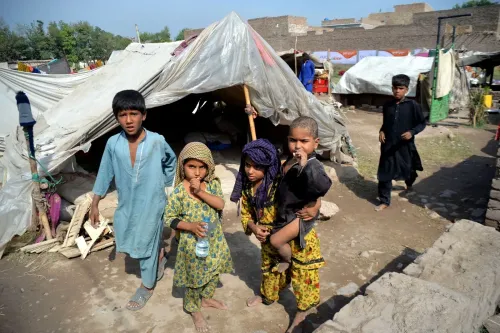
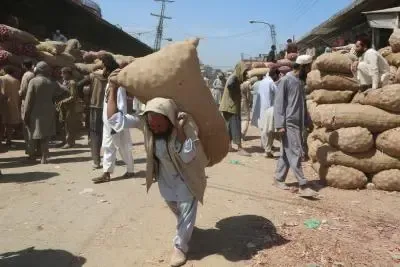
Pakistan is facing a deepening poverty and human development crisis, with the national poverty rate surging from 22% in 2018-19 to 29% in 2024-25 — meaning roughly 70 million people now live below the national poverty line, according to the World Bank's Pakistan Poverty and Equity Brief, as cited in leading Pakistani daily Dawn. Multiple international indices released in 2025 and 2026 paint a consistently grim picture of economic distress, food insecurity, and deteriorating mental health across the country.
Rising Inequality and Economic Shocks
Pakistan's Gini index — a measure of income inequality — has climbed from 28.4% to 32.7%, signalling a widening gap between the rich and poor. The World Bank attributes the reversal in poverty reduction to a confluence of economic shocks: the Covid-19 pandemic, the catastrophic 2022 floods, sustained high inflation, and sharp currency depreciation. These overlapping crises have eroded household purchasing power and pushed millions who had previously escaped poverty back below the threshold.
According to the United Nations Development Programme (UNDP)'s 2025 Global Multidimensional Poverty Index, 38.3% of Pakistan's population is multidimensionally poor — accounting for deprivations in health, education, and living standards beyond income alone. A further 32 million people are considered vulnerable to multidimensional poverty, placing them at risk of falling deeper into destitution with any additional shock.
Pakistan's Hunger Crisis in South Asia
The 2026 Global Hunger Index (GHI) ranked Pakistan 106th out of 122 nations, with a score of 25.5 — categorised as a 'serious' level of hunger. Pakistan holds the distinction of recording the highest hunger score in South Asia, trailing only Afghanistan, which scored 28.6. Pakistan's GHI score is calculated from four components: child stunting, undernourishment, child wasting, and child mortality.
Notably, while Pakistan's score has improved from 36.2 in 2002 to 25.5 in 2026, the pace of improvement has stalled in recent years. Undernourishment has risen from a low level in 2018 to a medium level, and child wasting is approaching the 'high' threshold, according to the report. Analysts link the food insecurity crisis to declining household purchasing power and constrained access to food — themselves driven by inflation and currency weakness.
A Mental Health Emergency Overlooked
Beyond economic deprivation, a nationally representative mental health survey covering the period 2018 to 2022, published in the British Medical Journal, revealed alarming findings. Naseer Memon, senior adviser for water governance at the Sustainable Development Policy Institute, writing in Dawn, noted the severity: 'Every third Pakistani lives with a diagnosable mental or behavioural disorder; one in five meets the criteria for post-traumatic stress disorder.'
Memon further stated that 'a shocking 6% reported suicidal thoughts, and more than one in 10 had depression,' adding that 'such staggering rates of mental disorders have been linked to lower income and poor education, unemployment, age, and disrupted family circumstances.' The convergence of economic distress and psychological burden points to a crisis that standard poverty metrics alone fail to capture.
What the Data Signals for the Region
This comes amid broader concern over South Asia's economic fragility, with Pakistan's trajectory standing in contrast to its neighbours. India and Bangladesh have both recorded poverty reduction gains over the same period, making Pakistan's regression more pronounced in a regional context. Critics argue that structural issues — including low tax collection, fiscal mismanagement, and dependence on IMF bailouts — have amplified the impact of external shocks that other economies have been better positioned to absorb.
With Pakistan currently engaged in an ongoing International Monetary Fund (IMF) programme, the path to stabilisation remains uncertain. Economists warn that austerity-driven fiscal consolidation, while necessary for macroeconomic balance, risks deepening short-term deprivation for Pakistan's most vulnerable households. The convergence of poverty, hunger, and mental health data underscores the scale of the challenge facing Islamabad as it attempts to restore growth.
Point of View
Nutritional, and psychological — are not independent events but symptoms of a structurally fragile state that has lurched from one IMF programme to the next without resolving its fiscal foundations. What the data reveals, taken together, is a poverty trap: currency depreciation drives food inflation, food inflation drives undernourishment, undernourishment drives mental stress, and mental stress drives lost productivity. The World Bank and UNDP figures also expose the limits of headline GDP metrics — Pakistan has periodically posted growth, yet inequality has simultaneously worsened. For India and regional observers, the unfolding crisis in Islamabad is both a humanitarian concern and a geopolitical variable, given that internal instability in a nuclear-armed neighbour carries consequences well beyond its borders.
NationPress
11 Nov 2026
Frequently Asked Questions
What is Pakistan's current poverty rate according to the World Bank?
Pakistan's national poverty rate stood at 29% in 2024-25, up from 22% in 2018-19, according to the World Bank's Pakistan Poverty and Equity Brief. This translates to roughly 70 million people living below the national poverty line.
Why has poverty increased in Pakistan in recent years?
The World Bank attributes Pakistan's poverty reversal to overlapping economic shocks: the Covid-19 pandemic, the devastating 2022 floods, persistently high inflation, and sharp currency depreciation. These factors together eroded household incomes and purchasing power.
How did Pakistan rank on the 2026 Global Hunger Index?
Pakistan ranked 106th out of 122 countries on the 2026 Global Hunger Index with a score of 25.5, categorised as a 'serious' level of hunger. It is the worst-ranked country in South Asia after Afghanistan, which scored 28.6.
What does the UNDP's 2025 Multidimensional Poverty Index say about Pakistan?
The UNDP's 2025 Global Multidimensional Poverty Index finds that 38.3% of Pakistan's population is multidimensionally poor, measuring deprivations in health, education, and living standards. An additional 32 million people are considered vulnerable to multidimensional poverty.
What did the mental health survey reveal about Pakistan's population?
A nationally representative survey covering 2018-22, published in the British Medical Journal, found that one in three Pakistanis lives with a diagnosable mental or behavioural disorder, one in five meets the criteria for PTSD, and 6% reported suicidal thoughts. Researchers linked the high rates to low income, poor education, unemployment, and disrupted family circumstances.