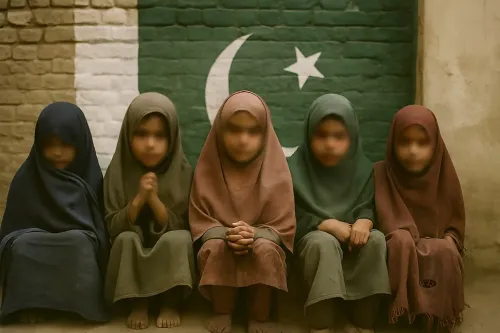
Will Enacting Laws Deter Child Marriages? Pakistan Must Enforce Them: Report

Synopsis
The fight against child marriage in Pakistan reveals a stark contradiction between the law and reality. Despite recent legislation, deeply held social norms and economic disparities continue to perpetuate this practice. How can Pakistan transform legal statutes into real change? This article explores the urgent need for enforcement and community engagement.
Key Takeaways
10% of adolescents aged 15–19 are married in Pakistan.
Legislation has not led to substantial change.
Balochistan has the highest adolescent marriage rate at 22.5% .
Rural areas are significantly more affected than urban.
Gender disparities perpetuate cycles of dependency.
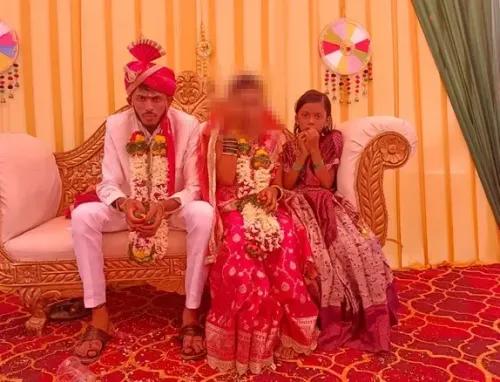
Islamabad, Feb 7 (NationPress) The ongoing issue of child marriage in Pakistan, despite legislative advancements, highlights the profound entrenchment of social norms and structural inequalities that mere laws cannot dismantle, as noted in an editorial from the esteemed financial publication 'Business Recorder'.
According to Gallup Pakistan's recent Digital Analytics report, nearly 10% of adolescents aged 15–19 are already married, illustrating a significant gap between legal frameworks and the harsh realities faced by many.
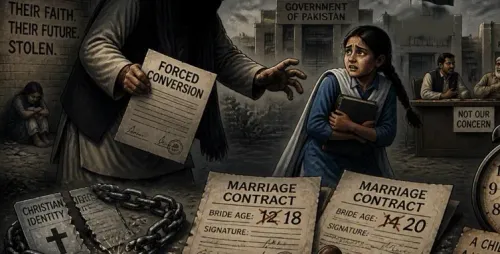
In recent years, both Islamabad and Sindh have enacted laws prohibiting marriage below the age of 18, while Punjab remains an exception with a minimum marriage age of 16. These initiatives were celebrated as significant milestones for the protection of adolescent rights. However, the statistics reveal that such legislation has not resulted in substantial societal changes.
“Balochistan is reported to have the highest rate of adolescent marriages at 22.5%, followed by Sindh at 17% and Khyber Pakhtunkhwa at 13.8%. Punjab and Islamabad show lower rates of 6.9% and 4.7%, respectively, yet these figures still represent thousands of young lives impacted prematurely,” the report stated.
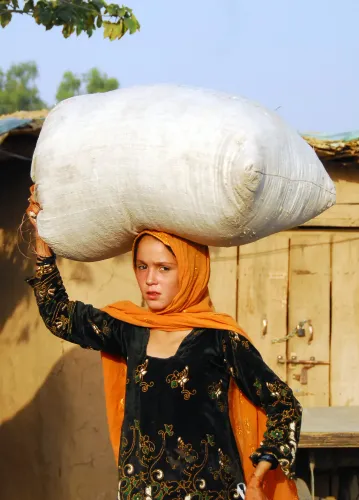
The practice is notably prevalent in rural regions, where poverty, limited educational opportunities, and inadequate service delivery intersect with deep-rooted cultural norms. In areas where education is either inaccessible or undervalued—especially for girls—marriage is often perceived as a means of social and economic security.
This urban-rural divide underscores the significant impact of geography. Legislation passed in provincial capitals frequently fails to reach remote districts where traditional societal structures prevail.
As reported, girls disproportionately suffer from early marriages. Nationwide, 15% of females aged 16–19 are married, but in the rural areas of Khyber Pakhtunkhwa, Sindh, and Balochistan, this figure climbs to 30%. In contrast, boys tend to marry later, typically after achieving economic stability.
This gender disparity reflects patriarchal standards that normalize early marriage for girls while granting autonomy to boys, perpetuating cycles of dependency and reinforcing women's subordinate roles in society.
Early and repeated pregnancies lead to increased maternal mortality, obstetric complications, and adverse neonatal outcomes. Girls often leave school permanently, which limits their economic opportunities and perpetuates poverty.
Moreover, young brides face elevated risks of domestic violence and abuse, particularly within extended family structures where they lack autonomy.
These issues are not merely personal tragedies; they signify systemic failures that hinder national development goals.
“As Gallup Pakistan rightly points out, national averages obscure significant sub-national variations. Geography and gender significantly influence outcomes, far beyond legal reforms,” the editorial stated.
The article emphasizes the need for a paradigm shift in policy approaches, where passing laws is merely the initial step, and enforcement becomes the critical measure. Effective enforcement necessitates community involvement to confront entrenched norms; enhancing access to education, particularly for girls in rural and marginalized communities; and ensuring health and social support systems reach these underserved populations.
“Without targeted, region-specific initiatives, early marriage will persist in certain areas of Pakistan, despite improvements in national averages. Provincial authorities must move beyond mere legislation to safeguard the rights, health, and futures of adolescent girls by enforcing existing laws, expanding educational opportunities, and challenging outdated local customs,” the piece concluded.
This article has spotlighted an issue that transcends legalities and delves into socio-economic factors where poverty, gender inequality, and ineffective governance converge to maintain early marriage.
For Pakistan, the path forward is evident: progress beyond symbolic legislation to actionable measures. Protecting the rights, health, and futures of adolescent girls calls for confronting poverty, dismantling patriarchal structures, and investing in education.
Point of View
It is imperative to recognize that while legislation is crucial, it is merely the first step. Our focus must shift towards ensuring effective enforcement and community engagement to eliminate child marriage and protect the future of our adolescents.
NationPress
24 Sept 2026
Frequently Asked Questions
What is the current child marriage rate in Pakistan?
According to Gallup Pakistan, nearly 10% of adolescents aged 15–19 are married, reflecting significant disparities between legal standards and actual practices.
Which provinces have enacted laws against child marriage?
Islamabad and Sindh have laws criminalizing marriage below the age of 18, while Punjab has a minimum age set at 16.
How does geography affect child marriage rates?
Rural areas experience higher rates of child marriage due to poverty, lack of education, and traditional norms, highlighting significant urban-rural disparities.
What are the consequences of early marriage for girls?
Early marriage leads to higher risks of maternal mortality, limited educational opportunities, and increased vulnerability to domestic violence.
What solutions are proposed to combat child marriage?
Effective enforcement of laws, community engagement, and improved access to education, especially for girls, are critical to addressing this issue.