Pakistan courts treat child marriage as procedural flaw, not rights violation: Report

Synopsis
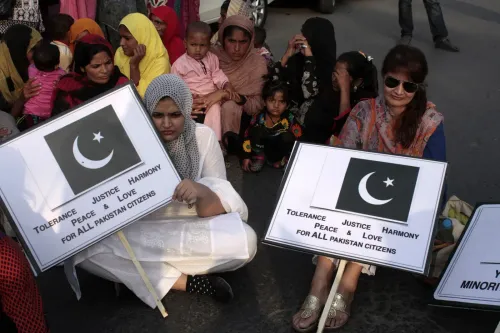
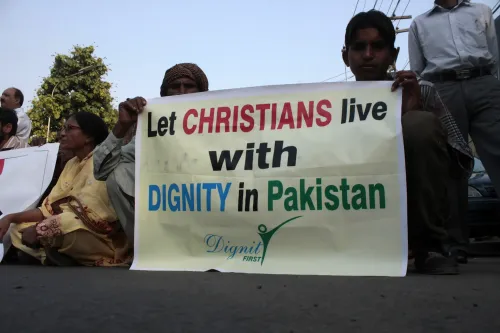
Pakistan's Federal Constitutional Court upheld a minor Christian girl's marriage to a Muslim man in the Maria Shahbaz case, even as new legislation criminalises such unions. Critics say the ruling entrenches a dangerous duality: child marriage can be a crime, yet its outcome remains legally enforceable — leaving girls vulnerable to coercion and exploitation.
Key Takeaways
The Federal Constitutional Court upheld the marriage of a minor Christian girl to a Muslim man in the Maria Shahbaz case on 30 March .
The Islamabad Capital Territory Child Marriage Restraint Act , effective May 2024 , sets 18 as the minimum legal age for marriage and criminalises underage unions.
Despite criminalising child marriage, Pakistani courts have consistently refused to declare such marriages void , creating a legal contradiction.
The Islamabad High Court allowed a 15-year-old girl to remain with her husband in the Madiha Bibi case in October 2024 , citing Islamic jurisprudence.
Critics argue Pakistan's courts prioritise religious interpretations over statutory protections, undermining constitutional guarantees of dignity, equality, and bodily autonomy .
Pakistan's legal system continues to treat child marriage as a procedural irregularity rather than a substantive violation of rights, with the Federal Constitutional Court's judgement in the Maria Shahbaz case on 30 March once again exposing the deep structural contradictions in how the country's judiciary handles underage marriages, according to a report published in the UK-based daily Asian Lite.
The Maria Shahbaz Ruling and Its Fallout
In the verdict, the Federal Constitutional Court upheld the marriage of a minor Christian girl to a Muslim man, grounding its reasoning in Islamic jurisprudence that permits marriage between a Muslim man and a woman from the
Point of View
But courts have effectively nullified its protective intent by declining to void marriages contracted in violation of it. What emerges is a two-tier system where the law punishes the act of child marriage on paper while leaving the child trapped within it in practice — a outcome that disproportionately harms girls from religious minorities, who face the compounded vulnerability of forced conversion alongside underage marriage.
NationPress
21 Sept 2026
Frequently Asked Questions
What was the Maria Shahbaz case ruling in Pakistan?
The Federal Constitutional Court of Pakistan upheld the marriage of a minor Christian girl to a Muslim man on 30 March, grounding its decision in Islamic jurisprudence that permits marriage between a Muslim man and a woman from the 'People of the Book.' The court refused to declare the marriage void, sparking widespread concern about Pakistan's inconsistent legal framework on child marriage.
What does Pakistan's child marriage law say?
The Islamabad Capital Territory Child Marriage Restraint Act, which came into effect in May 2024, sets 18 as the minimum legal age for marriage and criminalises underage marriages. However, Pakistani courts have consistently declined to declare such marriages void, creating a contradiction between the law's penal provisions and its protective intent.
Why are Pakistan's courts criticised for their handling of child marriage?
Critics argue that Pakistani courts prioritise Islamic jurisprudence over statutory protections, treating child marriage as a procedural irregularity rather than a substantive rights violation. By refusing to void such marriages even while acknowledging they are criminal, courts leave minors — particularly girls — vulnerable to coercion, forced conversion, and exploitation.
What was the Madiha Bibi case?
In October 2024, the Islamabad High Court allowed a 15-year-old girl to remain with her husband in the Madiha Bibi case, despite official records confirming she was underage. The court relied on Islamic jurisprudence, which presumes puberty at 15 and considers marriage valid if free consent is given, effectively overriding the statutory age threshold.
Has Pakistan made any progress on child marriage reform?
Yes, a 2023 Federal Shariat Court verdict upheld 18 as a valid minimum age for marriage, stressing that mental maturity — not merely puberty — is a prerequisite under Islamic principles. The 2024 Islamabad Capital Territory Act followed this. However, subsequent court rulings, including the Maria Shahbaz verdict, have undermined these gains by refusing to invalidate underage marriages in practice.