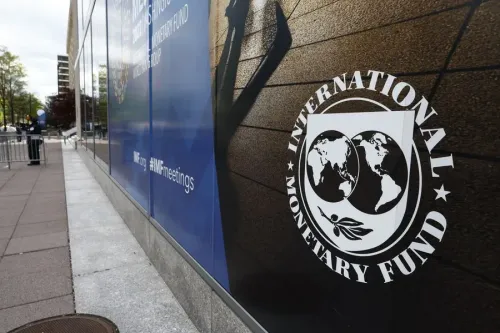
IMF unlocks $1.21 billion for Pakistan amid geopolitical risk warnings
Synopsis
The IMF has agreed to unlock $1.21 billion more for Pakistan — but the fine print is unsparing. With circular debt unresolved, inflation still above 10 per cent, and geopolitical risks mounting, the Fund's message is clear: the money comes with conditions Islamabad cannot afford to sidestep. Total disbursements under the two facilities now approach $5.7 billion, making this one of Pakistan's most consequential IMF engagements.
Key Takeaways
The IMF reached a staff-level agreement with Pakistan on 8 October 2026 to release approximately $1.21 billion in additional financing.
Funds are split between $1 billion under the Extended Fund Facility (EFF) and $210 million under the Resilience and Sustainability Facility (RSF) .
Total disbursements under both arrangements would reach approximately $5.7 billion upon Executive Board approval.
Pakistan's economy grew 3.6 per cent in FY26 ; inflation eased to 10.3 per cent in September; reserves reached $21.5 billion .
The IMF demanded a primary surplus target of 2 per cent of GDP , energy tariff reforms, and the phase-out of Pakistan's fuel support scheme.
IMF mission head Iva Petrova warned risks remain high from geopolitical tensions, volatile energy prices, and trade disruptions.
The International Monetary Fund (IMF) reached a staff-level agreement with Pakistan on 8 October 2026 that could release approximately $1.21 billion in additional financing, even as the lender flagged persistent threats from geopolitical tensions, high energy prices, and global trade disruptions to the country's fragile economic recovery.
What the Agreement Covers
The deal encompasses the fourth review of Pakistan's 37-month Extended Fund Facility (EFF) and the third review of its 28-month Resilience and Sustainability Facility (RSF). Once ratified by the IMF Executive Board, Pakistan would access roughly $1 billion under the EFF and a further $210 million under the RSF, lifting total disbursements under both arrangements to approximately $5.7 billion.
An IMF mission led by Iva Petrova conducted discussions with Pakistani authorities in Karachi and Islamabad from 23 September to 7 October, as part of the country's annual economic consultation and programme reviews.
Pakistan's Economic Snapshot
Pakistan's economy grew an estimated 3.6 per cent in FY26, though elevated energy prices and supply disruptions weighed on momentum. Real GDP growth reached 4 per cent during the first three quarters of the financial year before easing.
Inflation, after peaking in May, moderated to approximately 10.3 per cent in September. The current account remained broadly balanced, supported by robust remittances. Gross foreign exchange reserves climbed to about $21.5 billion by end-September, and sovereign credit-rating upgrades restored Pakistan's access to international financial markets — signals the IMF cited as evidence of improving policy credibility.
IMF's Conditions and Reform Demands
The Fund called on Islamabad to maintain fiscal discipline and implement its FY27 budget, anchored around an underlying primary surplus target of 2 per cent of GDP. It pressed for stronger tax administration — including risk-based audits, digital invoicing and use of third-party data — to shore up revenue collection.
The IMF also urged reforms to public financial management, procurement, and government cash operations to cut borrowing costs and reduce debt rollover risks. On the monetary front, the State Bank of Pakistan was urged to hold an appropriately tight stance until inflation returns sustainably to its target range.
Social spending improvements were acknowledged: Pakistan raised health and education expenditure from 2.2 per cent of GDP in FY24 to 2.5 per cent in FY26, with a target of 2.8 per cent in FY27. However, the IMF pressed for the existing fuel support scheme to be phased out promptly, citing its high cost and broad coverage.
Energy Sector Remains a Flashpoint
Energy sector reform remains a critical condition, including timely tariff adjustments, improved distribution efficiency, greater competition in electricity distribution, and concrete measures to prevent renewed accumulation of circular debt — a structural problem that has repeatedly undermined Pakistan's fiscal stability.
Risks and What Comes Next
'Nevertheless, risks remain high, particularly from geopolitical tensions, volatile energy prices, tighter global financial conditions, and trade disruptions,' Petrova said. The warning underscores that despite measurable stabilisation, Pakistan's recovery remains susceptible to external shocks — a recurring vulnerability given the country's dependence on imported energy and its exposure to regional instability.
Pakistan has leaned on successive IMF-backed programmes to stabilise its economy, bolster reserves, and address chronic fiscal and energy-sector imbalances. The Executive Board's approval of the current agreement will determine when the next tranche of funds is released.
Point of View
Not a clean bill of health. Pakistan's inflation is still above 10 per cent, circular debt remains a structural sore, and the country's energy sector has resisted reform across multiple IMF programme cycles. The IMF's insistence on phasing out the fuel subsidy — politically toxic in any context — will test whether Islamabad can sustain reform momentum beyond the disbursement window. History suggests that once funds flow, compliance tends to soften. The real story is not the $1.21 billion but whether the Executive Board attaches verifiable benchmarks that past programmes conspicuously lacked.
NationPress
8 Oct 2026
Frequently Asked Questions
What is the IMF's $1.21 billion agreement with Pakistan?
It is a staff-level agreement covering the fourth review of Pakistan's 37-month Extended Fund Facility and the third review of its 28-month Resilience and Sustainability Facility, announced on 8 October 2026. If approved by the IMF Executive Board, Pakistan would receive roughly $1 billion under the EFF and $210 million under the RSF, bringing total disbursements under both facilities to about $5.7 billion.
What conditions has the IMF attached to the Pakistan financing?
The IMF requires Pakistan to maintain fiscal discipline anchored by a 2 per cent of GDP primary surplus target for FY27, strengthen tax administration through digital invoicing and risk-based audits, reform energy tariffs, and promptly phase out the existing fuel support scheme. The State Bank of Pakistan has also been urged to keep monetary policy tight until inflation returns to its target range.
What is the current state of Pakistan's economy according to the IMF?
Pakistan's economy grew an estimated 3.6 per cent in FY26, with inflation cooling to 10.3 per cent in September after peaking in May. Gross foreign exchange reserves rose to approximately $21.5 billion by end-September, and the current account remained broadly balanced on the back of strong remittances.
What risks does the IMF warn could derail Pakistan's recovery?
The IMF specifically flagged geopolitical tensions, volatile energy prices, tighter global financial conditions, and trade disruptions as key threats. IMF mission chief Iva Petrova noted that despite measurable stabilisation, Pakistan's recovery remains highly vulnerable to external shocks.
When will the IMF funds actually be released to Pakistan?
The staff-level agreement must first be approved by the IMF Executive Board before any funds can be disbursed. No specific date for the board meeting has been announced, but approval is a standard procedural step following a staff-level deal.