Is there a major impact on oil prices from Venezuela and Iran tensions?
Click to start listening
Synopsis
The IMF reveals its ongoing vigilance over global energy markets amidst rising tensions in Venezuela and Iran, yet confirms no significant influence on oil prices has been observed. As Venezuela faces a humanitarian crisis, what could this mean for international economic stability? Discover the IMF's insights into these critical issues.
Key Takeaways
- The IMF is closely monitoring energy markets amid Venezuela and Iran tensions.
- Oil prices have not experienced significant impacts yet.
- Venezuela faces a humanitarian crisis with millions displaced.
- Economic vulnerabilities in Venezuela have increased since late 2024.
- The IMF's engagement with Venezuela remains on hold due to recognition issues.
Washington, January 16 (NationPress) The International Monetary Fund (IMF) announced on Thursday that it is diligently monitoring the global energy landscape amidst rising tensions concerning Venezuela and Iran, yet emphasized that oil prices have not experienced any "very significant impacts" thus far.
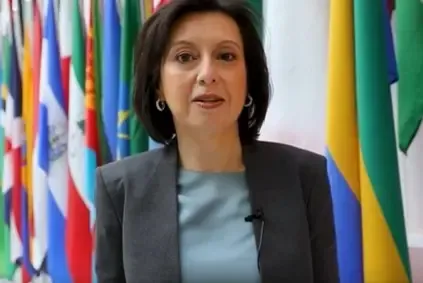
When asked about the seriousness of the current conflicts involving Venezuela and Iran for international energy markets, Julie Kozack, Director of the IMF’s Communications Department, stated: "At this moment, we are keeping a close eye on these developments."
She elaborated, "We closely observe fluctuations in global energy markets, particularly oil prices."
According to Kozack, "Currently, there have not been significant shifts in oil prices, but we will continue to watch closely for any signs of change in those markets," she mentioned during the IMF press briefing.
The inquiries arose as she discussed the Fund’s evaluation of Venezuela’s economic situation and the circumstances under which the IMF might resume its activities with Caracas, given the ongoing recognition-related hiatus.
"Since late 2024, our analysis indicates that imbalances and vulnerabilities have resurfaced, primarily due to declining oil revenues and an expanding fiscal deficit," she noted, attributing these issues to "a lack of US dollar liquidity."
She further stated, "Inflation is projected to be in triple digits, and there is a rapid depreciation of the currency underway."
In response to a query, she indicated that Venezuela’s Special Drawing Rights (SDRs) at the IMF amount to "approximately $4.9 billion." Access to these funds would only be granted when the IMF resumes its engagement, which remains on hold due to government recognition challenges.
"Since 2019, the Fund's interactions with Venezuela have been suspended due to recognition issues with the government," Kozack explained.
"In such situations, the IMF is directed by the perspectives of the international community as represented by a majority of the total voting power of its members," she added, noting that this would guide their decision-making regarding the resumption of ties with Venezuela.
Kozack described Venezuela as experiencing a "severe and prolonged economic and humanitarian crisis," stating that "since 2014, roughly 8 million individuals, about a quarter of the national population, have fled the country."
She mentioned that "socioeconomic conditions remain dire, with high levels of poverty and inequality, alongside widespread shortages of essential services," emphasizing that "overall, Venezuela's situation remains critically fragile, and the humanitarian needs of its citizens are substantial."
"Since late 2024, our assessment indicates that significant imbalances and vulnerabilities have reemerged, driven by lower oil revenues and a widening fiscal deficit, which has led to increased monetary financing and a scarcity of US dollar liquidity," she reiterated.
"Inflation is estimated to be in triple digits, with rapid currency depreciation in progress," Kozack remarked, adding, "Venezuela's public debt is estimated at 180 percent of GDP, not accounting for any legal judgments or arbitrations, and the debt is predominantly in default."
Kozack emphasized the IMF's commitment to observing developments despite "very significant information gaps."
"We are closely monitoring developments in Venezuela, even in light of the substantial information gaps," she stated.
Point of View
It is crucial to recognize the broader implications of these developments, particularly for vulnerable populations in Venezuela. The IMF's monitoring reflects a commitment to addressing economic challenges while considering humanitarian needs.
NationPress
16/01/2026
Frequently Asked Questions
What is the IMF's position on oil prices amid Venezuela and Iran tensions?
The IMF is closely monitoring global energy markets and has noted that, at this moment, there have not been very significant impacts on oil prices due to the tensions surrounding Venezuela and Iran.
How has the economic situation in Venezuela evolved?
The IMF indicates that since late 2024, imbalances and vulnerabilities in Venezuela's economy have reemerged, driven by lower oil revenues and a widening fiscal deficit.
What is the current state of Venezuela's humanitarian crisis?
Venezuela is facing a severe humanitarian crisis, with approximately 8 million individuals having left the country since 2014, highlighting high poverty and inequality levels.
When might the IMF resume engagement with Venezuela?
The IMF's engagement with Venezuela remains paused due to government recognition issues, and it will resume in accordance with the views of the international community.
What are the current inflation rates in Venezuela?
Inflation in Venezuela is estimated to be in the triple digits, coupled with a rapid depreciation of the national currency.