India-UNESCAP talks in Bangkok target trade, clean energy, digital infra
Synopsis
India's Ambassador to Thailand sat down with a senior UNESCAP official in Bangkok to map out deeper cooperation across trade, clean energy, digital infrastructure, and disaster resilience — sectors where India increasingly sees itself as a model for the Asia-Pacific. With India already hosting two ESCAP institutional centres, this meeting signals an intent to convert institutional presence into active regional leadership.
Key Takeaways
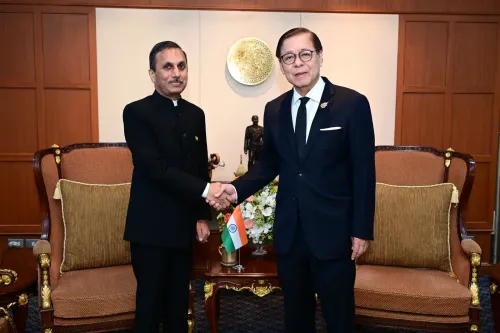
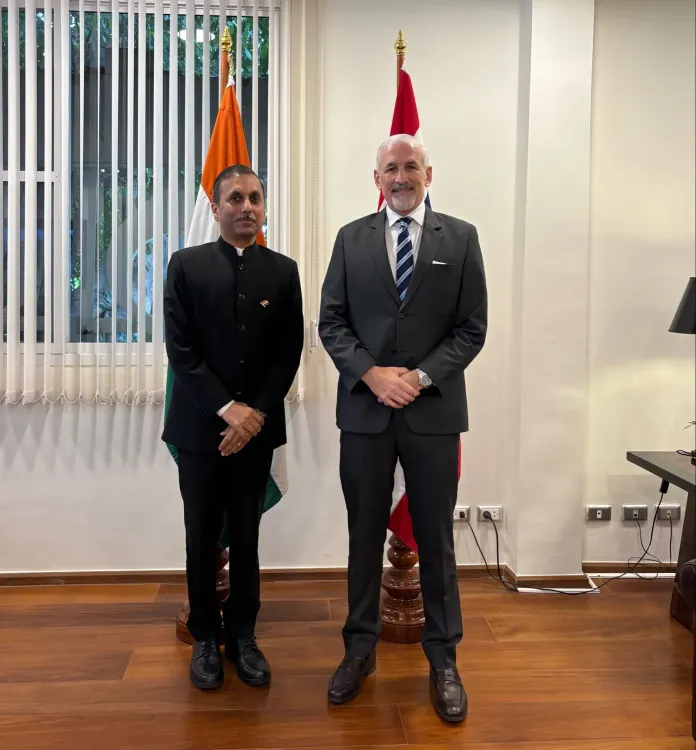
Ambassador Puneet Agrawal met UNESCAP Deputy Executive Secretary Shombi Sharp in Bangkok on 30 June .
Discussions covered cooperation in trade , digital public infrastructure , renewable energy , and disaster risk reduction .
India actively participated in the 82nd UNESCAP Session in April , focused on the 2030 Agenda and SDG implementation.
India hosts the ESCAP Asia and Pacific Centre for Transfer of Technology and the Subregional Office for South and South-West Asia .
No formal agreements were announced; follow-up sectoral engagements are anticipated.
India's Ambassador to Thailand, Puneet Agrawal, met Shombi Sharp, Deputy Executive Secretary for Partnerships and Coordination at the United Nations Economic and Social Commission for Asia and the Pacific (UNESCAP), in Bangkok on Tuesday, 30 June, for discussions centred on deepening bilateral collaboration across key development sectors. The introductory meeting covered potential cooperation in trade, digital public infrastructure, renewable energy, and disaster risk reduction.
What Was Discussed
The two sides explored how India and UNESCAP could leverage their respective expertise to advance shared priorities in the Asia-Pacific region. According to the Indian Embassy in Thailand, 'Ambassador Puneet Agrawal received Mr Shombi Sharp, Deputy Executive Secretary for Partnerships and Coordination, Office of the Executive Secretary, UNESCAP, for an introductory meeting. Views were exchanged on enhancing collaboration between India and UNESCAP, including by leveraging mutual expertise in sectors like trade, digital public infrastructure, renewable energy, and disaster risk reduction.'
India's Engagement at the 82nd UNESCAP Session
This meeting follows India's active participation in the 82nd Session of UNESCAP, held earlier in April in Bangkok under the theme 'Leaving no one behind: advancing a society for all ages in Asia and the Pacific'. The Indian delegation contributed substantively to deliberations, underscoring India's commitment to the 2030 Agenda and its engagement with UNESCAP on Sustainable Development Goals (SDGs) implementation. The Embassy noted that the delegation 'contributed constructively to the deliberations, highlighting India's commitment to the 2030 Agenda and India's robust engagement with UNESCAP in SDG implementation.'
India's Institutional Ties with UNESCAP
India and UNESCAP share a longstanding institutional relationship. India makes voluntary contributions to ESCAP's regional institutions and supports capacity development projects focused on technology transfer. Notably, India hosts the ESCAP Asia and Pacific Centre for Transfer of Technology as well as the Subregional Office for South and South-West Asia — two anchors that give New Delhi a structurally embedded role in the Commission's regional architecture.
Why This Matters
The outreach comes at a time when India is positioning itself as a key provider of digital and clean-energy solutions across the Global South. India's digital public infrastructure stack — including UPI, Aadhaar, and ONDC — has drawn interest from multiple Asia-Pacific nations. Expanding the UNESCAP partnership could serve as a formal channel for scaling these models regionally. This is also consistent with India's broader multilateral strategy of deepening engagement with UN bodies to amplify its development narrative ahead of its growing global profile.
What Comes Next
No formal agreements were announced following the introductory meeting, but both sides signalled intent to pursue structured collaboration. Given India's existing institutional footprint within UNESCAP, follow-up engagements on specific sectoral roadmaps are expected in the coming months.
Point of View
A voluntary contributor, and increasingly a model exporter of digital and clean-energy solutions. Using UNESCAP as a channel to scale India's DPI stack across Asia-Pacific is a logical next step, but the absence of any announced deliverables after this 'introductory' meeting is worth noting. India's multilateral diplomacy often generates strong optics at the meeting stage; the harder test is whether sectoral roadmaps with measurable outcomes follow. With the 2030 SDG deadline approaching and India's own development record under scrutiny, the pressure to convert partnership intent into verifiable regional impact is only growing.
NationPress
30 Jun 2026
Frequently Asked Questions
What did India and UNESCAP discuss at the Bangkok meeting?
India's Ambassador to Thailand, Puneet Agrawal, and UNESCAP Deputy Executive Secretary Shombi Sharp met on 30 June in Bangkok to explore enhanced collaboration in trade, digital public infrastructure, renewable energy, and disaster risk reduction. The meeting was described as introductory, with no formal agreements announced.
What is UNESCAP and what role does India play in it?
The United Nations Economic and Social Commission for Asia and the Pacific (UNESCAP) is the UN's regional development arm for the Asia-Pacific. India is a member state that makes voluntary contributions to ESCAP's institutions and hosts two key bodies: the ESCAP Asia and Pacific Centre for Transfer of Technology and the Subregional Office for South and South-West Asia.
What happened at the 82nd Session of UNESCAP?
The 82nd UNESCAP Session was held in Bangkok in April 2025 under the theme 'Leaving no one behind: advancing a society for all ages in Asia and the Pacific.' India's delegation participated actively, highlighting the country's commitment to the 2030 Agenda and its engagement with UNESCAP on Sustainable Development Goals implementation.
Why is India focusing on digital public infrastructure in its UNESCAP engagement?
India's digital public infrastructure — including platforms like UPI and Aadhaar — has attracted interest from multiple Asia-Pacific nations. Deepening the UNESCAP partnership offers a formal multilateral channel through which India can share and potentially scale these models across the region, reinforcing its positioning as a development solutions provider for the Global South.
What are the next steps following the India-UNESCAP meeting?
No specific agreements or timelines were announced after the introductory meeting. However, given India's existing institutional presence within UNESCAP, structured follow-up engagements on sectoral cooperation roadmaps are expected in the months ahead.