India at UN: Attacks on schools rose 44% in 2025, children in conflict zones a 'damning verdict'
Synopsis
Attacks on schools jumped 44% in a single year and 38,558 grave violations against children were recorded in 2025 — the worst in 30 years. At the UN Security Council, India's envoy didn't just condemn; he offered DIKSHA, India's AI-powered digital education platform, as a scalable solution for children displaced by war. The numbers are damning, and India is pushing for accountability with teeth.
Key Takeaways
Attacks on schools rose by 44 per cent in 2025 , according to the UN Secretary-General's annual report on children and armed conflict.
38,558 grave violations against children were verified in 2025 — the highest in the 30-year history of the UN mandate.
Nearly 473 million children — more than one in six globally — live in or are fleeing conflict zones; over 85 million have no access to education.
Harish demanded accountability at the UN Security Council , calling the situation 'a damning verdict on humanity's collective failure.' India proposed its DIKSHA platform as a model for delivering education to children in conflict zones.
The worst violations in 2025 were recorded in the Occupied Palestinian Territory and Israel , DRC , Nigeria , Myanmar , and Somalia .
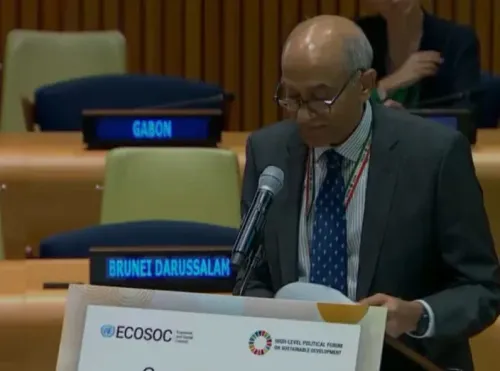
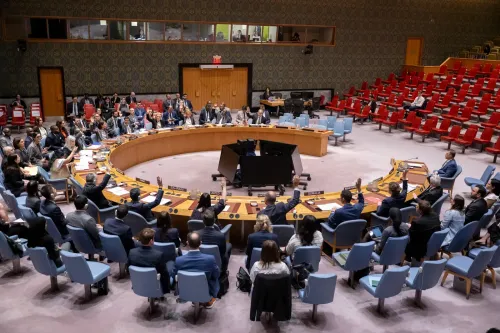
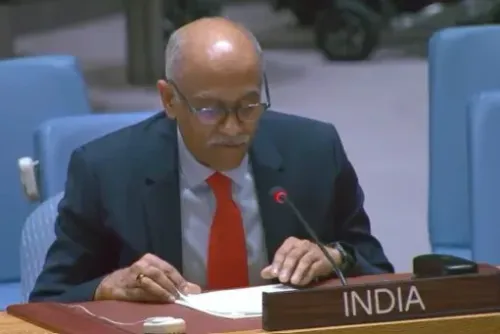
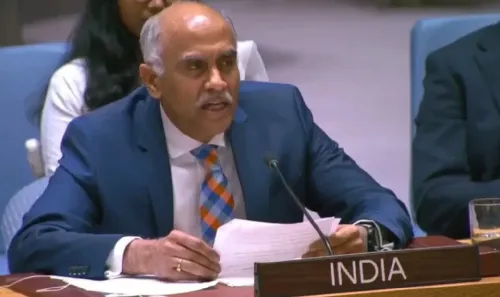
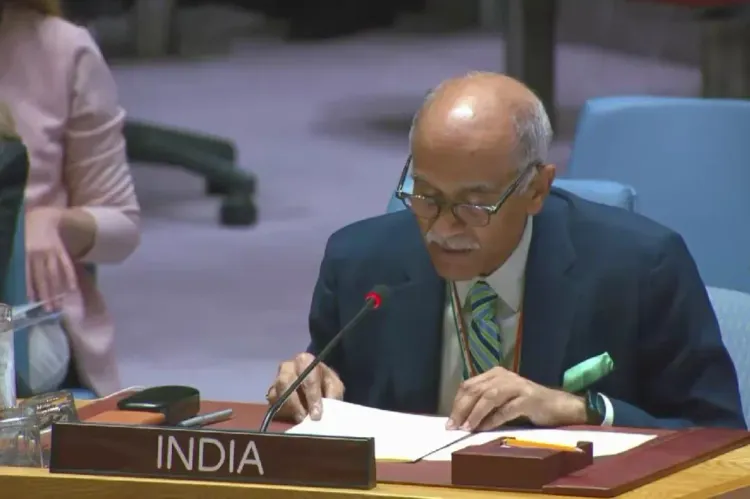
India's Permanent Representative to the United Nations, P. Harish, on 25 June called for immediate accountability against those who target schools and children in conflict zones, describing the situation as 'a damning verdict on humanity's collective failure' to honour its commitments. He was speaking at a UN Security Council debate on children and armed conflicts held in New York.
Scale of the Crisis
Citing the UN Secretary-General Antonio Guterres's annual report on children and armed conflict, Harish highlighted that attacks on schools surged by a staggering 44 per cent in a single year — 2025. The same report recorded 38,558 grave violations against children in 2025, affecting 24,174 children — the highest figure since the UN mandate to produce such a report was established 30 years ago.
Nearly 473 million children — more than one in six globally — currently live in or are fleeing conflict zones, and more than 85 million among them have no access to education whatsoever, Harish said.
India's Call for Accountability
'Protection without accountability is incomplete. Those who target schools and children with impunity must be held to account,' Harish said at the Security Council debate. He framed the crisis not merely as a humanitarian emergency but as a systemic failure to translate international commitments into ground-level action.
Most of the verified violations in 2025 were concentrated in the Occupied Palestinian Territory and Israel, the Democratic Republic of the Congo, Nigeria, Myanmar, and Somalia, according to Vanessa Frazier, the Secretary-General's Special Representative for Children and Armed Conflict. Frazier described 2025 as the worst year for serious violations against children in at least 30 years.
India's Digital Education Model as a Solution
Beyond condemnation, India offered a concrete proposal: its own digital education platform, DIKSHA (Digital Infrastructure for Knowledge Sharing), as a replicable model for reaching children displaced by conflict. Harish said DIKSHA has 'democratised access to quality learning through interactive content and AI-powered tools across multiple languages.'
'Our experience has convinced us that access to digital learning can be the bridge that helps children access education during conflicts,' he said. India has also invested in rebuilding education infrastructure — including schools and vocational training centres — in several countries, particularly in its neighbourhood, he added.
Emerging Threats: Drones and AI in Warfare
UNICEF Executive Director Catherine Russell warned that the evolving nature of warfare is compounding dangers for children. Drones, autonomous and remotely operated systems, and AI-supported targeting tools are making an already dangerous situation significantly worse. 'As the nature of warfare evolves, our commitment to protecting children must remain steadfast,' Russell said.
What Comes Next
The Security Council debate signals growing multilateral pressure to enforce existing frameworks protecting children in conflict, including the UN's Children and Armed Conflict mandate. India's dual approach — demanding accountability while offering digital education solutions — positions it as both a moral voice and a practical contributor in this space. Whether the Council translates this debate into binding resolutions remains to be seen.
Point of View
Deployable alternative in DIKSHA. But the harder question is accountability — the UN has documented grave violations against children for three decades, and the numbers are getting worse, not better. The 44% single-year spike in school attacks is not a statistical anomaly; it reflects the normalisation of civilian infrastructure as a theatre of war. Until the Security Council moves from documentation to enforceable consequences, these annual reports risk becoming monuments to inaction rather than instruments of change.
NationPress
23 Sept 2026
Frequently Asked Questions
By how much did attacks on schools rise in 2025?
Attacks on schools rose by 44 per cent in 2025, according to the UN Secretary-General's report on children and armed conflict, cited by India's Permanent Representative P. Harish at the Security Council debate on 25 June.
How many children are currently living in conflict zones?
Nearly 473 million children — more than one in six globally — live in or are fleeing conflict zones. Of these, more than 85 million have no access to education, according to figures presented at the UN Security Council.
What did India propose at the UN Security Council debate?
India proposed its DIKSHA (Digital Infrastructure for Knowledge Sharing) platform as a replicable model for educating children displaced by conflict. India's envoy P. Harish said the platform uses AI-powered tools and interactive content across multiple languages and could serve as a bridge for children to access learning during conflicts.
Which countries recorded the most violations against children in 2025?
The majority of the 38,558 verified grave violations in 2025 were concentrated in the Occupied Palestinian Territory and Israel, the Democratic Republic of the Congo, Nigeria, Myanmar, and Somalia, according to UN Special Representative Vanessa Frazier.
Why did UNICEF warn about drones and AI in warfare?
UNICEF Executive Director Catherine Russell warned that drones, autonomous systems, and AI-supported targeting tools are making an already dangerous environment for children and schools significantly worse. She stressed that international commitment to protecting children must keep pace with how warfare is evolving.