India, Australia deepen cyber security and critical tech ties under PACTS framework
Synopsis
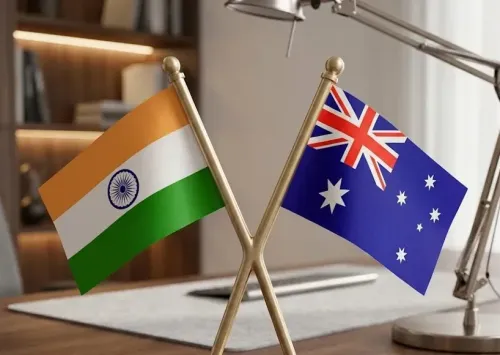
India and Australia are moving beyond policy talk on cyber security and critical tech — senior officials met in Canberra to operationalise PACTS, a five-pillar framework covering AI, supply chains and digital standards across the Indo-Pacific. With India’s scale and Australia’s regional convening power, the partnership has the makings of a significant force in shaping the region’s technology governance.
Key Takeaways
India and Australia held senior-level talks in Canberra on 15 September 2026 to advance their joint cyber and technology agenda.
The talks focused on operationalising PACTS — the Australia-India Partnership on Cyber, Critical Technologies and Supply Chains — built around five key pillars .
Amit Shukla (India's Joint Secretary for Cyber Diplomacy) met Jessica Hunter (Australia's Ambassador for Cyber Affairs and Critical Technology).
Both officials participated in an AI masterclass at the Australian Strategic Policy Institute (ASPI) , examining AI adoption across the Indo-Pacific .
Cooperation covers cyber security , critical technologies , AI , and resilient supply chains under the broader Comprehensive Strategic Partnership .
India and Australia have agreed to significantly deepen bilateral cooperation in cyber security, critical technologies, and resilient supply chains, with senior officials from both nations meeting in Canberra on 15 September 2026 to advance the implementation of a landmark new partnership. The discussions mark a concrete step forward in operationalising the Australia-India Partnership on Cyber, Critical Technologies and Supply Chains (PACTS).
Senior Officials Lead Canberra Talks
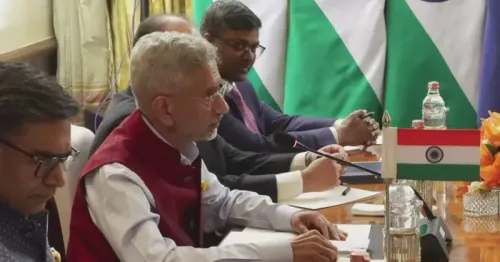
Amit Shukla, Joint Secretary for Cyber Diplomacy at India's Ministry of External Affairs, held a bilateral meeting with Jessica Hunter, Australia's Ambassador for Cyber Affairs and Critical Technology, during an official visit to Australia. According to a statement issued by the Indian High Commission in Canberra, the two officials discussed the longstanding partnership and exchanged views on how to operationalise PACTS in practical terms.
The new framework organises cooperation around five key pillars designed to deepen collaboration across the Indo-Pacific, bringing cyber security, critical technologies, and supply-chain resilience under a single broader strategic architecture.
AI and the Indo-Pacific: Panel at ASPI
On the sidelines of the bilateral meetings, Shukla participated in an Artificial Intelligence (AI) masterclass organised by the Australian Strategic Policy Institute (ASPI) in Canberra. He joined a panel examining AI adoption across the Indo-Pacific, alongside representatives from Papua New Guinea (PNG) and other regional partners.
Hunter, who moderated the panel, said the discussion “underscored the importance of regional collaboration and shared experience as countries navigate AI adoption, balancing innovation, security and economic prosperity.” She specifically highlighted India’s role, noting that “India’s experience demonstrates the transformative impact of technology deployed at scale.”
What PACTS Covers and Why It Matters
Both governments view cyber security, critical technologies, and supply chains as increasingly central to economic growth, national security, and the ability to shape global technology standards and norms. The PACTS framework is intended to move these priorities beyond policy dialogue into operational collaboration.
Notably, the Canberra talks come as India and Australia continue to expand their broader Comprehensive Strategic Partnership, with technology and supply-chain resilience emerging as among the most consequential pillars of the relationship. This is also consistent with India’s wider Indo-Pacific strategy, which places digital infrastructure and secure supply chains at its core.
Regional Significance and What Comes Next
Hunter emphasised that the Indo-Pacific is “already shaping its AI-enabled future that is inclusive, practical and delivers real benefits for our communities,” pointing to practical use-case sharing and strengthened partnerships as key enablers. PNG’s participation in the ASPI panel was flagged as reflecting “emerging AI leadership” in the Pacific island nation.
With the PACTS framework now under active implementation discussion, the focus will shift to translating the five-pillar structure into tangible outcomes — whether through joint working groups, technology-sharing protocols, or aligned positions on global standards bodies. The next round of consultations is expected to build on these foundational Canberra exchanges.
Point of View
But its real test will be whether the five pillars translate into binding commitments or remain aspirational. India’s scale in digital deployment gives it genuine credibility in this space, yet its semiconductor and supply-chain dependencies make deep cooperation with Australia strategically valuable — not merely symbolic. What mainstream coverage underplays is the standard-setting dimension: whoever shapes AI and cyber norms in the Indo-Pacific now will have outsized influence over how the region governs technology for the next decade. India and Australia positioning jointly on that front is consequential well beyond the bilateral.
NationPress
15 Sept 2026
Frequently Asked Questions
What is the PACTS framework between India and Australia?
PACTS stands for the Australia-India Partnership on Cyber, Critical Technologies and Supply Chains. It is a strategic framework that organises bilateral cooperation around five key pillars, covering cyber security, AI, critical technology, and resilient supply chains across the Indo-Pacific.
Why did Indian and Australian officials meet in Canberra in September 2026?
Senior officials met to discuss the implementation of PACTS and to advance practical collaboration on cyber security and critical technologies. The visit by India’s Joint Secretary for Cyber Diplomacy, Amit Shukla, included a bilateral meeting with Australia’s Ambassador for Cyber Affairs, Jessica Hunter, and participation in an AI panel at ASPI.
What was discussed at the ASPI AI masterclass?
The Australian Strategic Policy Institute hosted an AI masterclass in Canberra where panellists from India, Papua New Guinea, and Australia examined AI adoption across the Indo-Pacific. The discussion covered innovation, security, economic prosperity, and how regional nations can shape an inclusive, practical AI-enabled future.
How does this fit into the broader India-Australia relationship?
The talks are part of the India-Australia Comprehensive Strategic Partnership, under which technology, cyber security, and supply-chain resilience have emerged as priority areas. PACTS brings these priorities under a unified strategic framework for the first time.
What is India’s role in Indo-Pacific AI and technology governance?
According to Australian officials at the ASPI event, India’s experience demonstrates the transformative impact of technology deployed at scale. India is seen as a key regional partner capable of shaping AI adoption norms across the Indo-Pacific, particularly through practical use-case sharing and multilateral standards engagement.